Pure Fashion or Profound To Belief?
By Chief Art Editor Carolina Berghinz, with analytical support from Ginevra Berghinz & Valeria Berghinz.
Publication date 8tv May 2026; 07:00 GMT
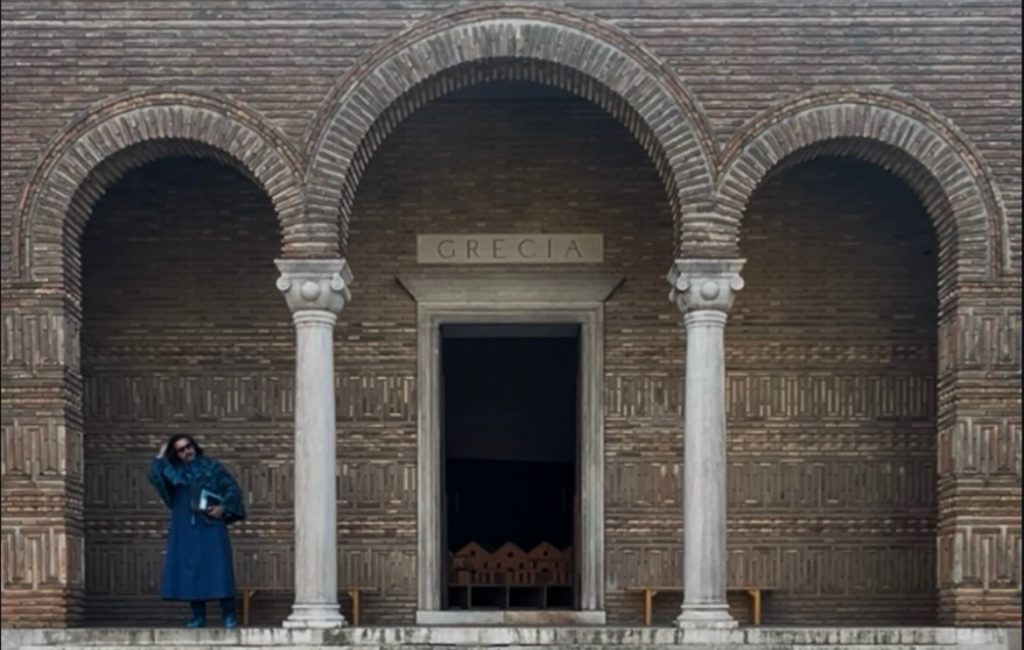
(Omero Tarquini pictured last year at the Venice Biennial of Architecture. Image Credit: Omero Tarquini Instagram)
Omero Tarquini seen encompassed within a gloriously picturesque viewpoint dressed to kill — resembling a 22nd century Cardinal or beyond. Completely encapsulated in space blue from head to toe — with a quantity of books in hand that would satiate most contemporary scholars in this day and age. The picture was uploaded on to his Instagram account just days after posting the below image of himself, thoroughly enjoying his lodging’s bed — but a spitting distance from San Marco Basilica. Just look at the angles — scaffolders, master builders & even, dare I say, specialised miyadaiku have been known to be less precise — everything in our perspective has its place — it’s like feng shui heaven:
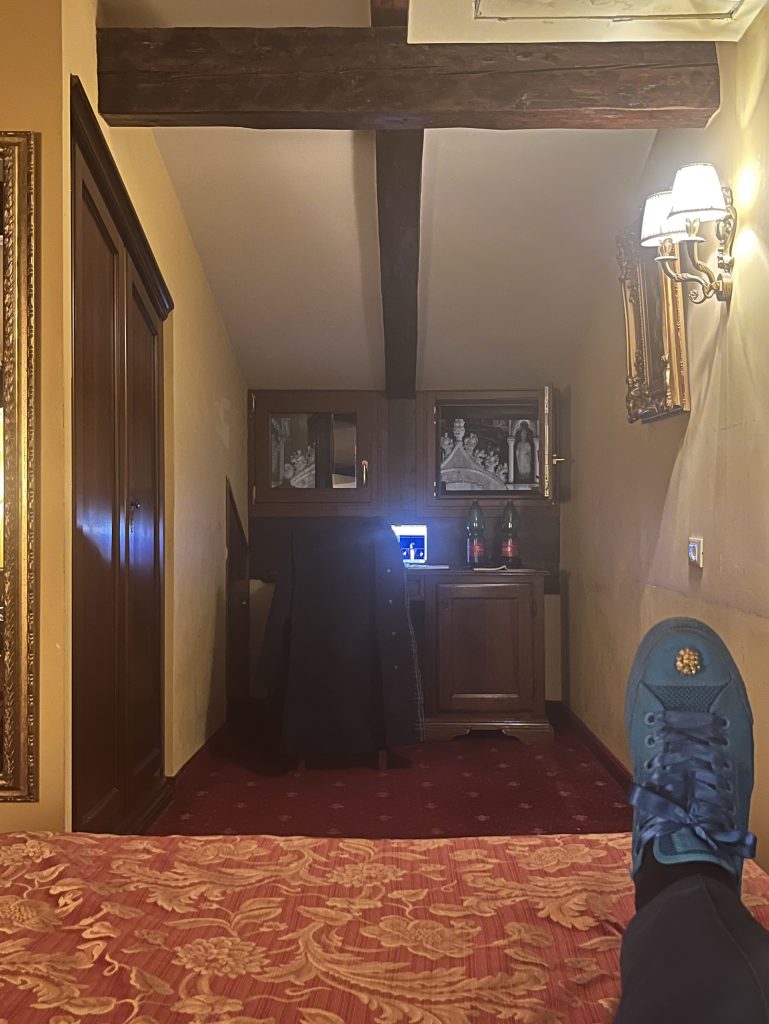
(Image Credit: Omero Tarquini Instagram)
Yet beyond the blessing or what we might innocently describe as, very much “benedicting” sculpted religious relic from the cathedral’s facade. With it’s age enduring Vesica Pisces configured head attire — looking as it might quite literally burst through the eye absorbingly presented window, the sexy leg with it’s trouser line expertly & seamlessly flowing toward an apex of the image’s four corners and the marvellously simplistic let least plain, potentially even humble — but magnificently aesthetically satiating as well as, somehow still “minimalistically”bejewelled shoe everyone — either wants to take off or puton
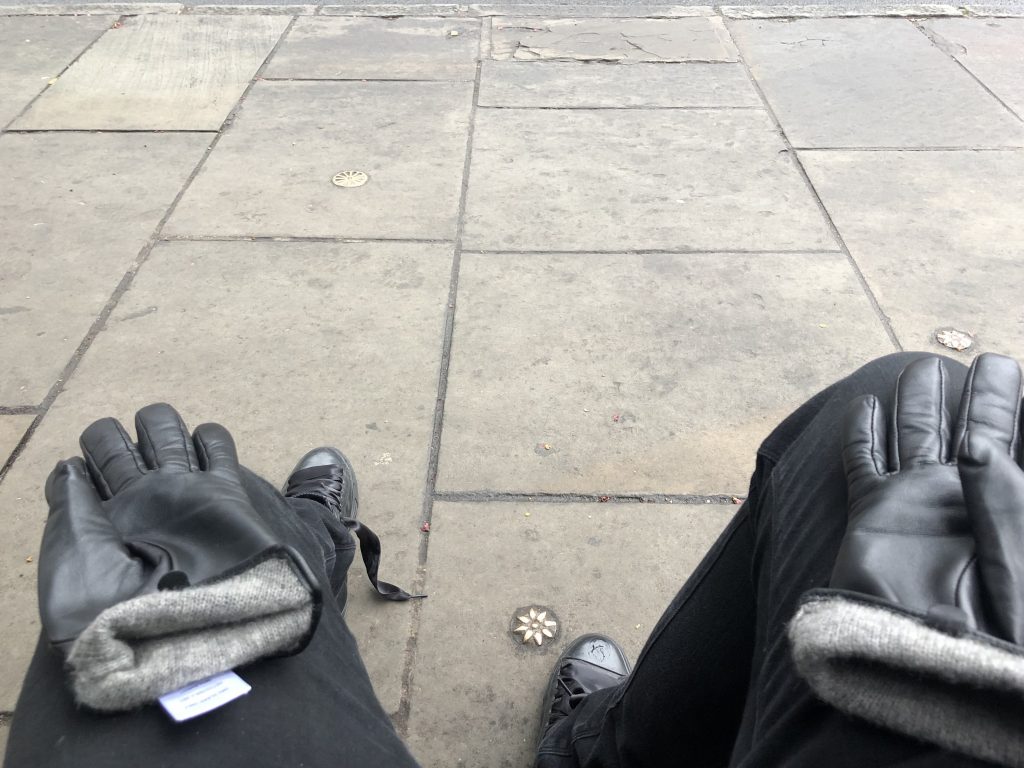
(Ongoing motif, Omero Tarquini admires public infrastructure at St John’s College Cambridge with . Image Credit Omero Tarquini Instagram)
The image, one of many in an ongoing motif of the artist’s perspective, features # holynights, and if we control our sinful thinking upon having put 2 & 2 together with this
youthful yet utterly ingenious wordplay, 21st century poetic hashtag and contemporary prose-like one liner.
And take a moment, seriously — could there actually be truth in his thinking — a devout artist so close to San Marco one could almost blow off the holy driven priest’s hat, grasp it and look him in the face — is he so close, so close to the Holy Sea, and if we are to indulge in poetry ourselves, so close to all that is encompassed by “her”— that he is so close to God? — so close that one, not the one but he, can not almost feel, but really feel the divine?
Wow — it brings awe just thinking about it !
Well if we seize the moment to enjoy a deep & profound analysis of the artist’s recurring signature, sign & logo. Apparently somewhat inspired and morally justified by an age old thought. When he was but a twinkle in his ancestors eyes —from when and where artists themselves were merely presumed to be doing the work of God in bygone epochs of nameless masters who predated the globally revered greats like Michelangelo, Da Vinci and so on and so on.
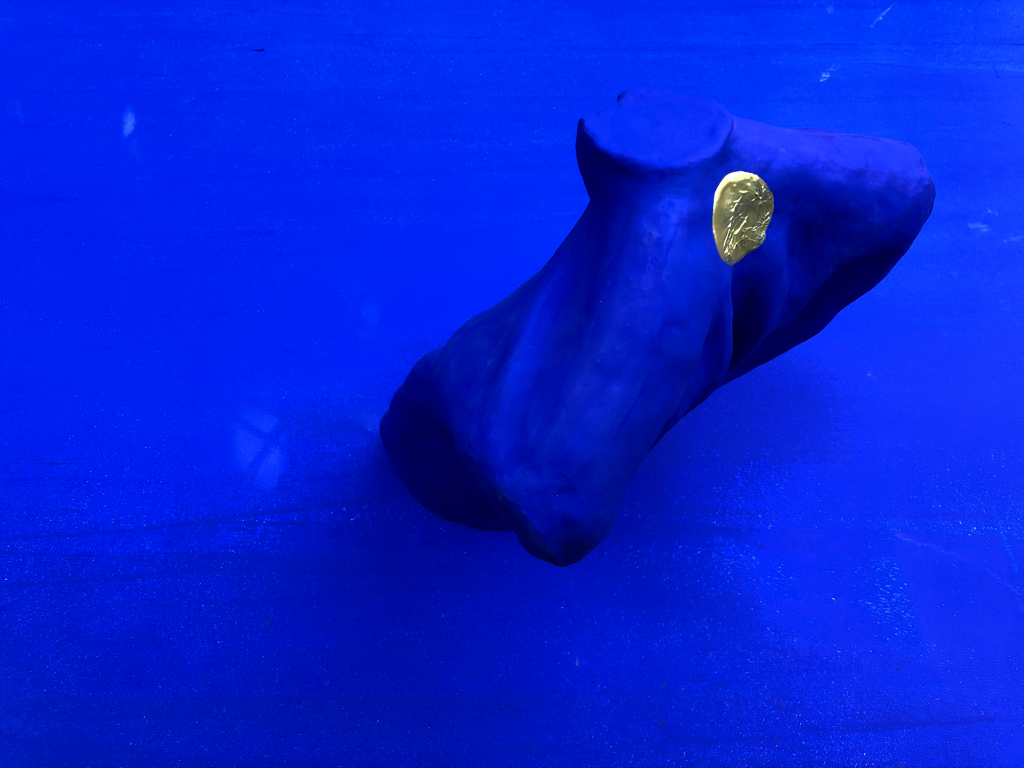
(Here we observe Omero Tarquini’s universal signature, sign & logo. Image Credit: Omero Tarquini Instagram)
We see a fingerprint that only thanks to the likes of Scotland Yard & Sir Edward Henry in 1901 would we ever have ever actually been able to know it to be Omero Tarquini at all— and in so, otherwise, we see merely what one could, and very likely would still, in many cases, describe as a banal albeit alluring simple dot.
But what on earth could a mere dot mean, simple or not?
Well it turns out, as it would in the realm of Art and Religion — that it’s a deceptively simple yet profoundly deep question — as the symbolism of a dot • and God has actually echoed across philosophy, theology, mathematics, and mysticism for more than millennia!
So if you haven’t already, make yourself a tip top cuppa and let’s enjoy as we acquaint ourselves with the varying resonances each age, culture and discipline has handed us down through our glorious combined human history:
The Primordial Point — Genesis of All
In nearly every metaphysical system, the dot symbolizes the origin — the first manifestation from the unmanifest. In Hinduism and Tantric cosmology, the dot is the Bindu, the seed of creation within the sacred syllable, which coincidently happens to be at the very beginning of the artist’s name, Om (ॐ). It represents the point where sound and silence meet, where the infinite takes form. The universe expands from this point (the “point without dimension”) into space, time, and multiplicity.
On the other hand in Kabbalistic thought, it mirrors the Ain Soph Aur — the infinite light contracting into a single point to begin creation. That dot is Keter, the crown, the first emanation of God — a spark of infinity. And in Christian mysticism, God as the “Alpha” parallels the dot — a beginning that never began, from which all things flow.
In Geometry and Philosophy — The Monad
The dot in geometry is dimensionless, yet it contains potential infinity. Pythagoras called it the Monad — the source of all numbers and thus all reality. The Monad is unity itself, equivalent to God in his cosmology. From it arises the Dyad (duality), the Triad (harmony), and the Tetrad (manifestation). Plotinus, in Neoplatonism, identifies the One (God) as a point of absolute simplicity — beyond measure, beyond division, the cause of being without being itself a being.
In mathematics, a dot can represent both zero-dimensional nothingness and infinite continuity — a paradox that beautifully mirrors divine omnipresence: God as both everything and no-thing.
In Art and Symbolic Language
Artists and mystics have often used the dot to symbolize divine presence or the eye of God. In Islamic art, where figural representation of God is generally and historically forbidden, the dot (nuqta) represents the first mark of the pen that wrote creation, as mentioned in the Qur’an. Sufi mystics call it the hidden point—the silent origin of divine expression. (Who wrote this?) “I was a hidden treasure and I desired to be known” — the dot is that hidden treasure becoming manifest and in the case of Omero Tarquini whether deemed simplistic or not it always looks like a treasure.
In Zen Buddhism, the ensō (a circle often left incomplete) sometimes begins as a dot, symbolizing the instant of awakening, or suchness (tathatā) — reality as it is, unseparated from the divine.
In Modern and Scientific Symbolism.
The dot in cosmology recalls the singularity at the Big Bang — all matter, energy, and time compressed into an infinitely small point — literally, everything from nothing. Many see in this scientific image a reflection of the divine creative impulse, the instant God’s idea becomes the universe.
Thus to philosophically synthesise, across cultures:
The dot = potential, origin, infinite unity, silence before sound, God before creation.
The 20th Century thinker Alois Riegl which we know has influenced the artist thanks to the writings of Italian Science & History Magazine: PROMETEO — Art Critic Francesca Schaal-Zucchhiati. To put it simply, Riegl’s philosophy was that the art of art finishes in the beholder but we’ll get to that. As one could even go a step further whilst analysing another reoccurring motif of this magically inspiring artist. On this occasion not in his art per say, being a mere “sculpture” as the artist calls himself but in his physical documentaries — a dot and a line as seen below, in the midst of enjoying a household chore—folding washing. Albeit not in his uniquely recognisable logo in this shot but a formation of a dot non the less, in this case, a triangular dot seen on the book of sculpture encompassed in the setting of his weathered and thoroughly warn studio, accompanied by a nearby line we were once all very much familiar with—via our non wireless complimentary iPhone headphones of once upon a time.
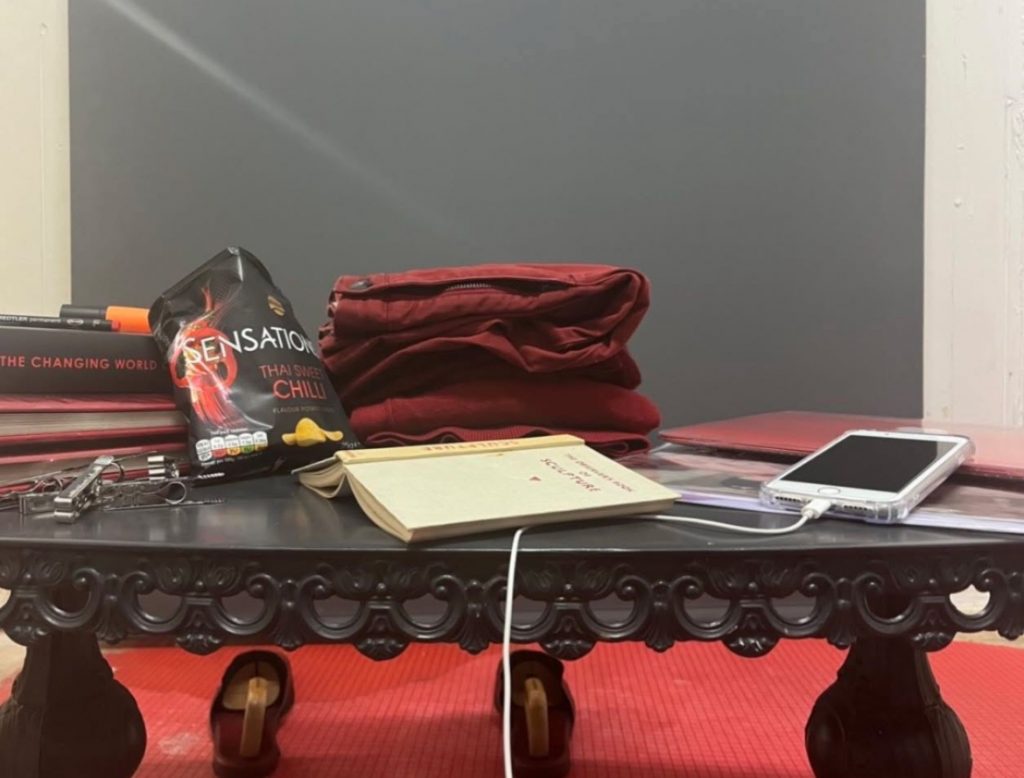
(Omero Tarquini’s floorless, worn & weathered studio environment. Image Credit Omero Tarquini Instagram)
In many teachings as already cited, especially in Sufi texts and the Buddhist ensō there are underlying cosmological ideas — that existence begins from a point, then extends into a line and then into form — this idea appears in multiple sacred and philosophical traditions. So let’s look more closely at where that pattern explicitly or implicitly emerges:
Vedic and Tantric Sources
In Hindu Tantric cosmology, particularly in Śaiva and Śākta texts. Creation begins with the Bindu (the dot or point of infinite potential of which from the Bindu emanates Nāda, the primal sound vibration — often represented visually as a line or stroke.
In a highly more profound and abstract sense in Śiva Sūtras, specifically (1.1–1.3) alludes to this: where “Caitanyam ātmā” (Consciousness is the Self). “Jñānaṁ bandhaḥ” (Knowledge [differentiation] is bondage). The idea of this is culminated in the thought that from undivided consciousness (Bindu), differentiation (the first line) begins. Also in Zen and Mahāyāna Buddhism The “dot” is suchness (tathatā) reality before differentiation.
Moving towards more self manifested teachings. In Kāmakalā, a Tantric diagram predating the Śrī Yantra a point (Bindu) expands into a short line (Nada), symbolizing the awakening of sound and direction, i.e. the first act of creation.
Kabbalistic Tradition (Ayin → Yesh → Kav)
Even in the Kabbalah, there is a textual parallel found in Isaac Luria’s cosmology (the Lurianic Kabbalah):
Ein Sof — the Infinite (unmanifest God) contracts itself in Tzimtzum — leaving a point (Reshimu) within the void. Then projects a ray or line of light (Kav) into that void to initiate creation. Etz Ḥayim, by Rabbi Ḥayyim Vital (16th century), describes Luria’s teaching as follows:
“Then a single line of light extended from the Infinite into that empty space. Through this line, all the worlds were created.”
So in the mystical Judaic vision:
- The dot = the residue of divine infinity
- The line = the first directional movement of divine will, God extending into creation
Hermetic and Neoplatonic Sources
Even in the Hermetica and Plotinus’ Enneads, we find a geometrical cosmogony:
The point represents The One (God, source).
The line is the Logos, divine thought extending from the One.
Plotinus writes (Enneads VI.9):
“From the One proceeds the first thought — a simple line of being —and from that line unfolds the breadth of Soul.”
Later, Christian mystics like Nicholas of Cusa adapted this into their geometry of God.
Christian Mysticism and Pseudo-Dionysius
Pseudo-Dionysius and later scholastic thinkers used similar metaphors:
“The point is the Father, the line the Son.”
The Modern Echo — From Zero to One
- This geometrical motif could also be argued to have a presence in modern metaphysics and science:
- In cosmology: singularity → spacetime expansion (a dot becoming a line).
- In logic: 0 → 1 (nothing → something).
- In digital systems: the binary expression of all creation through points of being and absence.
So even without scripture, the symbolic intuition persists.
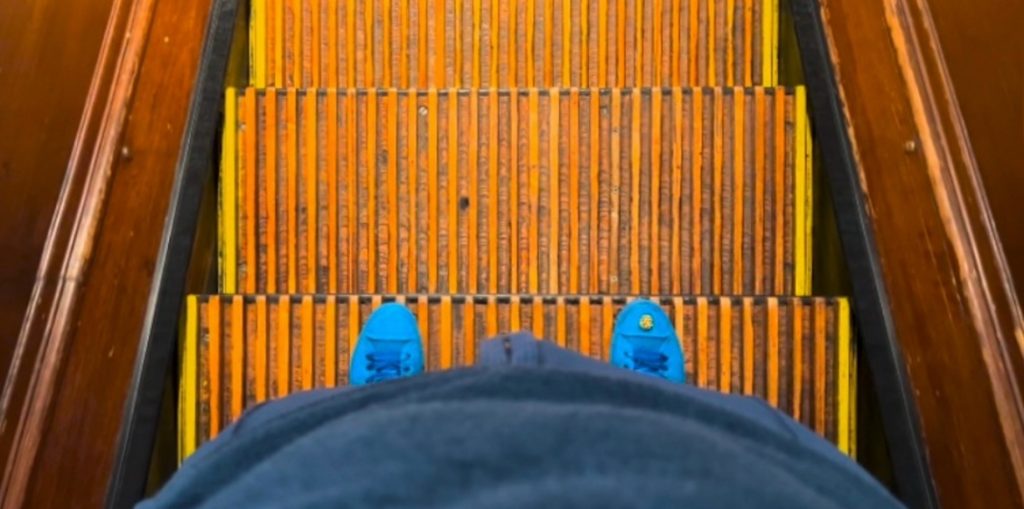
(Image Credit: Omero Tarquini Instagram)
Above we see the dot and a line of the artists trouser once again in this reappearing perspective motif, this time appreciating the oldest escalator in the entire world at non other than Macy’s New York and if that wasn’t enough we are fortunate enough to view in plain sight — a natural dot in the original ash wood’s branch exit, which mercilessly penetrates the bright orange coating (no doubt after countless paint jobs) even now in the midst of its centennial. Just like that, the probabilities are mind boggling — Amazing !
Yet if we can get beyond the fact that so much can, well be expressed by so little. Is this all so very too deep for at times such potentially bland and perceptively uncomplex modern art, let least, in case of Tarquini, still a relatively very young artist who, yes happened to get all A’s in his compulsory theological studies at Rome’s revered Catholic University LUMSA just metres from the Vatican itself.
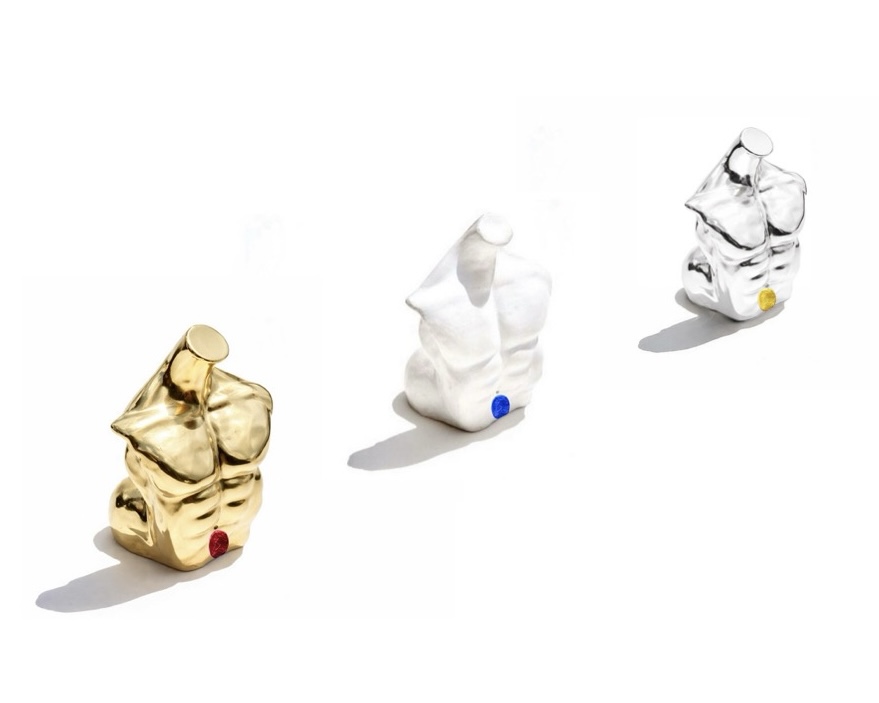
(Image Credit Tiggy Butler)
Well one would certainly be forgiven were they to think so until observing the above and witnessing what the artist was able to create with his bare hands whilst acing those doubtlessly, very profound & hard theological examinations. Here we see the same motif executed in a manner that is so in your face and so seductively cunning it has never been seen before. And not merely in his material of choice — clay nor in his popular conversion metal bronze, but via this stunningly captivating twin pair of solid gold Los Angeles hallmarked 18k 1.8kg casted sculptures in white & yellow gold respectively. Positioned ina row with a calibre of military precision even a king would be proud of, next to their previously made original Feeling 8 and physically cast in 2024 by the globally sort after multi-millionaire British American interior designer to the stars & beyond Tiggy Butler during a mansion revamp. Currently rumoured to be in the collection of fellow American. Actress, and royal divorcee, the former “Donna Lee dei Principi” and Ferraro Roche superstar Beverly Skelton.Going beyond the holy and devoutly religious connotations selected in the signed pieces — red, blue and yellow (the source of all colour) usually reserved for the likes of Jesus Xhrist himself. It is almost difficult to truly grasp the power of the dot and line motif here. So ingeniously materialised through the physical stature of the materiality of the art itself and it’s natural immaterial bi-product upon light gifting it to us. Oh what pleasure, can it be so. I, yes it can !
But still, how could any, let alone even a majority of the above teachings, thoughts and reflections be present in a rather elegant, albeit expensive— yet highly functionary laptop sleeve for example?
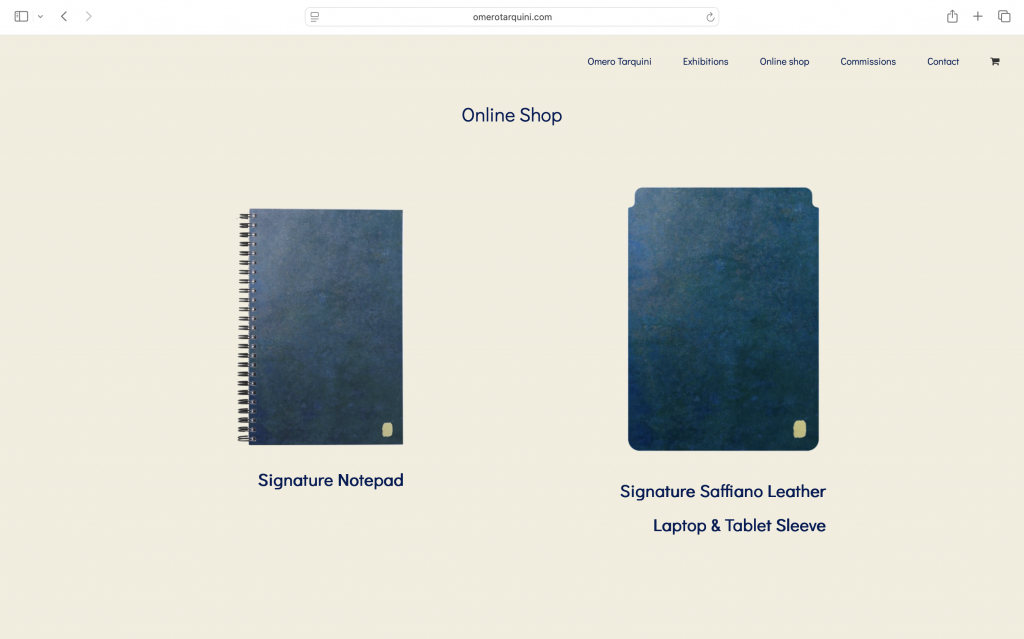
(Omero Tarquini Saffiano Leather Laptop Sleeve. (Image credit omerotarquini.com)
And what are we to expect when we navigate the Artist’s website after coming across once again this supposedly marvellously simple signature greeting you yet again in Desktop, Tablet & Mobile format:?!
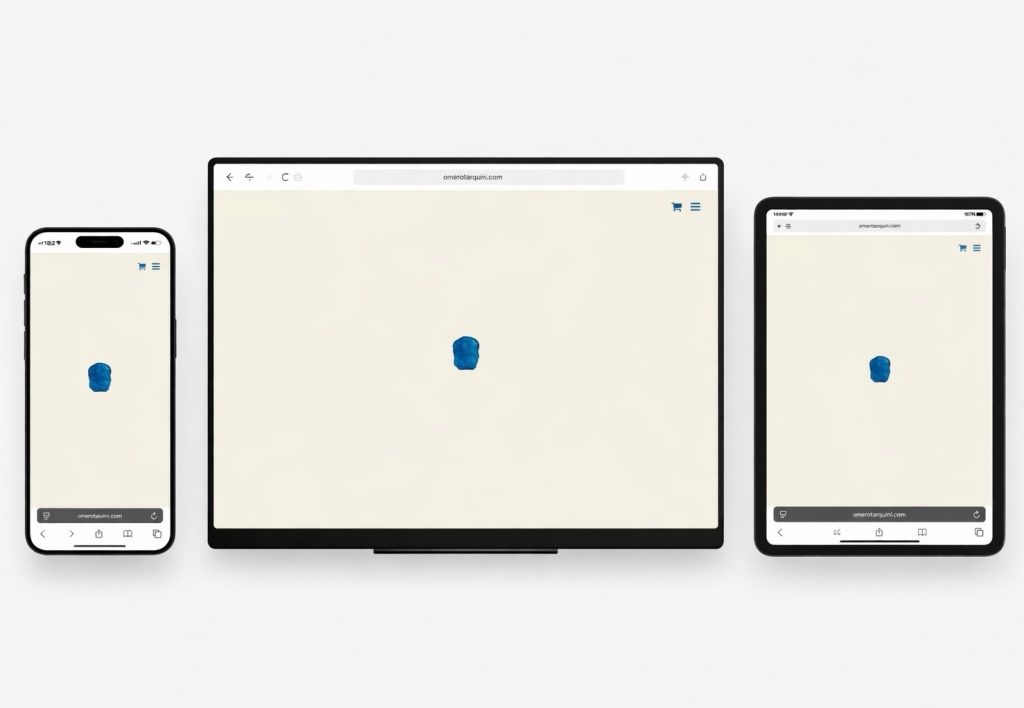
(The artist’s website homepage in mobile, tablet and desktop format presented marvellously courtesy of ChatGPT+)
I guess it’s open to interpretation if this is all profound to belief and here we finally come back to the beauty of the late Swiss art critic Alois Riegl — that art finishes in the mind of the viewer, well it certainly can and if your lucky enough to know all the above.
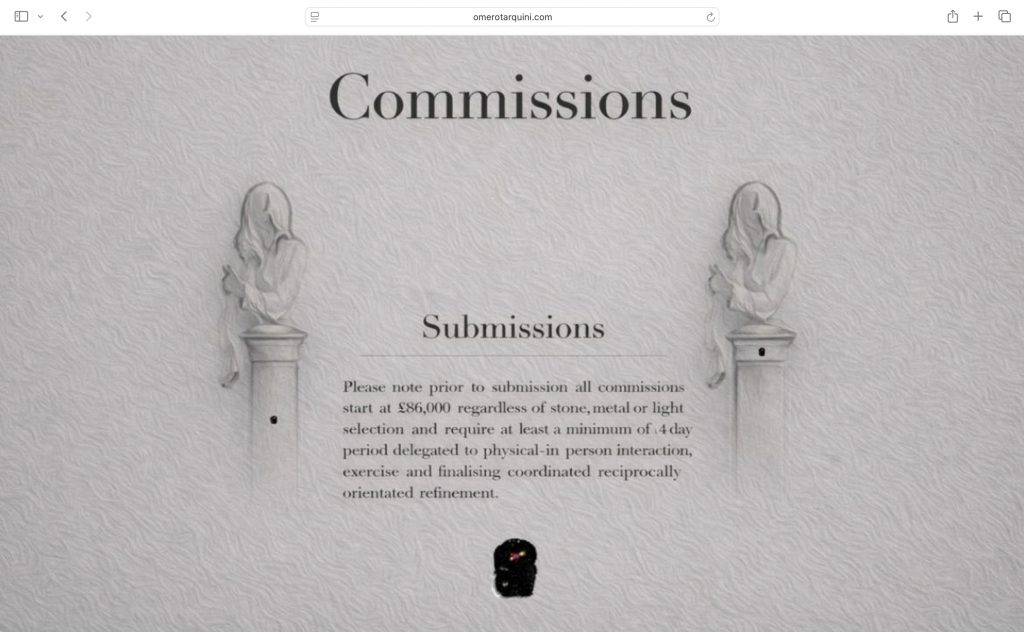
Omero Tarquini Commissions & Submissions Page. (Image credit omerotarquini.com)
I’m sure it might pop into mind whether you purchase (upon an accepted commission submission; having compulsorily declared your annual charitable donations, purpose and motive for a Tarquini sculpture and so forth and so forth) an £86,000 holographic, marble or anodised steel bust of your wife, child or husband, or even the £18 notepad featured above flanked by the Saffrano Leather Laptop & IPad sleeve.
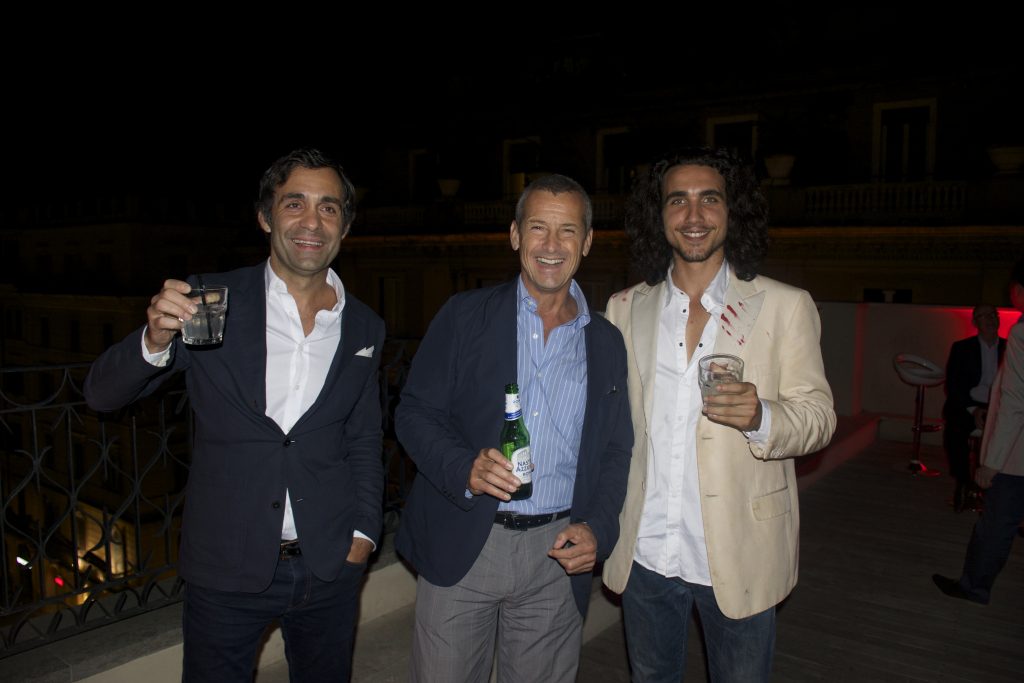
(Image Credit: Omero Tarquini Instagram)
The truth is beyond knowing the artist loves a good drink and a party seen above with a nice brew of the top shelf in hand with former top tier Campari executives and the grandson of Francesco Peroni founder of Peroni beers. Although we can’t confirm that God truly is the motive behind the once Church of England schooled Tarquini’s signature nor the art of the artist itself.
In this leaked image with Cyber Modelling actress Tracy Anne East shot whilst getting a good talking too presumably after unsympathetically interrupting the artist from rigorously hard studies. We can just glimpse a small cross dangling from his neck nestled in between one of his much loved & renowned Austrian hunting jackets.
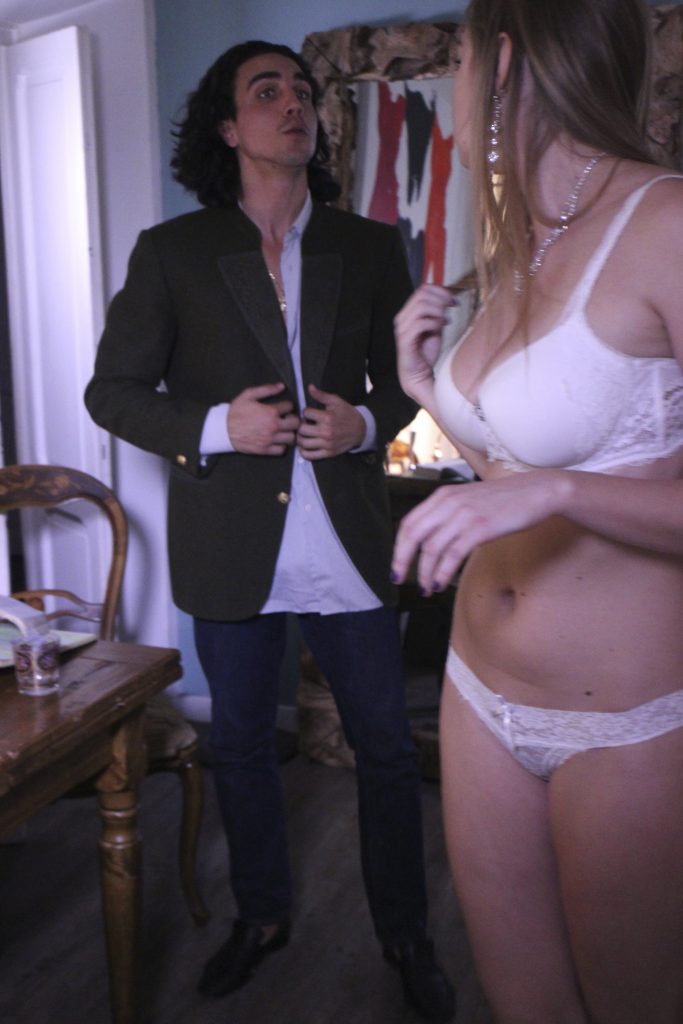
(Image Credit: Tiggy Butler)
And we do know him to have frequented churches. Seen below on this Instagram story upload on Lord Norman Foster’s Millennium bridge in London — taking a cheery selfie with a cherished teacher of his. The much admired author of How To Make Mistakes On Purpose, American Artist, respected Google/Parsons/NYU Lecturer & of course well known Sears Heiress. Laurie Rosenwald; flaunting her beauty “dot” no less with St Paul’s cathedral complimentarily in the background after enjoying a traditional mass. Now I know I’m thinking far too much — no wonder philosophers say they have a hard time!
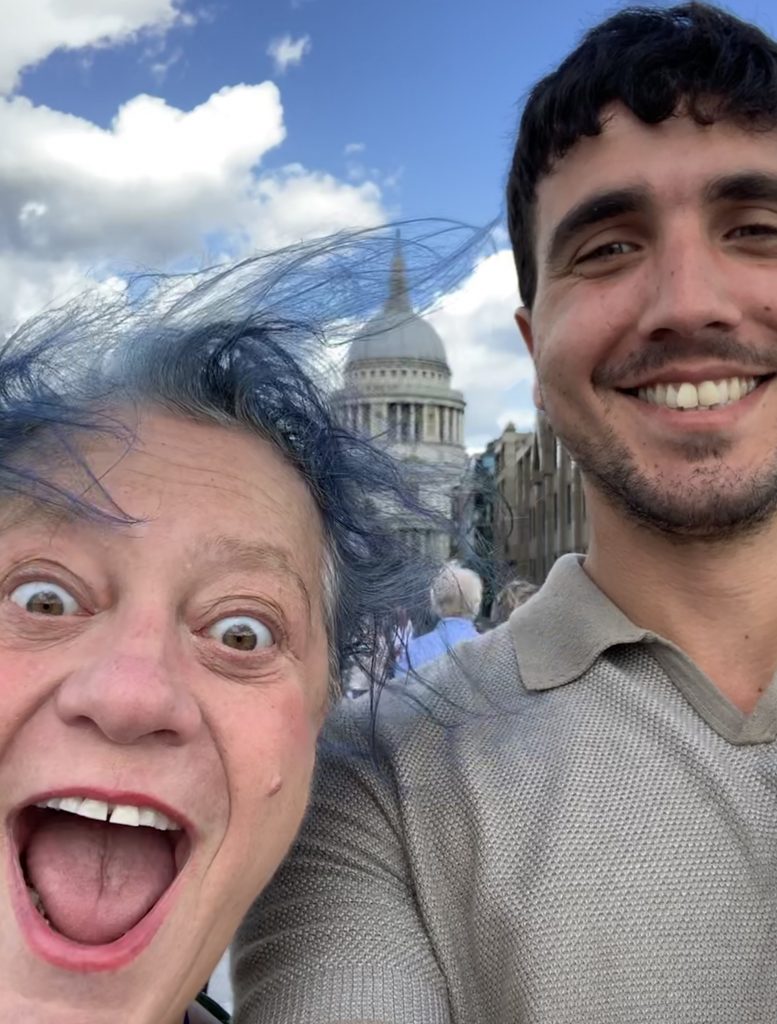
(Image Credit: Omero Tarquini Instagram)
But it is all written, the only question is, perhaps as Moses would ask, “has it been done as it has been written!?”
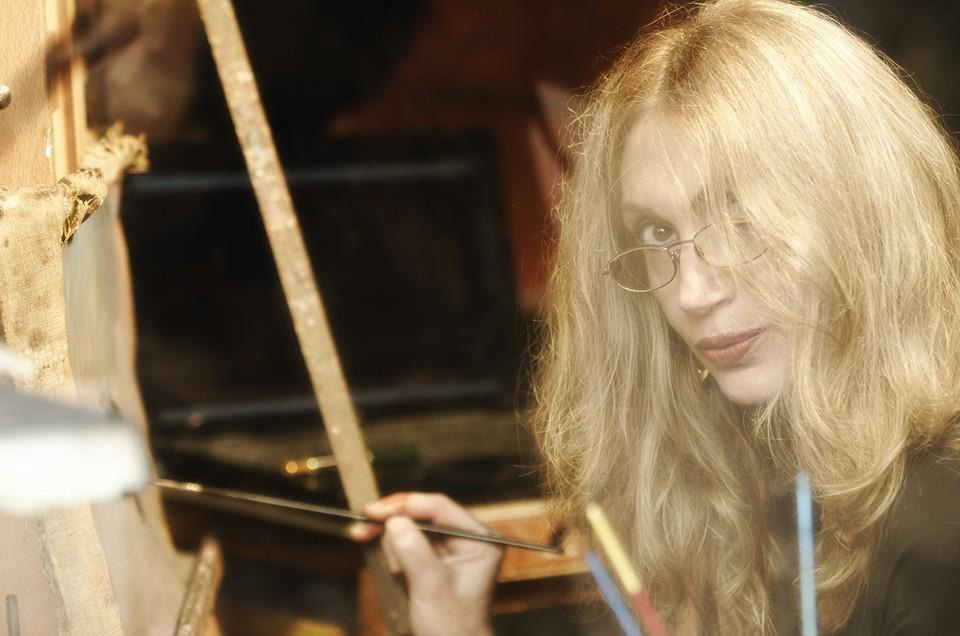
(Image Credit: Elena Tommasi Ferroni)
In all honesty no one actually knows how Omero came about to producing his logo — but if you aak his painting teacher the celebrated generational Italian artist Elena Tommassi Feroni whom apparently told the sculptor once — when producing a reproduction of a philosophically orientated painting he studied at University & one that’s subject matter heavily influenced the materialisation of the previously shown Feeling series now cast in gold. The highly celebrated Swiss artist Arnold Bocklin’s The Battle of The Centaur’s “That’s enough it’s already splendid, in fact it can’t be any better on that type of canvas — no need for more details”.
So beyond confirming he’s detail aware and beyond — so much so he’s not pixel aware but canvas thread aware. The master painter will quite disappointingly tell you that his signature comes from an old sculptural tradition of marking work with their thumb and therefore likely has nothing to do with religion whatsoever.
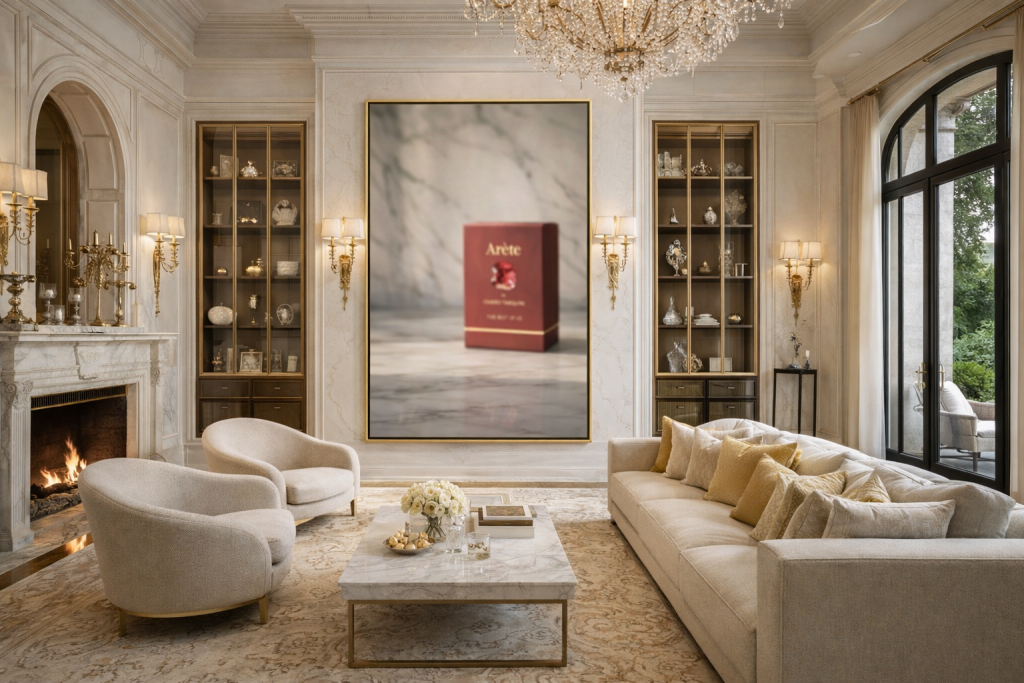
(Andy Warhol Campbell Soup-like AI rendering of electric fragrance poster-dispenser. Image Credit: Omero Tarquini Instagram)
And of course if you look at the Andy Warhol Campbell Soup-like AI rendering of the faddy-chic electric fragrance poster-dispenser (gosh that’s a mouthful) he’s asking his fans whether or not he should release for sale for £9,999.99
With its gimiky albeit gay, uplifting and possibly deeply meaningful slogan following the fragrance’s line Arête “The Best of Us” it’s easy to think there’s absolutely nothing remotely religious about his work — and all simply about money & “excellence”.
Yet as the bible says in order to motivate its devout followers to wait for the “Full Picture” in 1 Corinthians 4:5 “not to pass judgment before the appointed time, as God will bring hidden things to light”. Though we shouldn’t judge too soon.
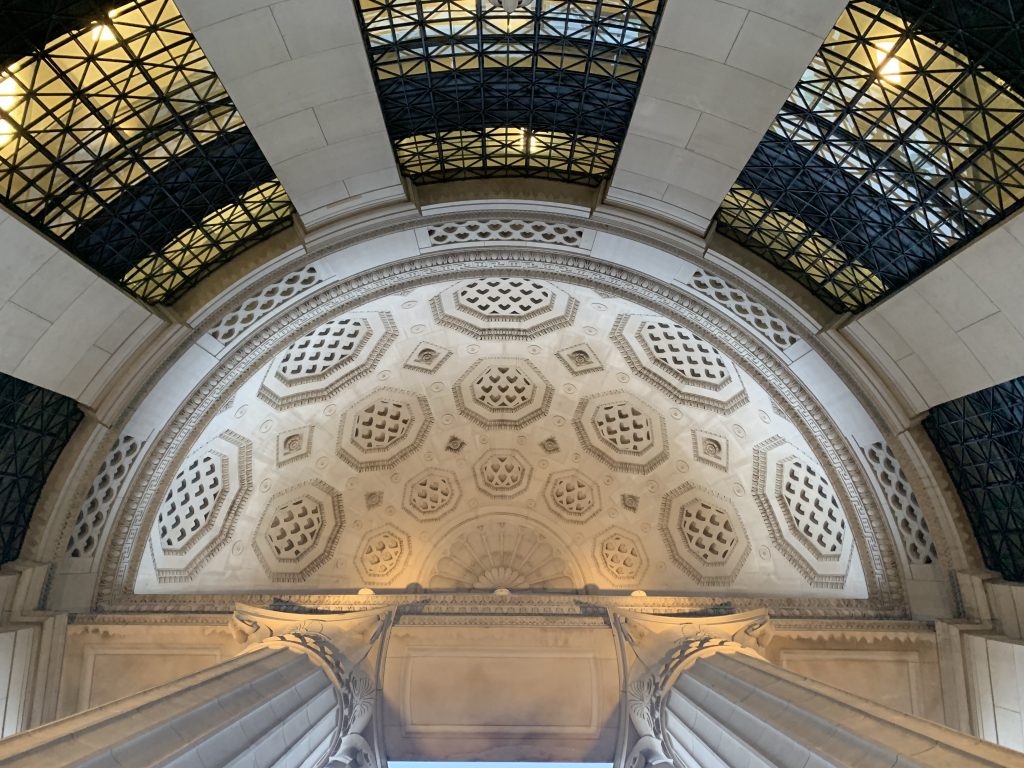
(Image Credit: Omero Tarquini Instagram)
Especially so as if you permit yourself to enjoy a deeper look into the 21st century artists life via his Instagram. Not enabling yourself to get distracted by the likes of story uploads such as the above featuring architectural detailing of what once was the most expensive building constructed on the face of the planet Bush House at the southern end of Kingsway in London, England and scrolling past further unsurpassed views, gorgeous dotted and non-dotted models, even a Papal Princess grasping his for and world class culinary delicacies quite literally, dare I say absolutely “perfectly” starts around the 2016 mark with nothing less than this upload of a well used, hand me down coverless copy of Giorgio Vasari’s “The Lives of Artists” next to an unknown tartan book and muse mask reflecting contemporary echoes of De Chirico’s metaphysical idols:
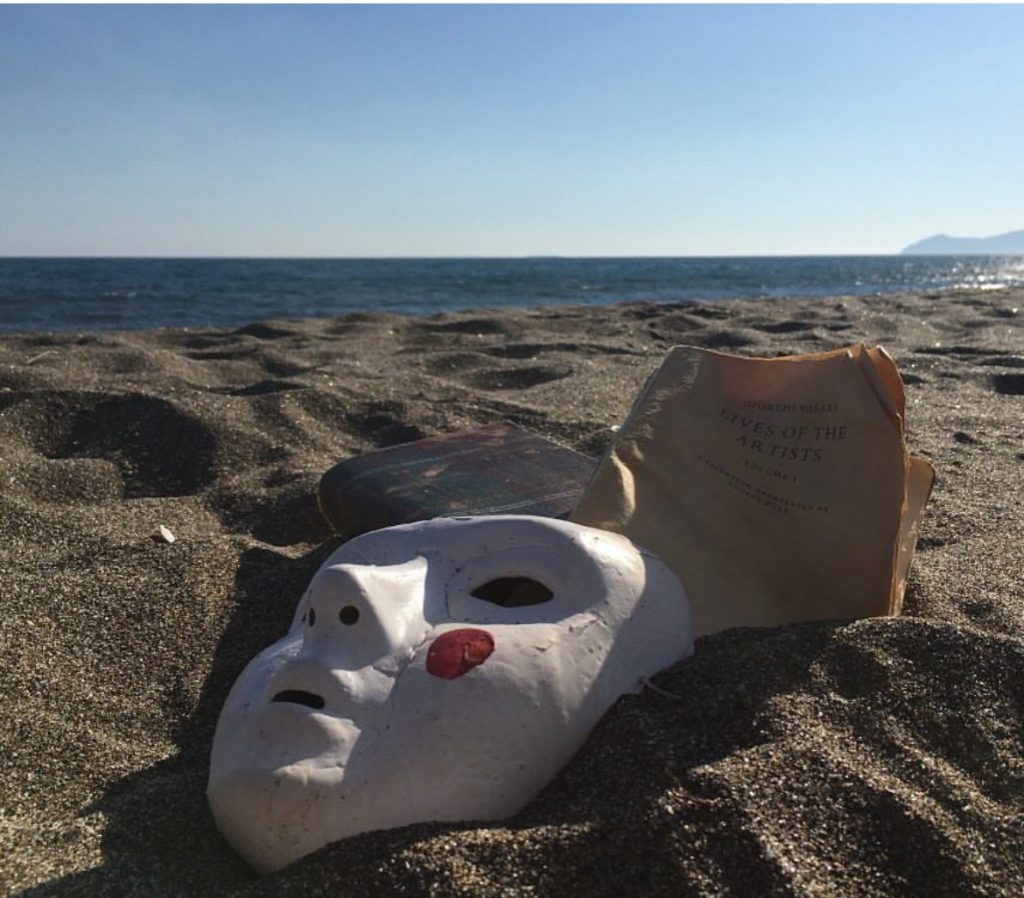
(Image Credit: Omero Tarquini Instagram)
when observing the Franciscan like backdrops, so rare like the below, the culmination of uncontrolled sights after quite literally God knows how many hours of focus & meditation where yet again a dot is presented at the lower right hand corner before quite frankly one of the more impressive perspectives the temporally sensitive natural world could ever gift upon a human onlooker.
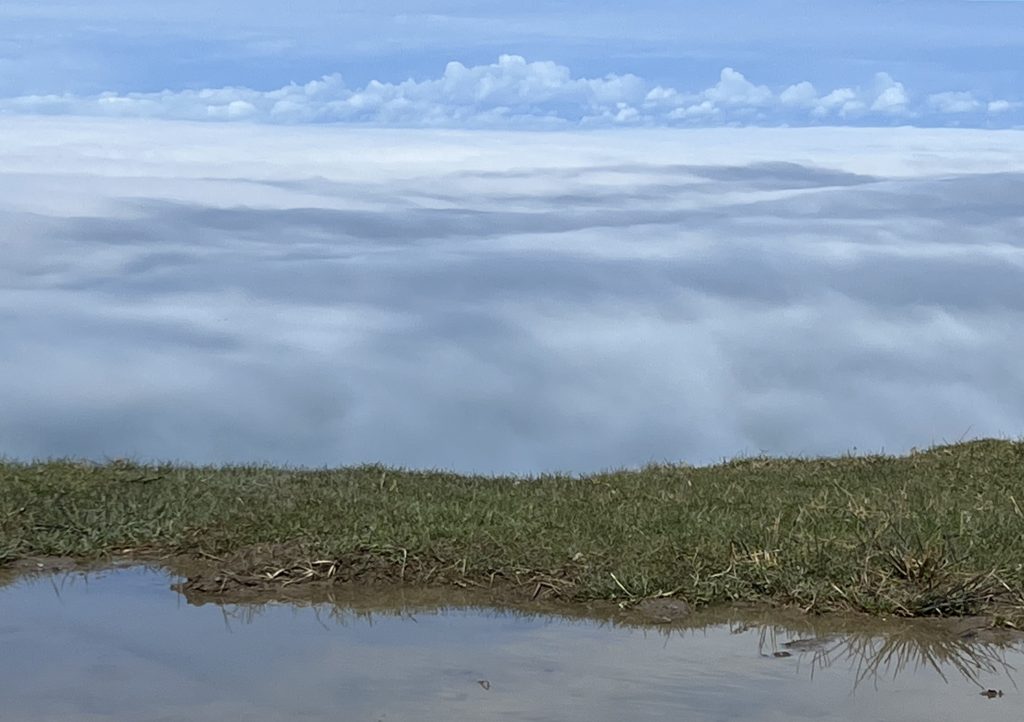
(Image Credit: Omero Tarquini Instagram)
One things for sure should he really feel close to god, or beyond — perhaps even sensing that of what a moderate or great prophet sensed of old — surpasses Ancient Greece lushus Daimons and all the rest of what has now merely become romantic fodder used to seduce innocent modern beauty by this era’s unsurpassed general class—likely thanks to a degree paid for by the state and not in America’s case but in Britain’s at least, likely from an admiralty with more admirals than ships or some other elitist or potentially even amoral who knows what from God knows where!
Well, Moses like many others before him actually thought, not a god — but God himself with a capital G (yes the capital G that on other occasions would likely be backed by a set of Mason’s tools) spoke to him. Can you imagine coming out with something like that today? In this day in age you’d be sent to the loony asylum no matter who you were — regardless of the 20th century Japanese Doctor Masaru Emoto’s findings, King Charles gets enough grief for having admitted he speaks to nature. I don’t think even the Pope God’s shadow on earth would come out and say he speaks directly to the almighty these days. Maybe I’ve been listening to more than too much Haydn alone, but I’m not able to work out if that’s a bad thing or a good thing. What would you do, if not a mere god, but God himself spoke to you, would you act upon it or not tell another soul. I know what I would do were I so lucky — not say a word and not because actions speak louder than words. No wonder Omero won’t speak to anyone on the matter at hand.
One thing is evident however the Artist has an eye, no one can question that especially in the presence of what it guids into being, but is it he who wields it both day and night or is it God?
Would we even want to know ?
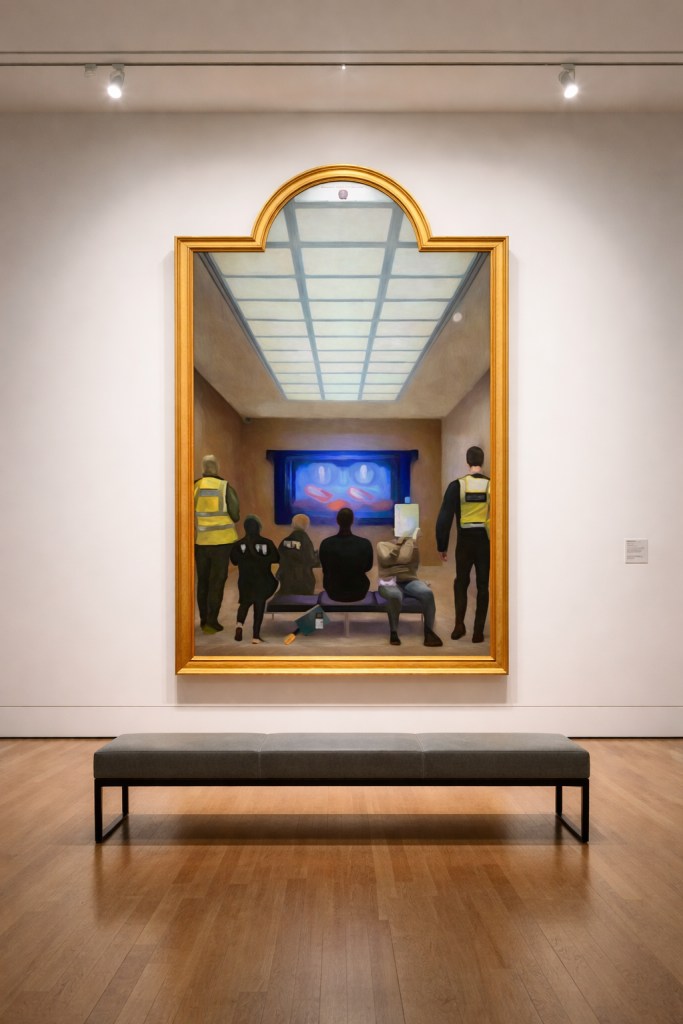
(“Space 4 Thought” digital twin unveiled last week and with Turner like popularity already been acquired for an unknown figure by a private collector 2 years prior to physical materialisation)
I beg to differ as on very rare occasions, not so frequented by the best of us throughout history art needs no answers, no answers whatsoever.
Thank God !
You May also like

By Rojina Bohora


By Anne Canal
By Sam Stafford