
Notre Dame And The Knowledge Behind A Return
By Aletheia Gako
Publication Date: 17 September 2026 — 10:07 GMT
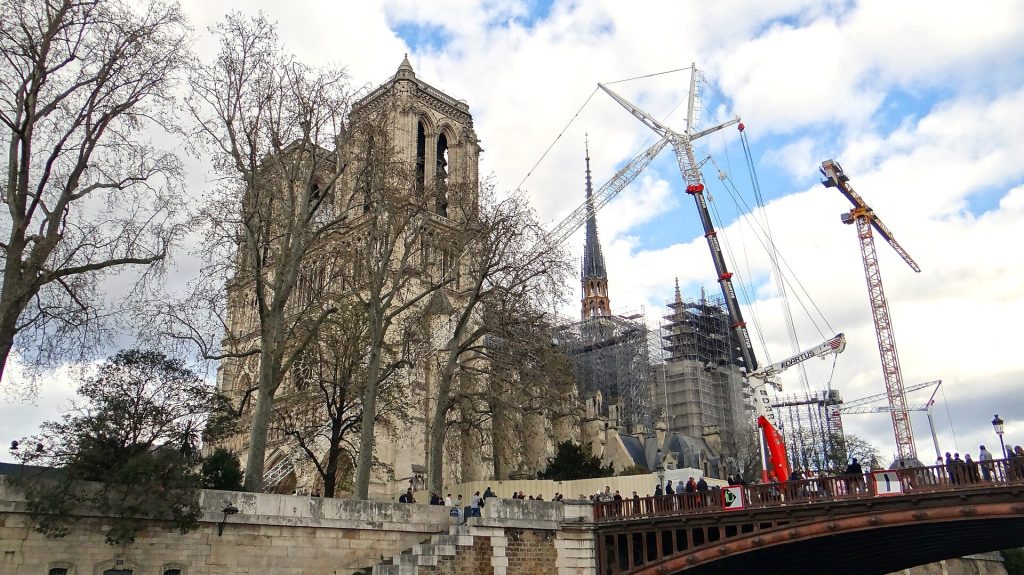
(Notre-Dame de Paris during reconstruction in March 2024, before its December reopening. Image: Ibex73, CC BY 4.0, via Wikimedia Commons.)
The cathedral’s reopening made visible only part of an immense reconstruction effort.
When Notre-Dame de Paris reopened in December 2024, the return of people to the cathedral became the central image. Behind it lay years of investigation, documentation and work by specialists responding to the fire of 15 April 2019. The event was a public threshold in a much longer material story.
The fire destroyed the roof’s timber framework and the spire, while leaving a damaged building that first had to be secured. Reconstruction required a detailed understanding of what had been lost and what remained. The cathedral could not be treated as a simple external shape waiting to be filled in.
Different Histories In One Roof
The roof’s history itself contained different periods. Medieval oak framing belonged to the nave and choir; the spire reflected the nineteenth-century work associated with Eugène Viollet-le-Duc. Reconstructing them faithfully meant addressing distinct historical structures rather than applying one generic idea of Gothic building.
Craft knowledge was central. Carpenters worked with oak, traditional assembly methods and full-scale preparation, supported by research and contemporary documentation. Trial assembly allowed components to be checked before installation. The familiar separation between historic craft and modern technology becomes less convincing in such work: each can assist the other when the task is clearly understood.
A reconstructed timber is new material carrying information about an earlier form. It cannot become the original wood simply because its geometry matches. This distinction is not a reason to dismiss reconstruction. It helps explain the achievement accurately: a lost structure was remade through evidence, judgement and labour, allowing the building to recover functions and an appearance that mattered to its custodians and public.
Reconstruction Through Knowledge
Reopening also should not be mistaken for proof that every conservation task was finished. A major cathedral requires continuing work, and a celebrated ceremony marks a change in use rather than an end to responsibility. Maintenance, monitoring and further restoration remain part of the building’s future.
Notre-Dame’s return gives architectural journalism an opportunity to look beyond a before-and-after image. Who knew how to cut the timber? Which records guided the design? How were surviving materials protected? Such questions reveal the depth of the work without inventing a heroic voice for people who have not been interviewed.
The cathedral stands through a combination of inherited fabric and renewed knowledge. Its restored roof is an architectural form, but also the outcome of skills that had to remain available when an extraordinary need arose. The return of the building depended on the continued presence of those skills.
You May also like
By Aletheia Gako
By Aletheia Gako
By Aletheia Gako