
Oslo And The Roof That Became Public Ground
By Aletheia Gako
Publication Date: 25 June 2026 — 10:32 GMT
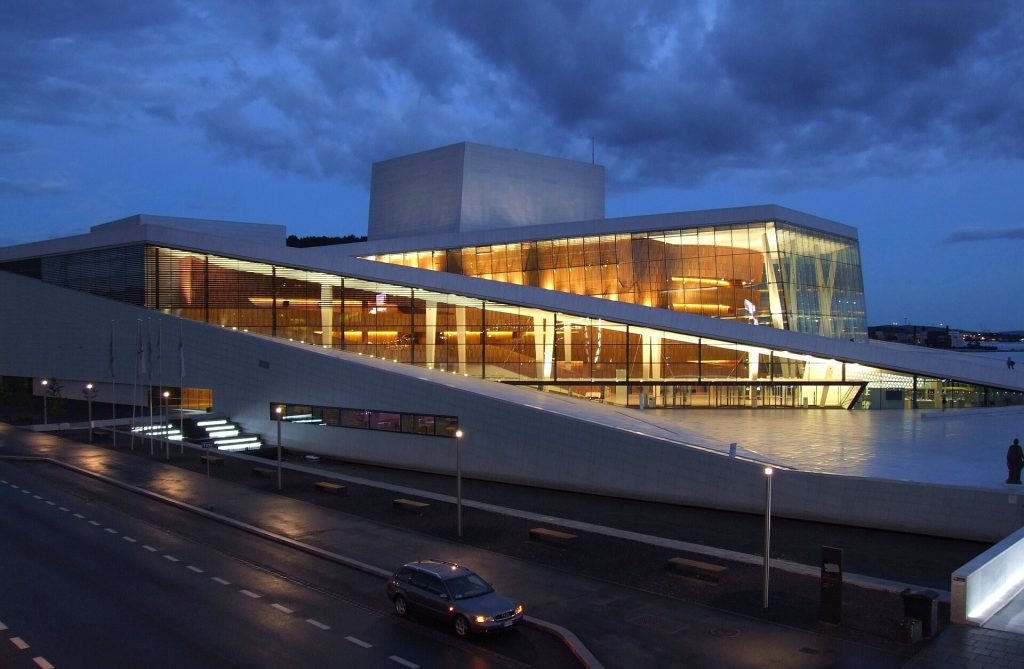
(The Norwegian National Opera and Ballet at Oslo’s waterfront. Image: Pudelek (Marcin Szala), CC BY-SA 4.0, via Wikimedia Commons.)
An opera house turns its exterior into a place for people who may never attend a performance.
Oslo’s opera house offers a route where a roof would normally offer a boundary. Pale planes rise from the waterfront, inviting people to walk above the building. The architecture gives the city a new ground while keeping an auditorium underneath it.
Designed by Snøhetta and opened in 2008, the Norwegian National Opera and Ballet was part of the redevelopment of Bjørvika. Its location at the fjord makes the relationship between water, city and public space central to the project. The sloping exterior connects those conditions through an unusually direct physical experience.
A Public Place Above A Performance
A cultural building often separates its public identity from its daily use. It is admired from outside, while entry depends on a ticket or a particular purpose. Here, the roof offers an experience of the building to people arriving for a view, a walk or time beside the water. The institution’s presence extends beyond its performance schedule.
Inside, the demands become more specialised. The main hall uses a horseshoe arrangement, and the architecture must accommodate the acoustic and technical requirements of performance. Workshops and backstage spaces support the work behind the event. Windows giving glimpses of production make some of that usually hidden activity visible from the city.
The public roof is itself a collaboration, including work by artists Kristian Blystad, Kalle Grude and Jorunn Sannes. Its surface is not simply an abstract white gesture. Detail, texture and the arrangement of stone affect the experience of walking. A persuasive outline still has to become a place that feet can negotiate.
The Conditions Of Access
That transformation carries responsibilities. Weather, maintenance, accessible routes and safe operation determine how the public space works over time. The idea of an open building is valuable only when its management supports real access. A photograph taken on a clear day cannot stand in for those continuing conditions.
Oslo’s achievement is not that every public institution should be climbable. It is that an opera house can make a meaningful offer to the city without asking everyone to become an opera audience. The exterior has a civic use of its own. Looking across the fjord from the roof, a person occupies the architecture rather than standing outside its image. A specialised cultural venue becomes part of an ordinary route through the day.
You May also like
By Aletheia Gako
By Aletheia Gako
By Aletheia Gako