
The Alhambra And The Intelligence Of Water
By Aletheia Gako
Publication Date: 22 January 2026 — 09:26 GMT
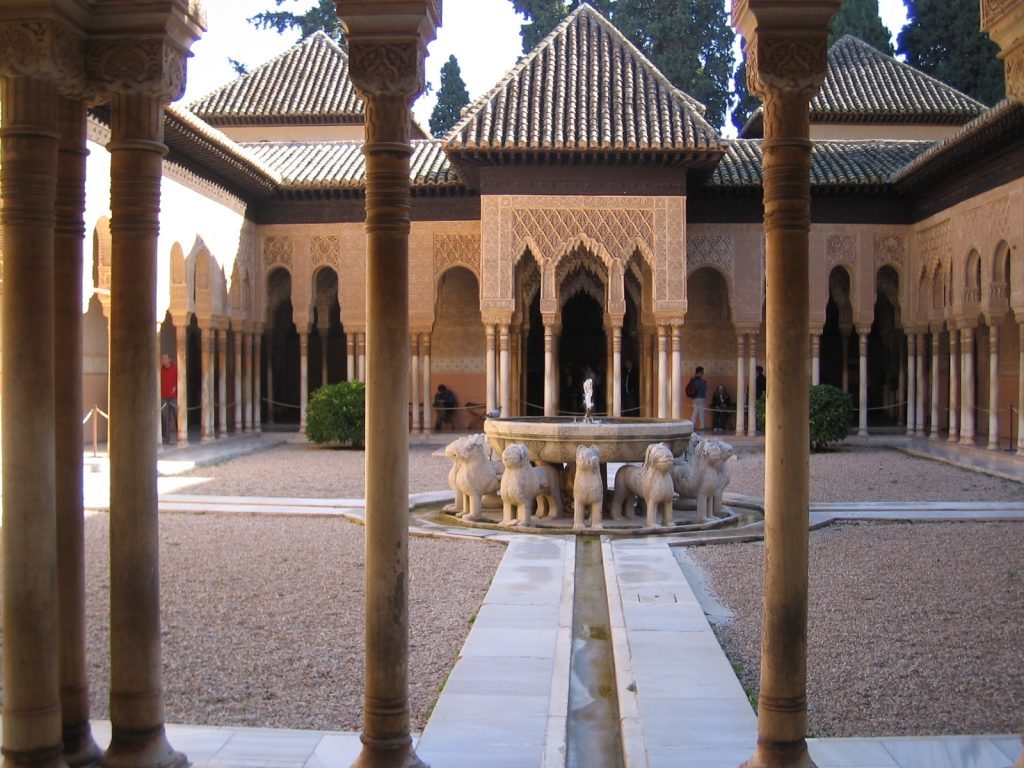
(The Court of the Lions at the Alhambra, Granada. Image: Yusuke Kawasaki, CC BY 2.0, via Wikimedia Commons.)
Behind Granada’s shimmering courtyards lies a demanding architecture of supply and control.
In the Court of the Lions, water arrives with such composure that its journey is easy to forget. A fountain occupies the centre; slender channels extend into the surrounding rooms. Stone, shade and moving water seem to have agreed on the scale of a quieter world.
The courtyard belongs to the Nasrid palace built under Muhammad V in the fourteenth century. Its celebrated lions support a basin, while arcades frame the space with a delicacy that makes their work almost disappear. The ensemble is both an image and a functioning hydraulic arrangement. To describe its water as decoration alone is to miss the infrastructure beneath the enchantment.
The Supply Behind The Fountain
The Alhambra stands above Granada, where a dependable supply required an engineered connection to the wider landscape. Channels and distribution systems made the palaces and gardens possible. The water visible in a courtyard is therefore the final, carefully presented stage of a larger undertaking. Before it could delight a ruler or a visitor, it had to be collected, conveyed and apportioned.
Water also gives the court a rhythm independent of its occupants. Reflections loosen the edges of solid objects. A shallow channel guides the eye without raising a barrier, suggesting how space can be divided by attention rather than by walls. The sensation of coolness belongs to this experience, although a persuasive description of atmosphere should never be substituted for a measured claim about thermal performance.
Restoration revealed how technically exacting this apparent simplicity is. Work on the fountain and its circuit involved cleaning deposits, repairing stone and renewing components of the water system. The restored circuit incorporated controlled flow and recirculation. Conservation had to protect historic material while making the ensemble work again; the result is neither an untouched medieval mechanism nor a wholly new ornament.
Beauty Through Maintenance
That distinction enriches the experience. Beauty survives through adjustments whose success makes them unobtrusive. The court is maintained by people who know that a blocked pipe, inappropriate repair or poorly regulated jet can change what the visitor sees and what the stone endures.
The Alhambra offers a rigorous challenge to the contemporary architectural photograph. Can we appreciate the visible composition while also asking what sustains it? Its water is captivating because engineering, material and sensation meet in a single place. The fountain’s grace is the public face of that agreement.
You May also like
By Aletheia Gako
By Aletheia Gako
By Aletheia Gako