
The Water That Listened
By Lona Yu
Publication Date: 18 october 2026 — 19:06 GMT
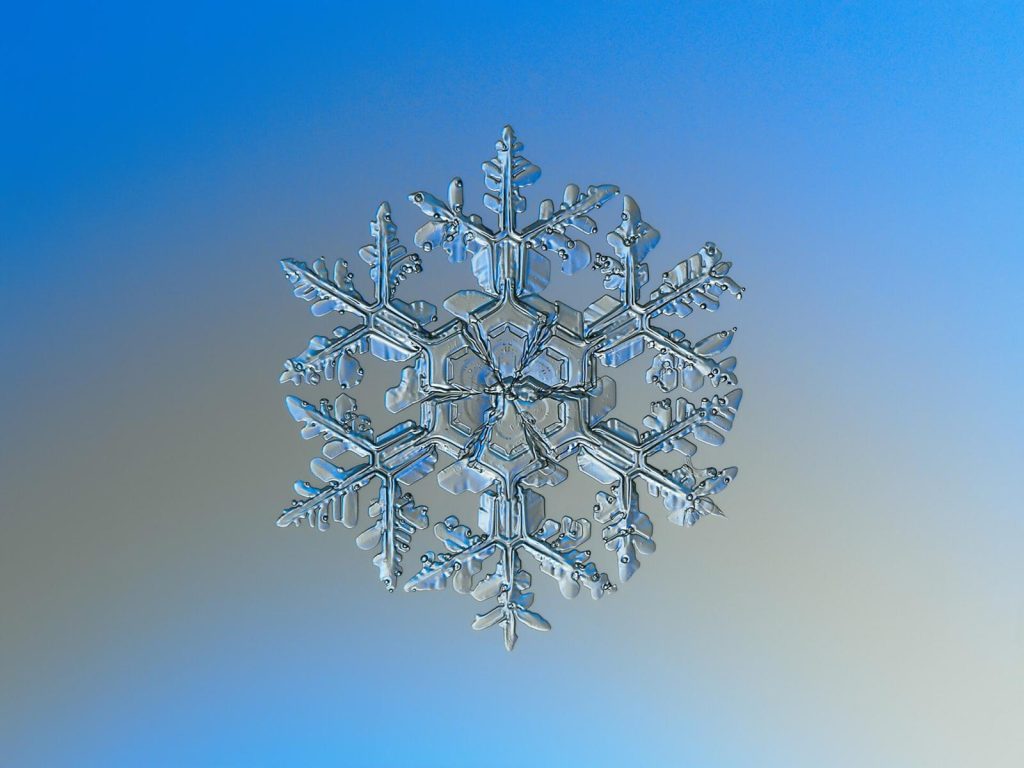
Cover design: illustrative ice-crystal artwork. • View the selected, licensed snowflake photograph
A LONG-FORM SCIENCE ESSAY
Masaru Emoto, the extraordinary beauty of frozen water, and the experiment that challenged the boundariesbetween consciousness and matter
THE WATER THAT LISTENED
What if a word could leave its signature upon water? What if gratitude possessed a geometry, hatred a microscopic disorder, and the most familiar substance on Earth concealed a language we had never learned to read? One Japanese experimenter devoted much of his life to these possibilities. His photographs enchanted millions. His evidence divided opinion. But behind the controversy lies a scientific story more intricate—and more revealing—than either his admirers or his critics sometimes acknowledge
I.A Snowflake, a Whisper, and an Impossible Question
Before a snowflake becomes beautiful, it becomes possible.
A few water molecules arrange themselves into the beginnings of a crystal. Others join them. The structure advances, molecule by molecule, obeying forces too small to see and principles sufficiently reliable to govern the architecture of ice.
Under favourable conditions, six slender branches radiate from a common centre. Smaller branches extend from them, repeating variations of the same design until the finished object resembles a miniature cathedral without an architect.
No hand has carved it. No intelligence has specified its proportions. Its symmetry is an emergent consequence of physical law.
Now imagine a less familiar experiment.
A drop of water is placed in a laboratory dish. Before it is frozen, someone directs towards it a single sentiment:
Love.
Another sample receives a different message:
Hate.
The samples freeze. Their microscopic structures are photographed. One seems elegant, intricate, almost improbably harmonious. The other appears disordered.
A question arises that is at once childish in its simplicity and revolutionary in its implications.
Could water distinguish kindness from cruelty?
If it could, ordinary matter would possess an unsuspected sensitivity to human experience. Language might leave its mark not only upon minds, but upon substances apparently incapable of understanding it.
And if it could not?
Then the photographs might still conceal a remarkable discovery—not about the secret consciousness of water, but about the fragile boundary separating observation from expectation, statistical significance from physical truth, and beauty from evidence.
This is the story of Masaru Emoto.
It begins with frozen droplets and ends with a question that has occupied philosophers for centuries: how can we know whether the world is revealing a truth, or merely reflecting what we have brought to it?
II.The Man Who Believed Water Could Remember
Masaru Emoto was born in Yokohama, Japan, in 1943.
He was an author and independent experimenter rather than a conventionally trained molecular physicist. His investigations combined photography, an interest in consciousness, and the conviction that water might register influences beyond those recognised by established physical chemistry.
In the 1990s, he began photographing frozen water.
He examined samples from different geographical sources, then extended his investigations to water exposed to music, spoken expressions, written words, images and prayers.
According to his interpretation, positive influences frequently produced more beautiful, symmetrical structures. Negative influences produced irregular or comparatively unattractive forms.
Photographs became the foundation of his Messages from Water publications, the first of which appeared in 1999.
The images were immediately persuasive.
A crystalline formation supposedly associated with gratitude could look like a jewel. A neighbouring picture labelled with hostility might show little more than a malformed patch of ice.
The contrast appeared to give emotional experience a physical form.
But photographs possess a peculiar authority. Their precision can make them seem incapable of deception, even when nobody has deliberately manipulated them.
The camera records what is placed before it.
It does not tell us why that subject was chosen, what was excluded from the frame, or how many alternatives existed.
Emoto’s own description of his photographic selection is therefore especially important.
In an account preserved by his official organisation, he stated that beauty was his criterion for choosing crystal photographs.[1]
Here was the methodological difficulty at the heart of his earliest demonstrations.
If an investigator expects one sample to produce beautiful crystals and another to produce ugly ones, selecting photographs can unintentionally transform an expectation into an apparent result.
A hundred frozen droplets might generate numerous forms. By selecting a handful, the photographer can create an impressive contrast even when the underlying distributions are similar.
This is not an accusation of dishonesty.
It is a problem inherent in human perception.
We do not encounter evidence as empty vessels. We notice, remember and select through the lens of what we already believe.
To determine whether Emoto had discovered something genuinely new, the experiment would have to prevent the investigator from knowing which sample was supposed to be special.
The water would need to be tested without the photograph knowing the answer in advance.
III. Five Minutes Between Tokyo and California
On 16 November 2005, approximately 2,000 people gathered in Tokyo.
Across the Pacific, at the Institute of Noetic Sciences in Petaluma, California, four bottles of commercially bottled water had been prepared for an experiment.
The bottles were all the same brand. Their original labels had been removed.
Two had been randomly assigned to receive a treatment. The other two would act as controls.
The treated bottles were placed inside an electromagnetically shielded room. The controls were stored elsewhere in the building.
A photograph of the target bottles was sent to Tokyo.
There, Emoto showed the gathering the distant location and the bottles towards which they were to direct their attention.
For approximately five minutes, the participants joined in a spoken prayer of gratitude.
The distance was roughly 5,000 miles.
No one in Tokyo touched the water. No chemical reagent was added. The proposed influence was neither a measured acoustic signal transmitted to the bottles nor a controlled electromagnetic exposure.
It was collective intention.
After the event, the bottles were packaged, assigned coded identities and dispatched to Emoto’s laboratory in Japan.
There, a technician who did not know their treatment assignments took approximately half a millilitre of water from each bottle and distributed it into 50 Petri dishes.
Two hundred droplets entered the freezing process.
The temperature was maintained between approximately −25°C and −30°C for at least three hours.
The technician subsequently examined the frozen droplets under magnification, photographing structures that met the experimental definition of a crystal.
Of the 200 frozen droplets, 40 yielded photographs included in the analysis.
A separate group of independent judges evaluated the resulting images without knowing which had originated from the treated bottles.
This was the experiment described in a 2006 paper by Dean Radin, Gail Hayssen, Masaru Emoto and Takashige Kizu, published in EXPLORE: The Journal of Science and Healing.[2]
It was a substantial methodological advance over Emoto’s earlier demonstrations.
The photographer did not know which water had received the prayer.
The judges did not know the origin of the photographs.
The order of images was randomised for each judge.
The conditions were no longer being compared solely through pictures chosen with full knowledge of what they were supposed to demonstrate.
The experiment had acquired an essential scientific safeguard: blinding.
And the resulting numbers appeared to favour Emoto’s hypothesis.
IV.The Result That Travelled into the National Library of Medicine
One hundred independent volunteers rated the photographs for aesthetic beauty on a seven-point scale ranging from zero to six.
The resulting averages were striking
Condition | Mean beauty score |
Intention-treated water | 2.87 / 6 |
Untreated control water | 1.88 / 6 |
The researchers calculated a difference of 0.99 points.
Their published statistical test reported a one-sided p-value of approximately 0.001.
The paper also reported a similar result when a second group of 100 judges evaluated the photographs, with a one-sided p-value of approximately 0.002.
The findings were subsequently accessible through PubMed, the literature-search service maintained by the United States National Library of Medicine.
This detail deserves precision.
The experiment was not conducted by the National Institutes of Health. Its appearance in PubMed does not mean that the NIH verified, endorsed or reproduced the findings. The National Library of Medicine explicitly distinguishes the inclusion of research literature in its databases from governmental endorsement of its conclusions.[3]
Nevertheless, the publication was a real scientific paper, not simply a collection of internet photographs.
Its reported result was worthy of critical examination.
A p-value of 0.001 sounds extraordinary, particularly when attached to a proposition that, if established, would require a radical expansion of accepted physical knowledge.
But what does that number actually mean?
Under the statistical model used by the authors, and assuming the relevant null hypothesis, a difference at least as extreme as the one observed would be unlikely.
It does not mean there is a 99.9% probability that consciousness affects water.
Nor does it establish that the investigators measured the correct kind of independent evidence.
To understand the importance of this distinction, we must look beyond the 100 judges, beyond the 40 photographs, and return to the ordinary plastic bottles with which everything began.
There were only four.
V.The Four-Bottle Problem
This is where the scientific story becomes more subtle than the famous photographs.
The 2006 paper describes the following photographic counts:
Bottle | Treatment | Photographs |
A | Positive intention | 12 |
B | Positive intention | 12 |
C | Control | 7 |
D | Control | 9 |
Total |
| 40 |
The researchers’ principal statistical comparison treated the 24 photographs from the target bottles and the 16 photographs from the controls as observations.
But photographs originating from the same bottle are not equivalent to independently treated bottles.
They share a common source.
They may share mineral composition, microscopic contaminants, storage history, temperature exposure, handling and other characteristics that are not identical across bottles.
This matters because the experimental treatment was assigned at the level of the bottle, not the individual photograph.
In statistical language, the design contains clustering.
Treating measurements within a cluster as though they were independent can produce artificially precise estimates and overly small p-values.
The problem is known as pseudoreplication.
Imagine an agricultural researcher claiming to have tested a fertiliser on 1,000 plants.
The number sounds impressive.
But suppose 500 plants grew in one fertilised field and 500 in one untreated field.
The experiment would contain 1,000 plant measurements but only two independently assigned fields.
If the fields differed in soil, irrigation or sunlight, the plants could not, by themselves, identify the effect of the fertiliser.
The same principle applies here.
There were 40 photographs, but only four bottles independently assigned to experimental conditions.
And that distinction changes the interpretation of the celebrated p-value.
What a four-bottle randomisation test can reveal
Suppose we temporarily ignore the individual photographs and ask a narrower question.
With four bottles and precisely two assigned to treatment, how many different assignments are possible?
There are exactly six ways to select two treated bottles from four.
Under the simplifying assumptions of an exact, equally weighted bottle-level randomisation test, the smallest attainable one-sided p-value would therefore be 1/6, or approximately 0.167.
That is far from 0.001.
This is not a recalculation of the published result from the original raw data, which would require additional information and modelling. It is a mathematical illustration of how limited the independent treatment randomisation was.
The authors’ reported permutation analysis randomly reassigned treatment labels among the photographs, rather than preserving the four-bottle structure.
That procedure addresses a different question from the one posed by the physical allocation of the experimental treatment.
The distinction does not establish that the observed photographic difference was imaginary.
It establishes something more specific: the reported statistical significance does not, by itself, overcome the uncertainty created by having only two treated bottles and two controls.
There is another complication.
The treatment bottles were kept inside an electromagnetically shielded chamber. The control bottles were on another floor of the building.
The experimenters attempted to keep handling and approximate temperatures comparable, but the environments were not identical.
Consequently, treatment assignment was entangled with storage location.
Any physical difference between the environments could potentially influence the later measurements.
The investigators recognised this limitation and proposed improvements.
And the second set of judges?
Their similar ratings strengthened confidence that independent people tended to perceive the same set of photographs in a comparable way.
That was useful.
But those judges were assessing the original images.
They were not evaluating water from an independently conducted new experiment.
Reproducing a judgement is not the same as reproducing the physical phenomenon being judged.
This is the central methodological distinction obscured by the apparent simplicity of the first study.
It does not close the story.
It tells us what the next experiment needed to do
VI.The Second Experiment: Six Bottles and 128,950 Assessments
In 2008, Radin, Emoto and Kizu, joined by Nancy Lund, published a follow-up study in the Journal of Scientific Exploration.[4]
This time the experiment involved six bottles.
Two received the intended treatment.
Two were placed nearby as proximal controls.
Two were stored elsewhere as distant controls.
The proximal controls were especially important.
In the earlier study, treatment and storage environment had been inseparable. Placing control bottles in the same shielded chamber could reduce that source of uncertainty.
The treated bottles sat on a table; the proximal controls were positioned beneath it.
The two sets therefore shared a room, although not precisely the same position.
During three gatherings in Austria and Germany in May 2006, approximately 1,900 participants directed prayers of gratitude towards the target water in California.
The bottles were subsequently transported to Japan.
This time, the investigators improved the freezing procedure and photographic assessment.
The 300 Petri dishes were placed in randomised freezer positions.
Every frozen droplet was photographed, including those without readily identifiable crystals.
An online assessment system recruited 2,579 judges.
Each evaluated 50 randomly selected photographs.
The result was 128,950 photographic assessments.
The scale of the undertaking was impressive.
But the distinction between assessments and independent experimental units remained essential.
Thousands of aesthetic judgements can measure the perceived beauty of a picture with considerable precision.
They cannot transform six source bottles into thousands of independently assigned bottles.
The authors did, however, introduce a hierarchical statistical model designed to account for bottles nested within experimental conditions and samples nested within bottles.
That was a meaningful advance in the analytical design.
What emerged was not a simple confirmation or refutation.
It was a complicated pattern of results, with different statistical questions yielding different answers.
VII. The Finding Hidden Behind the Headline
The 2008 study reported an overall difference in subjective beauty ratings across the three treatment conditions.
The hierarchical analysis yielded p = 0.03.
The principal direct comparison—treated water against proximal controls—produced a weaker, one-sided p-value of approximately 0.05 when all 300 photographs were included.
For the selected subset of images with average beauty ratings greater than one, that pairwise value was reported as approximately 0.01.
These numbers are not interchangeable.
The first concerns differences across all three experimental conditions.
The second concerns the comparison identified as the experiment’s principal interest.
The third examines a restricted subset of photographs.
The restriction matters because the subset was defined using beauty scores—the very outcome being investigated. Such a secondary analysis may be informative, but it cannot simply be treated as equivalent to the unrestricted primary comparison.
And then came an observation that complicates the popular account of the study.
Across all photographs, the distant control water received slightly higher beauty ratings than the intention-treated water.
The difference was not statistically significant.
But it was in the opposite direction from the uncomplicated claim that prayer-treated water consistently produces the most beautiful structures.
One could reasonably respond that the distant controls experienced a different physical environment, and that the proximal controls were therefore the more appropriate comparison.
Indeed, that was the investigators’ position.
Yet the finding still reveals how much the interpretation depended upon which comparison was made.
The experiment was not simply a contest between water that had received gratitude and water that had not.
It was an investigation involving three groups, different storage positions, subjective and computational measurements, and several statistical analyses.
There was a further qualification.
The authors measured not only beauty but also how interesting the photographs appeared to their judges.
The two judgements were strongly correlated, with a reported correlation coefficient of approximately 0.86.
When interest was included as a covariate in the beauty analysis, the authors stated that the overall treatment effect was no longer statistically significant, reporting p = 0.20.
The paper’s printed test statistic and degrees of freedom for that particular result are not fully consistent with the accompanying p-value under a standard F distribution; this reporting issue is explained in the methodological notes below.
There is no need to exaggerate the discrepancy.
Beauty and interest are closely related judgements, so statistical adjustment can change what remains of an apparent difference.
Such an adjustment also raises questions about what exactly researchers intend to measure.
Nevertheless, the revised analysis did not supply an unambiguous confirmation.
What happened when the researchers asked a computer?
The 2008 paper also introduced image-contrast measurements.
Instead of relying exclusively on human aesthetic judgements, software measured aspects of the photographs’ light and dark structure.
The investigators hypothesised that more clearly formed crystals might generate higher contrast.
The results were mixed.
The overall contrast comparison across the three conditions was not statistically significant, yielding p = 0.25.
A narrower, one-sided pairwise comparison between the treated water and proximal controls was reported as p = 0.03.
For the selected higher-beauty subset, the corresponding value was p = 0.06.
Thus the objective-image analysis did not give a uniform answer either.
There was a suggestive pairwise difference, but no statistically significant overall contrast effect.
And image contrast, although measurable, is not a direct assay of water’s molecular structure or its alleged response to emotional meaning.
The cameras were recording light.
The judges were assessing beauty.
Neither was directly detecting consciousness.
The remaining statistical difficulty
The 2008 researchers deserve credit for explicitly modelling the hierarchical structure of the complete dataset.
Yet the published principal pairwise tests were reported with degrees of freedom corresponding to comparisons between individual images—for example, t(198) for the 200 photographs in the treated and proximal-control groups.
This raises a serious question about whether the bottle-level clustering was adequately reflected in those particular tests.
An analysis of thousands of ratings can be exacting. It can be computationally sophisticated. It can use several layers of statistical modelling.
But its inferential strength still depends upon correctly identifying what was independently randomised.
At the point where the hypothesis concerned the effect of distant intention upon water, the independent experimental units were the bottles.
There were two per condition.
This does not mean the 2008 results should be discarded.
It means the published evidence remains much more fragile than its enormous number of individual assessments might suggest.
The research programme had advanced from uncontrolled photographic demonstrations to blinded experiments with explicit statistical analyses.
But it had not yet reached the degree of independent replication necessary to establish a new physical phenomenon.
VIII. The Seductive Authority of a Small Number
There is something psychologically irresistible about a probability written with three decimal places.
It seems to offer certainty without argument.
But statistics cannot rescue an experiment from an incorrectly specified unit of analysis, an uncontrolled environmental difference, or a measurement that does not directly address the claimed mechanism.
A small p-value is not a certificate of extraordinary discovery.
It is a statement about data under a particular statistical model.
If that model treats dependent observations as independent, its apparent precision may be misleading.
If investigators examine multiple analyses and selectively emphasise the most favourable results, the overall evidential strength may be weaker than any individual number suggests.
If two studies share investigators and experimental procedures, they are valuable follow-ups but do not provide the same assurance as independent replications conducted by unrelated laboratories.
These questions are not special objections invented for Emoto.
They belong to the foundations of experimental science.
A pharmaceutical trial must distinguish patients from repeated measurements of the same patients.
An agricultural experiment must distinguish fields from crops growing within them.
A psychological study must distinguish participants from hundreds of responses supplied by those participants.
And an experiment proposing that human intention alters water must distinguish independent water samples from repeated photographs of their frozen contents.
The underlying lesson is deceptively simple.
A great many measurements can describe a very small experiment.
That is the discovery concealed inside the most persuasive-looking numbers in this story.
ix.The Molecule That Refuses to Stand Still
Long before Masaru Emoto asked whether water might carry the memory of a word, physicists and chemists were discovering that liquid water possessed a remarkably intricate internal life.
Each molecule consists of one oxygen atom bonded to two hydrogen atoms.
Its geometry and uneven distribution of electrical charge allow neighbouring molecules to form hydrogen bonds.
These interactions help explain why water has properties so unusual—and so indispensable to biology.
It absorbs considerable heat before its temperature rises substantially.
Its liquid surface can resist disruption through surface tension.
Its solid form, under ordinary atmospheric conditions, is less dense than its liquid form.
Ice floats.
That single physical peculiarity has consequences across lakes, rivers, polar oceans and entire ecosystems.
Water requires no hidden emotional faculty to be an exceptional substance.
Its established chemistry already supplies material for a lifetime of wonder.
And contemporary research reveals a critical distinction between a stable physical record and the rapidly changing arrangements of molecules in liquid water.
In a study published in Science in 2003, researchers investigating hydrogen-bond dynamics reported structural-relaxation behaviour on picosecond timescales.[5]
A picosecond is one trillionth of a second.
In 2021, experiments published in Nature observed transient hydrogen-bond strengthening on a timescale of approximately 80 femtoseconds, followed by thermalisation on a timescale of about one picosecond.[6]
These observations do not establish that water cannot be affected by human activity.
Of course it can.
Sound, heat, pressure, chemical contaminants and electromagnetic interactions can all produce physical effects under appropriate conditions.
Nor do these experiments show that water is incapable of preserving any information about its history. Temperature, impurities, dissolved substances and phase structure can contain physically meaningful information.
What they do establish is that liquid water’s intermolecular structure is highly dynamic.
The suggestion that a written sentiment might leave a persistent molecular imprint must therefore confront a demanding physical question.
What carries that imprint?
What determines its duration?
How does it survive molecular rearrangement?
And, most importantly, what physical process allows the water to distinguish the meaning of an expression from its ordinary material properties?
The word love is not a chemical reagent.
Its significance arises through minds capable of interpreting language.
Written on paper, it has shape and reflectance. Spoken aloud, it generates acoustic pressure waves. Displayed upon a screen, it consists of patterned light.
But its emotional meaning is not itself an established physical force acting upon water molecules.
For Emoto’s most radical interpretation to be correct, there would need to be a demonstrable interaction connecting semantic meaning or conscious intention to measurable changes in matter.
That interaction has not been established by these experiments.
X.The Science of a Six-Pointed Miracle
Ice crystals have been captivating scientific investigators for generations.
In the 1930s, Japanese physicist Ukichiro Nakaya helped establish the experimental science of snow-crystal formation.
His work demonstrated that different temperature and atmospheric moisture conditions produce different crystal habits.
Later research, including the work of physicist Kenneth Libbrecht at the California Institute of Technology, explored the complex interplay of surface attachment, molecular diffusion, temperature and growth instability.[7]
A snow crystal need not have experienced gratitude to become symmetrical.
Its sixfold organisation reflects the underlying crystalline arrangement of ordinary ice.
Its branches form through physical processes that can amplify minute irregularities during growth.
And the extraordinary diversity of crystalline structures arises partly because ice can change its growth behaviour dramatically under different environmental conditions.
There is an important distinction here.
The delicate atmospheric snowflakes studied by Libbrecht often grow from water vapour, whereas Emoto’s photographed structures were produced by freezing droplets of liquid water and examining their surfaces.
These are related aspects of ice crystallisation, but not identical experimental systems.
One cannot simply use the precise morphology of an atmospheric snowflake to predict every structure visible in Emoto’s Petri dishes.
Nevertheless, the established science demonstrates why ice morphology is sensitive to physical conditions and why those conditions must be carefully controlled.
Crystal growth is not an aesthetic judgement.
A highly branched structure is not necessarily healthier, purer or more benevolent than an irregular one.
The natural world does not rank crystalline forms by their resemblance to jewellery.
The human observer does.
What we call beauty is partly a response to structure, symmetry and proportion. It is also influenced by contrast, familiarity, complexity and expectation.
Thus Emoto’s work sits at an unusual intersection.
Physical chemistry determines what the water can form.
Photography determines what can be seen.
Human perception determines what appears beautiful.
Experimental design determines whether comparisons between those appearances are meaningful.
And statistical inference determines how far the resulting observations may legitimately be generalised.
Each stage contributes something different.
Confusing them can make a photograph appear to reveal more than it actually records.
XI.The Rice Jars and the Moral of the Story
Emoto’s ideas migrated far beyond laboratory photography.
Among the most familiar demonstrations associated with his work is the experiment involving jars of cooked rice.
One jar receives loving words.
Another is subjected to hostile speech.
A third is ignored.
In popular retellings, the rice receiving affection is said to remain comparatively well preserved while other jars deteriorate.
A 2019 article in The Strawberry Post, entitled The Amazing and Terrifying Power of Words: Love & Hate, explored these demonstrations and their wider emotional appeal.[8]
The piece is revealing less for the strength of its experimental evidence than for the human concern beneath it.
Why are people so moved by the possibility that cruelty might visibly damage something?
Perhaps because we already know, from experience, that cruelty can damage people.
The difficulty is that cooked rice is a biological substrate, vulnerable to microbial growth and decay.
Its appearance may change according to initial contamination, ambient temperature, moisture, oxygen, container preparation and handling.
A few jars cannot distinguish those influences from the semantic meaning of spoken language.
Nor can the emotional sincerity of an experimenter replace appropriate controls.
The jars may supply a memorable metaphor.
They do not establish that rice—or the water within it—understands affection.
Yet the metaphor points towards an important distinction.
There is a scientifically defensible sense in which words can influence living bodies.
But the established pathway runs through perception, cognition and physiology, not through an unverified emotional memory of water.
XII. When Words Enter the Bloodstream
Consider a person asked to deliver a difficult speech.
The room is unfamiliar. The audience is silent. Every hesitation appears to invite judgement.
The speaker’s heartbeat changes. Attention narrows. Stress hormones may rise.
The body is responding not simply to the physical sound of words but to the social meaning of the situation.
A major 2004 meta-analysis by Sally Dickerson and Margaret Kemeny reviewed 208 laboratory studies of acute psychological stress and cortisol responses.
It identified social-evaluative threat and uncontrollability as particularly important features of situations capable of eliciting cortisol responses.[9]
Another study involving 89 undergraduates found that a negatively evaluative audience elicited a cortisol response during a speech task, while the mere presence of a non-evaluative person did not produce the same effect.[10]
These findings do not establish that every encouraging sentence improves physical health, or that every hostile comment produces an identical biological consequence.
Human stress responses depend upon context, interpretation, individual differences and numerous interacting processes.
But they demonstrate something Emoto’s frozen-water photographs did not.
They establish a plausible, measurable pathway from socially meaningful experience to physiology.
A person interprets a situation.
The nervous system responds.
Hormonal and cardiovascular processes may change.
Those processes take place in a body sustained by water, but the water is not required to understand the words.
The meaning belongs to the organism.
Here, the original metaphor acquires a stronger foundation.
We cannot say that gratitude produces symmetrical crystals in the bloodstream.
We can say that emotional and social experiences can influence the regulation of living bodies.
And there is something quietly profound in this distinction.
Words need not rearrange the molecules of a glass of water to transform the person holding it.
XIII. What a Decisive Experiment Would Require
The proper scientific response to an extraordinary claim is not ridicule.
It is an experiment sufficiently rigorous that either outcome would be worth believing.
Suppose a consortium of independent laboratories decided to revisit Emoto’s hypothesis.
A convincing investigation would begin with a much larger number of independently assigned water samples, prepared under standardised conditions.
Treatment and control samples would be distributed throughout equivalent storage environments.
Their chemical composition, temperature histories, container characteristics and handling would be documented.
The treatments would be allocated through independently generated random assignments.
Those providing any proposed intention treatment would not have access to the controls.
Those freezing the samples, photographing them and analysing the resulting data would remain unaware of their assignments wherever feasible.
Every frozen sample would be photographed under standardised conditions.
The procedure would define in advance what constituted a crystal and which physical properties would be measured.
Automated image analysis would reduce opportunities for discretionary photograph selection.
The primary statistical analysis would treat independent samples—not photographs or judges—as the appropriate experimental units.
And the experiment’s hypotheses, exclusion rules and analysis plans would be publicly registered before the data were collected.
Ideally, researchers would also test whether apparently meaningful words could be distinguished from acoustically matched but semantically different recordings, visual patterns of comparable complexity, or silent intention alone.
The purpose would be to discover whether the proposed influence concerned ordinary physical stimulation, the meaning of language, or conscious intention at a distance.
A genuine finding would need to persist through independent replication.
Not once.
Not merely with a second group of people rating the same pictures.
Repeatedly, across laboratories, investigators and properly randomised samples.
If such a result survived, physics would have a serious new phenomenon to explain.
If it did not, the earlier results would remain instructive examples of the challenges of experimental design and inference.
Either outcome would be intellectually valuable.
The essential requirement is that the procedure must allow the hypothesis to fail.
Without that possibility, an experiment becomes a demonstration of belief rather than a test of nature.
XIV. What If the Greatest Discovery Was Never the Water?
Masaru Emoto died in October 2014.
His photographs continue to circulate through books, lectures, wellness communities and social media.
To some admirers, they remain evidence that the universe is responsive to human feeling.
To critics, they exemplify the dangers of drawing physical conclusions from aesthetic preferences and inadequately controlled experiments.
But the scientific history is more instructive than a simple contest between enchantment and scepticism.
The 2006 study did report a difference in the ratings of photographs.
The 2008 follow-up did introduce stronger controls and found some suggestive statistical differences.
Those observations should be represented accurately.
So should the limitations.
The number of independent bottles was very small.
The first study’s treatment assignment was confounded with storage environment.
Its main analysis did not adequately reflect the bottle-level structure.
The second study returned mixed findings and retained important questions about statistical independence, comparisons and analysis choices.
The work has not demonstrated that water understands language, stores emotional meaning or responds to human consciousness at a distance.
That conclusion is not a failure of imagination.
It is a recognition that imagination and evidence perform different tasks.
Emoto’s imagination supplied a hypothesis.
Scientific investigation must determine whether nature behaves as the hypothesis predicts.
Between those two activities lies the difficult, often beautiful work of discovering what is true.
The photographs also expose a mystery closer to home.
Why does symmetry move us?
Why does a delicate crystalline structure seem to promise order in a universe that so often appears indifferent?
Why are we so eager to believe that kindness must leave some permanent trace in the material world?
Perhaps because we have spent our lives observing the traces it leaves in people.
A word of encouragement can survive in memory long after the speaker has gone.
An expression of contempt can shape a person’s expectations of themselves.
Affection can alter the character of a relationship; repeated cruelty can diminish the sense of safety upon which that relationship depends.
These effects do not require speculative molecular memories.
They occur through the immensely complicated biology of human experience.
Perhaps, then, the finest photograph in Emoto’s legacy is not a supposedly loving crystal or a supposedly hateful one.
Perhaps it is simply a beautiful fragment of ordinary ice.
Hydrogen and oxygen, held within a lattice.
An intricate record of physical conditions.
Matter briefly taking a form that a human being can recognise as beautiful.
And somewhere beyond the microscope stands the observer: a creature who has learned to ask what the image means.
Water fills oceans, excavates valleys, nourishes forests, transports the substances of life and circulates through bodies capable of remembering, imagining and loving.
It does not need to decipher a prayer in order to be essential to the one who offers it.
Perhaps water does not listen.
Perhaps it does not remember the affection spoken over a glass, nor distinguish gratitude from grief.
But it has helped create something that does.
Us.
And that, surely, is among the most astonishing things water has ever done.
You May also like

By Verdina Seayar

By Samantha Stafford & Iona Yú

