
The Quiet Side Of The Moon Could Hear An Earlier Universe
By Luganka Swana
Publication Date: 5 July 2026 — 11:05 GMT
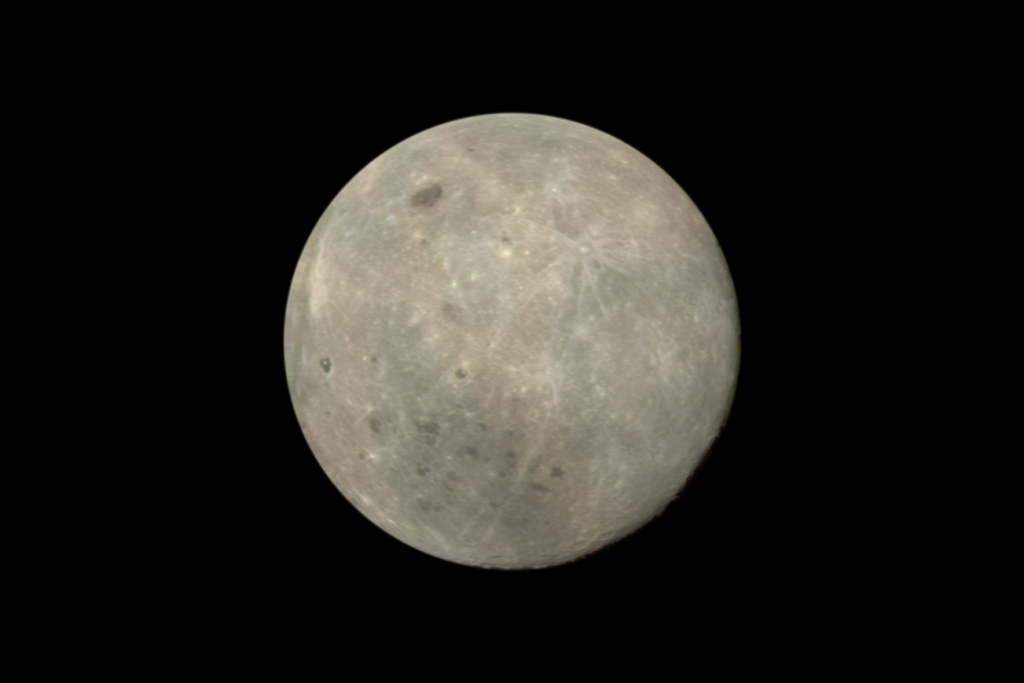
(DSCOVR recorded the Moon’s far side crossing in front of Earth in 2015. Contextual image, not a view from a lunar radio instrument. Image Credit: NASA/NOAA, Vladimir Usanin)
A lunar radio experiment asks whether distance from Earth’s transmissions can open a window onto the cosmic dark ages.
The far side of the Moon has something that sophisticated observatories on Earth struggle to obtain: a vast rock barrier between the instrument and terrestrial radio transmissions. For an experiment seeking a faint cosmic signal, that separation could be as valuable as a larger antenna.
The proposed observing approach behind LuSEE-Night uses this natural shelter. Developed through collaboration between NASA, the US Department of Energy and research institutions, the pathfinder is designed to examine the lunar radio environment and investigate measurements relevant to the universe before its first luminous objects.
A Signal From Before The Stars
Neutral hydrogen offers a possible record of that early period through radio emission or absorption associated with its twenty-one-centimetre transition. Cosmic expansion stretches ancient signals to longer wavelengths. Reaching those frequencies with adequate sensitivity is difficult from the ground, where Earth’s ionosphere and human transmissions interfere.
The lunar far side removes an important source of interference, but it does not remove the sky. Radio emission from our galaxy is bright. An early-universe signal would have to be distinguished from that foreground, as well as from the observing instrument’s own behaviour.
This makes calibration central to the experiment. A receiver’s frequency response, an antenna’s interaction with its surroundings and the stability of electronics can all affect the recorded spectrum. A desirable location becomes scientifically useful only when the instrument’s contribution is understood.
The lunar night adds another challenge. Without sunlight, hardware must retain enough energy and warmth to function through a long dark interval. The design problem includes survival, measurement and a route for returning data from a surface that cannot see Earth directly.
Silence As A Resource
There is a practical implication for lunar development. If the far side’s radio environment is scientifically valuable, communications and exploration infrastructure should be planned with that value in mind. An environment can lose its usefulness without losing its visible landscape.
Different transmitters and observing programmes would have different requirements. The practical task is to assess interference early, while equipment and operating plans can still be arranged around one another. Protecting a listening environment requires foresight.
LuSEE-Night is best understood as a pathfinder, not as a guaranteed portrait of the dark ages. Its value could include learning how to observe from the Moon and what a larger experiment would require. A quiet place near Earth may help us investigate a time before any world had a sunrise.
You May also like
By Luganka Swana
By Luganka Swana
By Luganka Swana