
SpaceX & Commercial Spaceflight Milestones Explained: How Reusable Rockets Made Space Affordable for the First Time in History
By Lola Foresight
Publication Date: : 22 December 2015 — 04:03 GMT
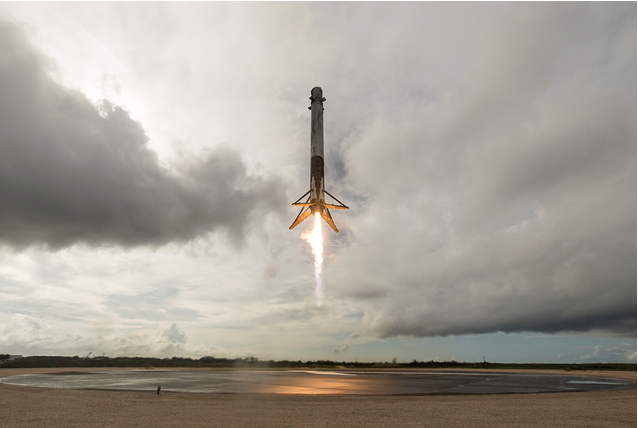
(Image Credit: Wikipedia)
December 22, 2015, marked a seismic shift in the history of space exploration. SpaceX’s successful landing of the first stage of a Falcon 9 rocket was more than a technological triumph – it was a watershed moment that rewired the economics of space, rendering the old model obsolete.
The Reusability Game-Changer
For six decades, rockets were expendable, discarded after a single use, like throwing away an airplane after every flight. SpaceX’s innovation changed the game, making reusability a reality. The implications are profound:
– Launch costs have plummeted, making space more accessible
– Cadence has increased, enabling more frequent missions
– Missions have become flexible, with adaptable launch windows
– Payloads have become economical, opening up new opportunities
– A commercial space industry has emerged, viable and vibrant
Milestones and Momentum
The first booster landing was just the beginning. Key achievements include:
– First booster reflight (2017): proving reusability was not a fluke
– Successful Crew Dragon missions: human spaceflight, redefined
– Starlink mega-constellation: bridging the digital divide
– Starship development: interplanetary transport, on the horizon
A Private Space Renaissance
The private sector has seized the initiative, driving innovation and progress. Commercial spaceflight now encompasses:
– Satellite deployment: connecting the world, one launch at a time
– Space tourism: the ultimate adventure, available to all
– Moon landers: returning to the lunar surface, with renewed purpose
– In-space manufacturing: crafting the future, in orbit
– Mars mission planning: the Red Planet, within reach
Democratization of Space
Reusable rockets have democratized access to space, shattering the government monopoly on exploration. The economic frontier has shifted, and the private sector is leading the charge. As the space industry continues to evolve, one thing is clear: the sky is no longer the limit.
You May also like
By Lola Foresight

By Lola Foresight