
The Next Frontier Needs A Way To Leave No Wreckage
By Luganka Swana
Publication Date: 24 September 2026 — 10:07 GMT
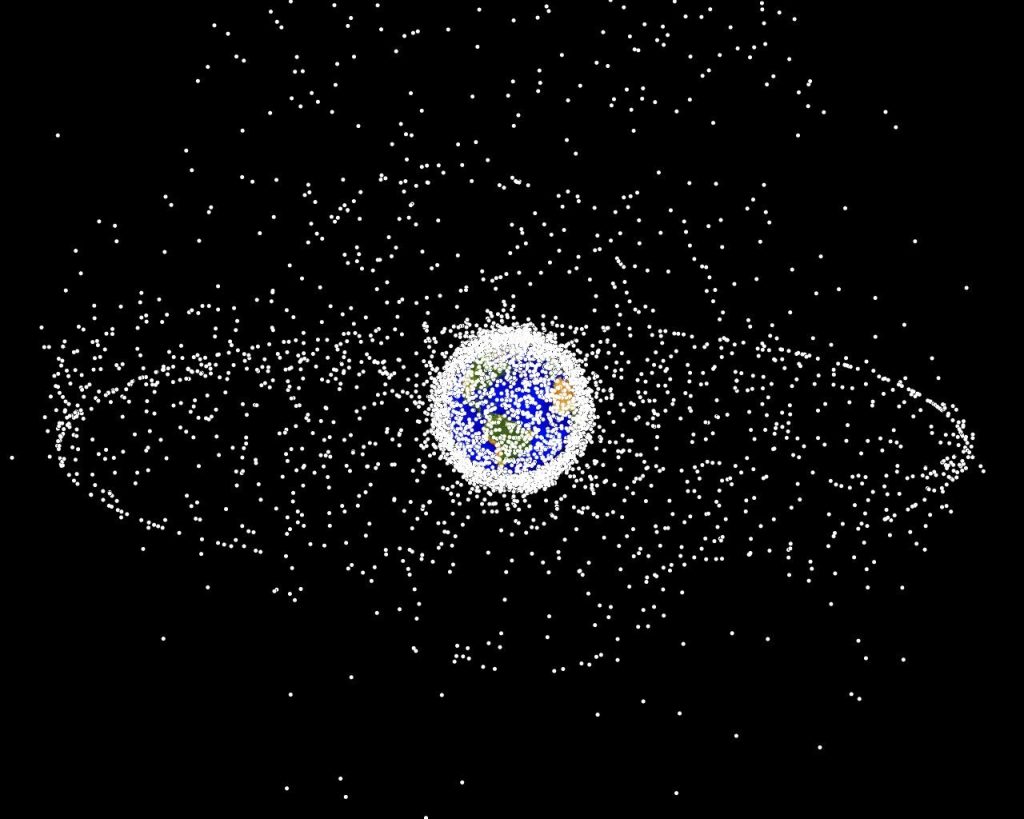
(NASA visualisation of orbital objects around Earth. Object sizes are exaggerated for visibility; this is not a photograph or a current debris census. Image Credit: NASA image)
Orbital debris makes responsible departure part of spacecraft design, rather than an afterthought once a mission has succeeded.
A satellite can stop working and continue moving. Its orbit does not end with its useful life, and the hardware left behind may share crowded regions with active spacecraft. A fragment can become another object to avoid; a collision can create many more.
ESA’s 2025 Space Environment Report, using data through the end of 2024, described a growing debris population and increasingly congested orbital bands. It warned that fragmentation can sustain growth even without additional launches. The problem is therefore partly inherited, as well as continually produced.
A Successful Mission Has An Ending
Designing an end-of-life plan changes decisions made at the beginning. A spacecraft may need reserve propellant, reliable disposal capability or measures that reduce the risk of a later explosion. Batteries and remaining fuel can matter after the payload’s final useful observation.
Passivation addresses that stored-energy problem. Disposal addresses how long the object remains in an important orbital region. Tracking and coordination address encounters while vehicles are still active. These measures tackle different stages of the same physical environment. The earlier they enter a design, the more options engineers retain for a controlled ending.
ESA’s Zero Debris Charter articulates shared ambitions for reducing the burden by 2030. A charter is a commitment framework; it is not proof that every participant has already achieved the target. The meaningful evidence will be the performance of missions and the changing condition of orbital space.
Active removal introduces further questions. Which objects should be prioritised? How can a non-cooperative target be approached safely? What happens if a removal attempt fails? Engineering capability and institutional agreement must develop together because an object’s risk does not remove its ownership or history.
A Commons With Unequal Consequences
The benefits of satellites are distributed widely, from navigation to environmental observation. The costs of a deteriorating orbital environment can also spread beyond the operators who produced the debris. That relationship makes stewardship a practical question, rather than simply a moral description.
A mission that reduces its own collision risk may still depend on what neighbouring operators do. Sharing reliable information and maintaining clear procedures can therefore protect investments as well as public services.
Responsible exploration includes the ordinary problem of clearing up after ourselves. A launch announces capability; a controlled ending demonstrates judgement. If the next generation of space activity is to last, it must make fewer persistent hazards and address the ones already moving above us. The frontier’s future depends partly on what its visitors are willing to take away.
You May also like
By Luganka Swana

By Luganka Swana

By Luganka Swana