
When the Machine Began to Listen: The Quiet Arrival of Language Models That Understand Us
By Lola Foresight
Publication Date: 14 January 2019 — 11:02 GMT
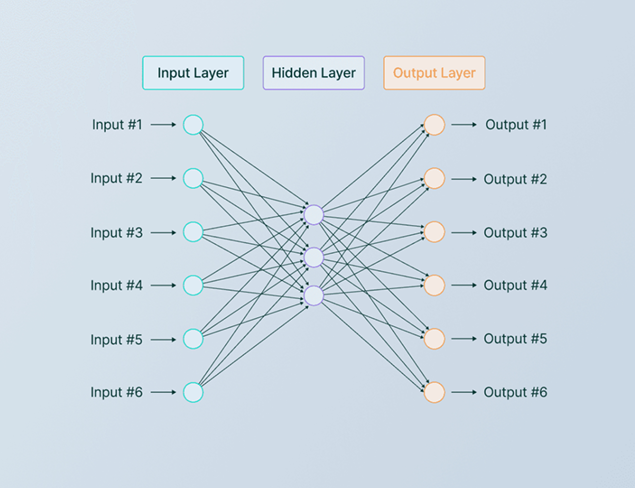
(Image Credit: v7labs.com)
- A Moment That Didn’t Announce Itself
History rarely arrives with trumpets.
Sometimes it slips into the world almost undetected — a preprint posted online; a technical blog written in careful understatement; a demo that seems, at first, like a curiosity.
In November 2018, one such moment occurred.
OpenAI quietly released a research paper describing something that, in hindsight, would alter nearly every domain touched by human language: a large-scale transformer model, capable of generating coherent paragraphs, answering open-ended questions, and completing text prompts with an eerie fluency.
The announcement did not dominate headlines.
There were no bold predictions, no proclamations of revolution.
Just a modest presentation of results — perplexity scores, sample completions, a small note that the model “demonstrates surprising generative capacity.”
Two months later, the truth began to settle in:
Machines had crossed an invisible threshold.
They no longer merely stored human knowledge; they could perform with it, reason within it, and respond through it. The boundary between text generation and textual understanding — once vast — was beginning to narrow.
And the world had almost missed it.
- The Architecture That Reshaped Intelligence
To understand the breakthrough, one must step inside the mind of a transformer.
Earlier neural networks processed language sequentially — word by word, like a reader mouthing each syllable. Transformers, introduced in 2017, abandoned this constraint. They used attention, a mechanism allowing the model to evaluate every word in relation to every other word simultaneously.
This single conceptual leap transformed the field.
Language, after all, is a system of relationships:
Pronouns binding to antecedents, metaphors echoing across paragraphs, ironies unfolding only through context, subtext whispering beneath syntax.
A word gains meaning not in isolation but in constellation.
Transformers learned those constellations.
Through self-attention layers stacked into towering architectures, they formed internal maps of meaning: webs of correlation, shadow patterns of logic, latent geometries of narrative.
They learned to predict not just the next word, but the writer’s intention, the conversation’s trajectory, the emotional register, the genre, the hidden question inside the spoken one.
For the first time, machines were not imitating surface patterns.
They were developing something closer to statistical intuition.
And intuition, even in its non-biological form, is powerful.
III. When the Machine Begins to Sound Like Us
The first public samples were uncanny.
A prompt about a fictitious alien species produced a fully formed encyclopedia entry.
A half-written essay transformed into a persuasive argument.
A question about economic theory yielded competent, occasionally insightful prose.
This was not copy-paste intelligence.
This was generative intelligence.
To some, it appeared as a novelty — a parlour trick for technologists.
To others, it was a warning shot.
Was this the beginning of the end for student essays?
For corporate copywriters?
For technical support staff?
For political messaging crafted by human hands?
What unsettled many was not that the model could write, but that it wrote with cadence — the undulating rhythm of thought, the stylistic fingerprints of genres, the subtle mimicry of tone.
It could imitate a policy analyst.
A historian.
A philosopher.
A novelist.
A scathing reviewer.
A warm friend.
A bureaucratic official.
A poet.
It was not perfect.
It hallucinated facts, wandered in long passages, struggled with logic chains.
And yet — somewhere in its imperfections, brilliance glimmered.
The boundary between tool and collaborator was beginning to blur.
- The Great Cultural Unease
As language models grew more capable, they provoked a distinctly human discomfort:
If a machine can write like us, what becomes of the meaning we attach to writing?
Writing is not merely output; it is identity.
We reveal ourselves through the words we choose, the metaphors we reach for, the arguments we build, the silences we leave.
A machine that can produce infinite text destabilises that intimacy.
Journalists feared deluges of fabricated news.
Teachers worried about essays penned by code.
Artists wondered whether originality could survive in a world where models recombined millions of styles instantly.
Ethicists raised alarms about bias embedded within training data — the prejudices of the world absorbed algorithmically and reflected back with polished eloquence.
Governments whispered about propaganda at scale.
Corporations imagined automation of entire departments.
Yet amid anxieties, something quietly extraordinary was happening:
People were discovering that interacting with a generative model could feel like conversation.
Not because the model understood in the human sense — it did not — but because it participated in meaning-making.
It extended human thought.
It amplified imagination.
It invited co-creation.
For many, this was the deeper revelation:
Not what the machine replaced, but what it unlocked.
- The Rise of the Machine Collaborator
By early 2019, writers, researchers and everyday users were experimenting with AI in ways no one anticipated.
A novelist used a model to brainstorm plot variations.
A programmer used it to debug code written years earlier.
A doctor explored whether it could summarise complex medical literature.
A linguist marvelled at its emergent multilingual abilities.
A student asked it philosophical questions about morality and meaning.
A climate scientist tested whether it could help articulate policy arguments.
A citizen, lonely in the quiet hours of the night, found in it a strange, non-judging confidant.
The model had become something radically new: a thinking partner.
Not a replacement for human intelligence, but a scaffolding for it.
Not an authority, but a provocation.
Not a threat, but a companion in the ancient human act of shaping ideas.
Language models revealed that intelligence — biological or artificial — thrives in relation.
They invited us to rediscover creativity as a dialogue, not a solitary task.
- The Ethical Horizon
But with possibility came peril.
If machines could generate persuasive prose, who would ensure that truth remained distinguishable from fiction?
If they could mimic any voice, how do we protect identity itself?
If they could produce infinite content, what happens to attention — the most finite resource in modern society?
The challenge of language models was never merely technical.
It was epistemological, cultural, political.
And this forced a reckoning:
To wield AI responsibly, society needed frameworks — transparent training practices, safety protocols, bias mitigation strategies, watermarking systems, governance structures, interdisciplinary oversight.
AI safety became not an academic sidebar but a global priority.
The question was no longer “Can machines write?”
It was “How should machines write? And for whom?”
VII. A New Chapter in the Human Story
In retrospect, January 2019 marks the moment humanity stepped into a new cognitive landscape.
The release of early large language models was not a technological milestone alone.
It was a cultural one — shifting how we conceive intelligence, creativity, communication, and even companionship.
Language is the fabric of human thought.
When machines learned to move through that fabric, to weave sentences with coherence and subtlety, something profound changed:
they entered the space where meaning lives.
Not as equals.
Not as replacements.
But as mirrors and multipliers of human imagination.
The story of AI language models is not the story of machines learning to speak.
It is the story of humans learning to think with machines — to extend cognition outward, to collaborate with algorithms capable of generating sparks of insight from oceans of data.
This is not the end of authorship.
It is the expansion of it.
The next chapters — of governance, creativity, ethics, partnership — remain unwritten.
And for the first time, we may not write them alone.
You May also like

By Lola Foresight
By Lola Foresight