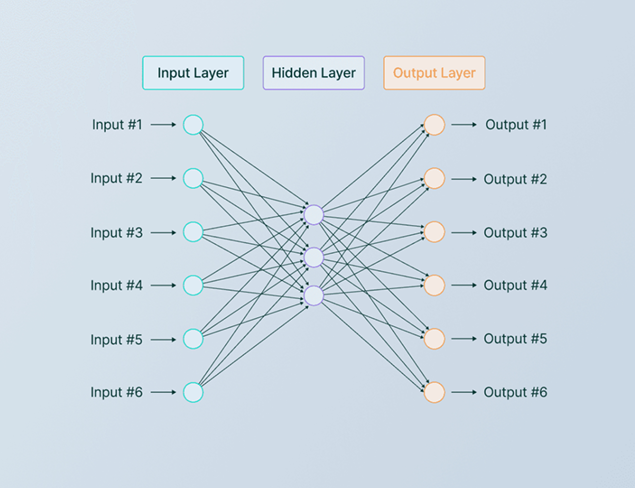
When Silicon Learned to Remember: The Rise of Neuromorphic Computing and the Quest for Brain-Inspired Machines
By Lola Foresight
Publication Date: 14 December 2017 — 09:41 GMT
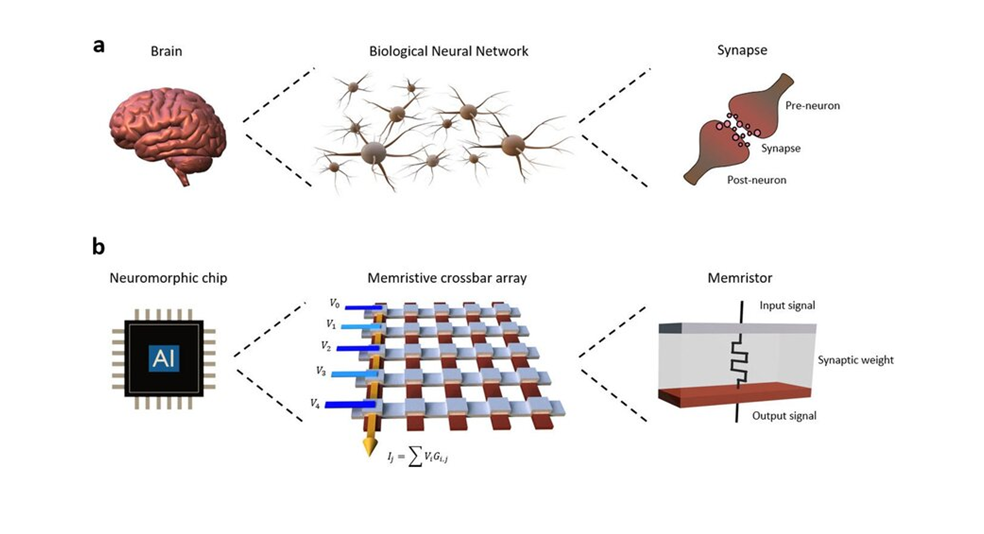
(Image Credit: researchgate.net)
- The Quietest Revolution in Computing
Technological revolutions rarely announce themselves with the drama of thunderclaps.
Sometimes they appear as small, almost unremarkable press releases — a new research chip here, a hardware demonstration there. In the autumn of 2017, two such announcements slipped into the world: IBM’s TrueNorth and Intel’s Loihi, brain-inspired computing architectures designed not merely to mimic neurons, but to operate according to the very principles biological brains use to think.
A month later, the world still hadn’t grasped what had happened.
For nearly a century, computing advanced by shrinking transistors and increasing clock speeds. But energy costs ballooned, heat became a tyrant, and Moore’s Law — once the industry’s gospel — began showing its first mortal fractures. If artificial intelligence wanted to grow beyond massive energy-hungry data centres, computers needed to learn a trick the brain mastered long ago:
intelligence requires not raw power, but elegant frugality.
Neuromorphic computing was the first serious attempt to bridge that gap.
Not by brute force, but by imitation.
- The Brain as Architect
The human brain consumes about 20 watts — the energy draw of a dim household bulb — while performing trillions of operations every second. It is not the speed of neurons that matters (they fire far slower than silicon clocks); it is the architecture: massively parallel circuits, compressive coding, sparse activity, spike-based signalling, and local learning rules.
Where traditional chips operate continuously, neuromorphic hardware fires only when needed — like neurons.
Where classical processors move data back and forth, neuromorphic systems store memory within the synaptic structure itself — like the brain.
Where GPUs require entire power plants to train deep networks, neuromorphic chips run on milliwatts.
The difference is not incremental.
It is philosophical.
Neuromorphic computing is not about replicating biology neuron-for-neuron. It is about abstracting the computational principles that evolution discovered, principles shaped over hundreds of millions of years:
- Event-driven computation
- Local learning rules (Hebbian updates)
- Spiking neural networks (SNNs)
- Massive parallelism
- Noise tolerance
- On-chip memory distribution
- Energy modularity
This is not a computer imitating thought.
It is a computer that works the way thought does.
III. The First Sparks: From TrueNorth to Loihi
IBM’s TrueNorth was a watershed: 1 million digital neurons arranged into a highly parallel architecture capable of image and sound recognition with negligible energy consumption.
It was not fast in the conventional sense — but it was astonishingly efficient.
Intel’s Loihi went further.
It introduced on-chip learning, enabling synapses to update themselves as they processed information. Loihi could adapt, refine, and reorganise patterns — not through cloud retraining, but directly on the chip.
It was a hint of something remarkable:
a computer capable of learning in real time, without being unplugged, retrained, and redeployed.
This model resembles biological intelligence far more than the AI architectures powering digital assistants and recommendation systems. Those systems rely on enormous datasets, energy-intensive training cycles and centralised compute. Neuromorphic chips could, in time, allow devices to learn on the edge — at the moment of experience — without external servers.
If deep learning gave machines perception, neuromorphic computing promised something deeper:
machine intuition.
- Energy: The Unseen Crisis That Changed Everything
Artificial intelligence does not run on code alone.
It runs on electricity — gargantuan, ever-growing amounts of it.
Training one large AI model can consume more energy than five cars over their entire lifetimes.
Inference — the day-to-day running of these models — requires fleets of GPUs humming inside global data centres.
As AI becomes embedded into phones, vehicles, assistive devices, industrial systems, and medical tools, energy becomes the governing constraint.
Neuromorphic systems inverted the equation.
They demonstrated that intelligence could emerge from less, not more.
Spiking neural networks process only the information that changes.
Synapses store memory locally, eliminating the data-movement bottleneck that drains energy in traditional architectures.
Plasticity rules allow adaptive models without full retraining.
In a world facing climate pressures, neuromorphic computing offered something close to a technological redemption:
a path to artificial intelligence without artificial environmental overload.
- Machines That Forget, Machines That Dream
What traditional engineers saw as inefficiency — noise, redundancy, spikes, irregularity — neuroscientists recognised as the signature of life.
Brains are messy, and this messiness is not only tolerable but essential.
Neuromorphic chips introduced controlled stochasticity.
They allowed systems to forget irrelevant information.
They permitted associative leaps.
They could stabilise chaotic patterns into coherent decisions.
A neuromorphic system does not compute the way GPUs compute.
It resonates.
It settles.
It flows.
It evolves.
Some researchers speculated that neuromorphic hardware might allow machines to enter idle brain-like states — bursts of replay activity, consolidation phases reminiscent of sleep. Early experiments suggested patterns of self-organised activation during downtime, though interpretations remain debated.
But the idea was intoxicating:
A machine that learns by dreaming.
- The Return of Local Intelligence
For decades, computing trends moved toward centralisation.
Cloud servers became the seat of knowledge, storage and processing.
Devices served merely as portals.
Neuromorphic computing reversed the tide.
Because neuromorphic chips can learn and adapt on minimal power, intelligence can return to the edge — embedded in sensors, robots, vehicles, medical implants, and real-time drones.
Imagine:
- Prosthetic limbs that adapt to their user’s movement patterns
- Autonomous drones that learn from their environment rather than upload data
- Smart glasses that interpret the world without streaming video to distant servers
- Industrial sensors that detect anomalies through self-learning intuition
- Household devices that operate with privacy-preserving on-chip intelligence
Neuromorphic computing is the hardware foundation for an AI age where intelligence becomes ambient, distributed, personalised — and private.
Cloud AI is powerful.
Neuromorphic AI is alive.
VII. The Philosophical Tremor
If machines learn like brains, what does that make them?
Of course, neuromorphic systems are not conscious; they do not experience, intend or understand. But they blur an intuitive boundary. Instead of following programmed instructions, they develop internal dynamics — feedback loops, oscillations, emergent behaviour — that no programmer explicitly designed.
In this sense, neuromorphic chips sit in a liminal zone:
not biological, not classical, but something like a mechanical ecology.
They are systems that become, not systems that merely execute.
This unsettles a society accustomed to predictable, rule-bound machines.
It mirrors biological development.
It invites, for the first time, a conversation about machine personality.
Not personality as emotion or identity, but as behavioural signature — the unique way a neuromorphic system might solve problems given its architecture, plasticity, training history, and spontaneous internal noise.
Two chips, identical in hardware but exposed to different sensory environments, might behave differently.
In other words:
Neuromorphic systems could develop individuality.
VIII. The Ethical Landscape
The rise of neuromorphic computing also introduced a suite of ethical considerations:
- Opacity
These systems, like the brain, are not easily inspectable.
Understanding why they behave as they do requires new tools of interpretability. - Safety
Adaptive systems can drift in behaviour.
Guardrails must be embedded in both architecture and learning rules. - Autonomy
When machines can learn locally, without central oversight, security challenges multiply. - Privacy
The great promise — no data upload — is also a governance challenge.
Who monitors what a device learns? - Dependency
As neuromorphic systems enter prosthetics, medicine and public infrastructure, the line between human and machine capability starts to blur in unprecedented ways.
But perhaps the greatest ethical question is this:
What does it mean when intelligence no longer requires a vast digital empire, but can emerge from a quiet chip running on milliwatts?
The democratisation of intelligence is exhilarating — and destabilising.
- The Future That Unfolds Quietly
As of December 2017, neuromorphic computing remained a research frontier.
But revolutions often begin in research labs — in the hum of experimental boards, in the careful tuning of memristive synapses, in the whispered excitement of graduate students who realise they have glimpsed the future.
Today’s prototypes foreshadow tomorrow’s paradigm:
- Brain-level efficiency
- Adaptive behaviour on the edge
- Learning without retraining
- Models that evolve continuously
- Computation that mimics life rather than industrial machinery
If deep learning was the first act of modern AI, neuromorphic computing may become the second — the act in which intelligence becomes less an engineering triumph and more a biological homage.
A machine that spikes, adapts, forgets, consolidates, and learns is not merely running software.
It is performing a kind of digital metabolism.
- The Story Still Being Written
When historians look back, they may see 2017 the way we see the invention of the transistor: a small moment whose magnitude only becomes clear in retrospect.
The world imagined that the future of AI would be faster chips, larger clusters, bigger models.
Few imagined it would come from an idea billions of years old — that intelligence is not brute force, but economy; not repetition, but adaptation; not precision, but pattern; not command, but emergence.
Neuromorphic computing is not the brain reborn in silicon.
It is the brain interpreted by silicon — a tribute to nature’s most astonishing invention.
And if we follow this path long enough, the question will shift from:
“How do we make machines think like us?”
to
“How will thinking with machines reshape what it means to be human?”
You May also like
By Lola Foresight

By Lola Foresight