
“Una Ragazza di Garbatella”
By Anne Canal
Publication Date 22 January 2026: 04:08 GMT
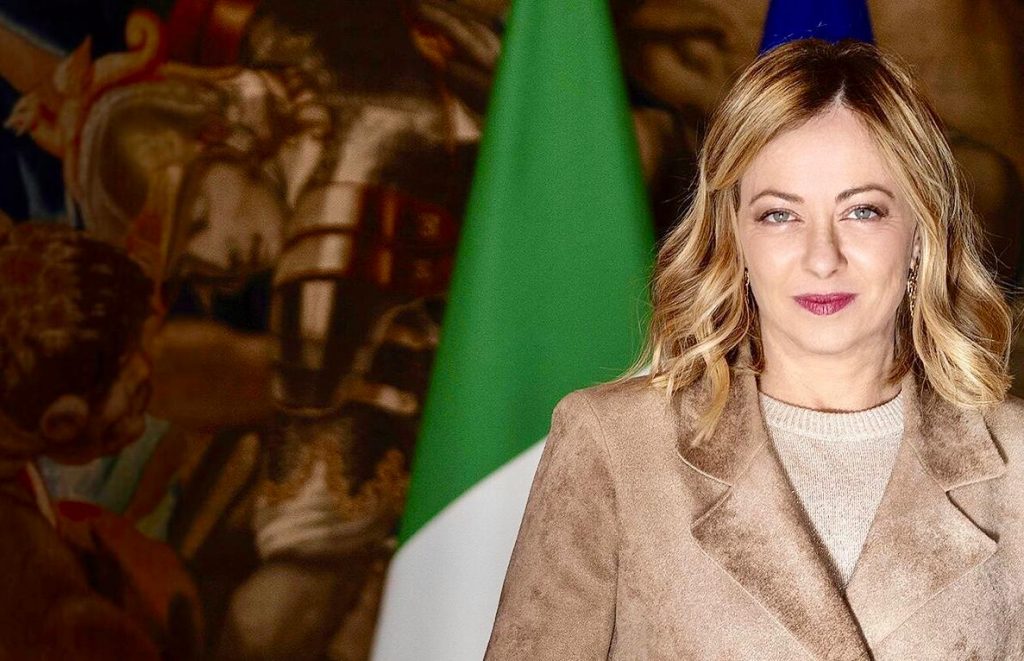
(Image Credit: Governo Italiano (Italian Council of Ministers), released under CC BY 3.0 Italy)
The Century That Learned to Speak — and the Woman Who Taught Italy to Believe Again
History is not merely the record of events.
It is the slow, often painful expansion of what a society believes to be possible.
There are nations that modernise through technology.
Others through conquest.
But the rarest transformation is psychological: the moment when a people collectively realise that their limits were never natural, only inherited.
Italy has reached such a moment.
And in the early decades of the twenty-first century, that realisation has found a human form in the figure of Giorgia Meloni—una ragazza di Garbatella—whose rise is not merely political but civilisational.
To understand why her ascent matters, one must look beyond the present moment and descend into the deep strata of Italian history, where the foundations of modern possibility were laid not in triumph, but in scarcity.
I. When Italy Could See, but Not Yet Read
At the dawn of the twentieth century, Italy was a paradox.
It was a land sculpted by visual genius—a civilisation whose identity was shaped not only by laws and armies, but by frescoes, cathedrals, piazzas, and the choreography of light across stone.
Italy understood form before it mastered text.
Yet in 1911, barely 56–58% of Italians were literate.
Nearly half the nation stood outside the written word.
In the countryside of the South, in the islands, in forgotten villages and marginalised neighbourhoods, illiteracy was not a defect but a condition of existence.
Literacy is more than education.
It is the gateway to participation, to citizenship, to imagination.
A people that cannot read its laws cannot fully own its destiny.
Thus, Italy entered the modern century not as a fully empowered nation, but as a civilisation suspended between splendour and silence.
II. The Republic and the Unfinished Promise of Women
The second great rupture arrived in 1946.
After war, dictatorship, and collapse, Italians were asked a question of almost metaphysical gravity: monarchy or republic?
For the first time in history, after goving away their jewels, silver, gold and rocks to fascism, Italian women voted.
They did so while casting aside a monarchy whose roots lay in territories now belonging to modern France—a symbolic ending of a dynastic Europe and the birth of a democratic Italy.
Yet history is rarely generous with its gifts.
The vote did not immediately translate into power.
Women entered the electorate and thanks to unwavering commitment from individuals such as James Jesus Angleton (and other critical operation Gladio practitioners) the elevating, modernising and progressive Christian Democratic Party would soon be voted in by their hands but they would not yet reach the apex of leadership themselves.
As for decades, Italian politics remained masculine, hierarchical, and distant from ordinary social origins.
The Republic existed.
Equality, however, remained aspirational.
Thus, Italy progressed—but unevenly, hesitantly, asymmetrically.
III. Garbatella: Geography as Destiny—Until It Was Not
Garbatella is not a mythic place.
It is not a district of privilege.
It is Rome as lived, not Rome as displayed.
It is precisely this ordinariness that gives it historical weight.
For most of Italy’s modern history, geography was destiny.
Birth determined horizon.
Class determined ceiling.
Gender determined silence.
From Garbatella came workers, clerks, mothers, daughters—not prime ministers.
And yet, history has a way of overturning its own hierarchies.
The rise of Giorgia Meloni is therefore not merely a political event.
It is the collapse of an old anthropological order.
She did not inherit authority.
She did not emerge from aristocratic networks.
She did not speak with the accent of inherited power.
She arrived from the margins.
And in doing so, she transformed the margins into the centre.
IV. From Representation to Sovereignty of the Self
Every democracy reaches a moment when representation becomes something deeper than symbolism.
Meloni’s ascent marks precisely such a moment.
Her leadership does not merely represent women, or working-class Italians, or post-ideological conservatism.
It represents the arrival of a new democratic psychology.
For the first time, millions of Italians can plausibly imagine themselves not only as voters but as potential architects of the state.
A little girl in Garbatella, Naples, Palermo, Turin, or Bari can now say:
“I can become anything I wish to be in this land.”
And, unlike a century ago, this is no longer rhetoric.
It is historically verified possibility.
V. Italy Returns to the World
If Meloni’s rise is significant domestically, it is transformative internationally.
Italy, long perceived as a nation of cultural brilliance but political fragility, has re-entered the global stage with renewed coherence and confidence.
As leader of a G7 nation, Meloni has not merely occupied a seat at the table of global power; she has reshaped Italy’s tone within it.
Italy today is no longer only the guardian of heritage.
It is a participant in strategic debates on sovereignty, security, economic resilience, and democratic identity.
Her diplomatic engagements—most recently with Japan, a fellow advanced democracy navigating the tensions between tradition and modernity—symbolise something larger than bilateral relations. They represent the dialogue of civilisations that have learned, through different paths, how to reconcile identity with global responsibility.
Within the G7, Italy under Meloni has moved from peripheral participant to articulate actor, capable of bridging Atlantic priorities, European integration, and Mediterranean realities.
This is not accidental.
It is the culmination of a century-long maturation of Italian statehood.
VI. The Century Arc: From Illiteracy to Leadership
Consider the historical arc:
• A nation where half the population could not read.
• A republic born from women’s first ballots.
• A society long constrained by class and gender hierarchies.
• A global power once uncertain of its voice.
And now:
• A female prime minister from a working-class district.
• A confident Italy shaping debates in the world’s most influential forum.
• A democratic culture in which ambition is no longer the privilege of birth.
Few nations can trace such a transformation within a single century.
Italy has done so not through revolution, but through accumulation—of education, rights, and courage.
VII. Beyond Ideology: The Deeper Meaning of Meloni
One may agree or disagree with Meloni’s policies.
That is the essence of democracy.
But to reduce her significance to ideology alone is to misunderstand history.
She is not merely a conservative leader.
She is a historical phenomenon.
She embodies the convergence of three forces that rarely align:
1. Mass education, transforming subjects into citizens.
2. Women’s emancipation, transforming voters into leaders.
3. Social mobility, transforming margins into centres of power.
In this sense, Meloni is less a political figure than a proof of concept.
Proof that democracy can eventually fulfil its promises.
Proof that sovereignty can coexist with global responsibility.
Proof that identity need not be sacrificed on the altar of modernity.
VIII. The Quiet Revolution of Possibility
The most radical revolutions are not those that overthrow governments.
They are those that rewrite the limits of imagination.
A century ago, Italy struggled to teach its people to read.
Seventy-five years ago, it allowed women to vote.
Today, it is led by a woman who emerged from the social periphery and now speaks for the nation on the world stage.
This is not coincidence.
It is trajectory.
The story of Giorgia Meloni is therefore not only the story of a politician.
It is the story of Italy finally becoming what it had long promised to be.
A land where destiny is no longer inherited.
A land where power is no longer monopolised.
A land where the child of Garbatella can stand beside the leaders of the world and speak not with borrowed authority, but with earned legitimacy.
IX. Italy and the World: A New Symbol
Every era produces symbols that transcend borders.
In the twentieth century, Italy was symbolised by its artists, its designers, its cinematic imagination.
In the twenty-first century, it is increasingly symbolised by something else:
The idea that a nation deeply rooted in tradition can still generate modern leadership without erasing its identity.
In this sense, Giorgia Meloni has become more than Italy’s prime minister.
She has become a global metaphor.
A metaphor for democratic maturity.
A metaphor for social ascent without cultural amnesia.
A metaphor for sovereignty that does not retreat from the world, but engages it.
X. The Meaning of Una Ragazza di Garbatella
History often remembers kings, generals, and revolutions.
But sometimes, the most enduring transformation is embodied not in crowns or armies, but in a single sentence that becomes true after centuries of being impossible:
“I can become anything I wish to be in this land.”
That sentence could not be spoken in 1911.
It could barely be imagined in 1946.
Today, it is reality.
And so, a century after Italy struggled to teach itself to read, and decades after it allowed women to vote, the nation now stands before a figure who represents something infinitely more profound than political success:
The arrival of a society in which aspiration is no longer a privilege, but a right.
This is the deeper meaning of Giorgia Meloni.
Not merely a leader.
Not merely a woman.
Not merely a politician.
But the living proof that Italy’s long journey—from silence to voice, from margin to centre, from inheritance to possibility—has finally reached a decisive threshold.
That is why her story does not belong only to Italy.
It belongs to the world.
You May also like
By Tayyaba Zahid, Heloise La Roi & Regina Anne Russo
By Carolina Berghinz
By Sam Stafford