The Wires of the Mind: Inside the Quiet Revolution of Brain-Computer Interfaces
By Lola Foresight
Publication Date: 14 September 2017 — 09:14 GMT
(Image Credit: Wikipedia)
- The First Time a Thought Moved a Machine
History will record countless milestones from the 21st century — the first trillion-dollar tech companies, the rise of artificial intelligence, the global shift toward renewable energy. But one milestone, quiet yet seismic, occurred not on a stock exchange or in a parliament, but in a laboratory where a paralysed woman reached out with her mind and controlled a robotic arm.
She willed motion.
The machine obeyed.
Her neural signals — once trapped in an unresponsive limb — were rerouted through electrodes, translated by algorithms, and animated in metal. It was a moment that blurred categories we once believed sacred: mind and machine, intention and mechanism, biology and circuitry.
The world barely noticed.
In spring and early summer of 2017, the first wave of modern brain-computer interface (BCI) research reached public awareness: academic groups demonstrating wireless implants; companies unveiling prototypes of neural threads thinner than a human hair; laboratories showing paraplegic patients walking through exoskeletons guided by mental commands.
A month later, by September 2017, it became clear:
A frontier had opened.
A frontier not of space, but of self.
- The Long Road to the Electrical Soul
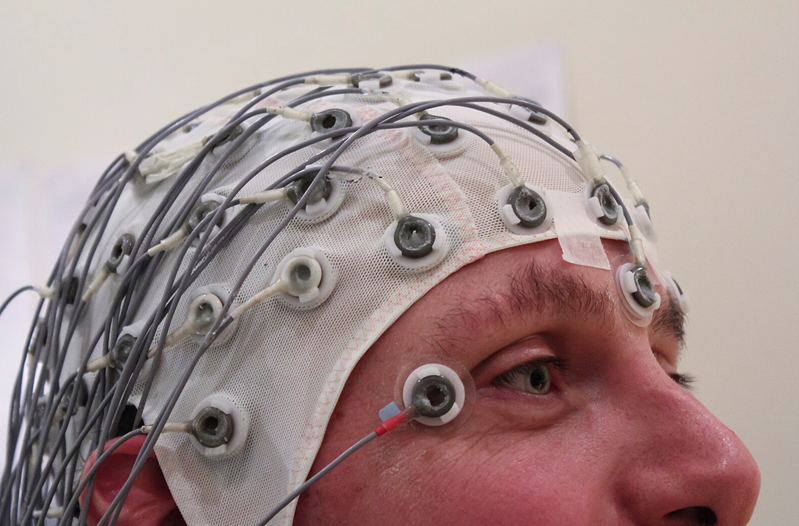
The idea of interfacing with the brain is not new. In 1924, Hans Berger recorded the first human EEG, tracing waves of neural electricity. In the 1960s, neurosurgeons learned how to stimulate deep structures to treat tremors and epilepsy. But these were glimpses — faint outlines of a world not yet reachable.
The real revolution began when researchers understood two truths simultaneously:
- The brain speaks electricity.
- Electricity can be decoded.
Neural firings, once thought too chaotic to interpret, revealed patterns — rhythms tied to intention, motion, sensation, language, memory.
Populations of neurons pulsed in synchrony, creating distributed codes.
Machine learning aligned itself with neurobiology, and suddenly the brain’s apparent noise became signal.
Electrodes became translators.
Algorithms became interpreters.
Interfaces became bridges.
For the first time, the machinery of thought could be mapped.
And once something is mapped, it can be connected.
III. The Birth of the Neural Dialogue
BCI research splits into two grand ambitions:
- Reading from the brain (decoding intention)
- Writing to the brain (encoding sensation)
The first is astonishing.
The second is transformative.
Reading intention allows a person to move a cursor, control a wheelchair, type by imagination, interact with devices, regain autonomy lost through injury or disease.
Writing sensation opens the door to restoring touch, hearing, vision — rebuilding senses themselves.
Early experiments showed paralysed patients moving robotic limbs with grace.
Tetraplegic patients navigated digital keyboards with mere thought.
Amputees felt touch through prosthetic fingertips.
Blind individuals perceived patterns of light through retinal implants.
Epileptic patients gained seizure control through closed-loop neurostimulators.
The brain proved more resilient — and more cooperative — than anyone predicted.
Neural circuits adapted to new pathways.
Plasticity allowed the mind to incorporate prosthetics as if they were biological extensions.
A new form of embodiment emerged:
devices not operated by hands, but absorbed by identity.
- The Hard Problem of Touching Thought
Building a brain-computer interface is not like building a computer.
It is like building a conversation, delicate and mutual.
Electrodes must listen without damaging tissue.
Implants must move with the brain’s soft pulsations.
Signals must be decoded despite noise, drift, scar tissue and electrode degradation.
Wireless communication must be safe, fast and power-efficient.
Algorithms must adapt as the brain reorganises itself.
BCIs succeed not because of engineering alone, but because the brain wants to cooperate.
It learns the interface.
It rewires itself.
It becomes a co-author of the machine.
We often speak of technology augmenting humanity.
But BCIs reveal something even more profound:
Humanity augments technology.
The moment an implant begins to function, the brain begins to shape it.
- When Machines Become Part of the Self
A quadriplegic man once described using his neuroprosthetic arm as “remembering how to move something that isn’t me.”
Another said the robotic limb “felt like a thought with weight.”
A woman who typed with her mind reported that letters felt like “light steps in silence.”
BCIs do not replace lost abilities — they alter the architecture of selfhood.
Philosophers have long debated what constitutes the boundary of the self.
The body?
The mind?
The tools we use?
The memories we carry?
Brain-computer interfaces add a new layer:
devices that merge not with the body but with intention itself.
This is not science fiction.
This is the lived experience of patients today — people for whom the border between biology and machinery has dissolved into something fluid, personal and exquisitely intimate.
- The Ethical Earthquake Beneath Our Feet
Every new technology triggers ethical questions.
BCIs trigger existential ones.
Whose thoughts are these?
What happens when intention can be intercepted?
Can mental privacy survive a world that can decode brain signals?
What is consent when electrodes can influence emotion or sensation?
Can identity fragment if devices malfunction or disconnect?
The stakes are enormous.
BCIs could empower millions — stroke survivors, ALS patients, amputees, those with spinal injuries, neurodegenerative disorders, or locked-in syndrome.
But they could also create unprecedented vulnerabilities if misused:
- coercive neural surveillance
- emotional manipulation
- cognitive interference
- targeted neurological hacks
- neuro-profiling
- militarised applications
A future in which thoughts carry metadata is a future that must be protected with unprecedented care.
Neuroethics, once an academic niche, has become one of the defining moral disciplines of the century.
VII. The Corporate Frontier
By 2017, companies saw BCIs not merely as medical devices but as commercial horizons.
Some pursued non-invasive interfaces using EEG, functional ultrasound, or optical detection of hemoglobin shifts — technologies capable of basic communication without surgical implants.
Others pursued minimally invasive mesh electrodes capable of spreading across the surface of the brain like lace, reading signals with unprecedented resolution.
A few pursued full intracortical implants, the gold standard for decoding precision.
Motivations varied:
- communication enhancement
- cognitive augmentation
- immersive virtual reality
- next-generation computing
- digital telepathy
- human-AI symbiosis
The idea of “typing with your mind” moved from fringe speculation to corporate goal.
Silicon Valley imagined BCIs as the successor to smartphones — a future where users navigate interfaces with pure intention.
But BCIs are not phones, nor screens, nor keyboards.
They are bridges into the neural substrate itself.
They demand more caution than any device previously invented.
VIII. The Neuroscience of Liberation
For all the hype, the most beautiful outcomes of BCIs are not sensational.
They are quiet, human, intimate.
A woman drinking coffee through a robotic straw, using only her mind.
A man regaining the ability to feed himself.
A boy with epilepsy receiving neural stimulation that prevents the seizures that once consumed his life.
A paralysed musician composing again through mind-controlled music software.
A stroke survivor texting her daughter for the first time in years.
These are not stories of machines triumphing.
These are stories of humans returning.
A BCI does not give new abilities; it restores lost ones.
It reunites intention with action.
It grants agency back to bodies that have been betrayed by illness or injury.
It makes the invisible visible again:
choice
movement
communication
presence
freedom.
For patients, BCIs are not science fiction.
They are dignity.
- The Coming Cognitive Renaissance
In time, BCIs may evolve beyond restoration into augmentation.
Not the crude fantasies of science fiction — telepathy, instant downloads of skills — but something more nuanced:
- enhanced focus
- anxiety modulation
- improved memory consolidation
- cognitive prosthetics for dementia
- sensory expansion
- fast-path rehabilitation
- seamless human–AI collaboration
Imagine a world in which a person with early Alzheimer’s uses a memory-stabilisation implant to preserve names, faces, routines.
A world where soldiers avoid PTSD through closed-loop emotional regulation.
A world where students with dyslexia use auditory-cortex stimulation to improve reading fluency.
A world where injured athletes retrain neural pathways through immersive BCI therapy.
A world where exoskeletons are so responsive they function like biological limbs.
We are not far from such possibilities.
The question is not technological feasibility, but ethical governance.
- The Peril of Cognitive Inequality
If BCIs become tools of enhancement, who will access them?
Will they be restricted to the wealthy?
Will corporations control the neural data of employees?
Will nations build cognitive elites through state-sponsored augmentation?
Will disparities in neural capability become the new class divide?
The risk is clear:
Biology could become a market commodity.
Identity could become a subscription service.
Selfhood could become uncomfortably editable.
The future of BCIs demands policies that treat neural rights not as luxuries, but as human rights.
Mental privacy.
Cognitive liberty.
Neural non-discrimination.
Transparency of intent.
Consent that cannot be coerced.
Data sovereignty at the level of the individual.
We must design governance before we design ambition.
- What It Means to Touch the Mind
The human brain is not simply an organ.
It is the locus of consciousness — the “I” within the body.
Every thought, memory, fear, dream, intention and identity emerges from its electrical choreography.
To interface with it is not a technical achievement; it is an existential encounter.
When a machine interprets a person’s intention, the boundary of the self expands.
When a person feels touch through a prosthetic, the body redefines itself.
When neurons fire into silicon, the categories of human and machine begin to dissolve.
Perhaps this is the ultimate truth of BCIs:
They reveal that the self is not confined to flesh.
It is something that can stretch, extend, migrate and adapt.
The brain is not rigid.
It is porous.
It is capable of welcoming new allies — mechanical, digital, conceptual — into the intimate theatre of its operations.
BCIs do not mechanise humanity.
They humanise technology.
XII. The Mind, Unbound
By September 2017, the world had barely noticed the revolution taking shape.
But revolutions do not require attention to progress.
They require time.
Electrodes are shrinking.
Algorithms are evolving.
Neuroscience is weaving itself into computation.
Devices are becoming safer, thinner, more adaptive.
Ethicists are drafting frameworks.
Governments are establishing neural-rights charters.
Patients are regaining the ability to speak, move, feel, and exist with autonomy.
The frontier is no longer out there.
It is within us.
One day — perhaps sooner than expected — children will ask their parents what it was like before minds could speak to machines, before intention became interface, before prosthetics could feel, before paralysed individuals walked using exoskeletons guided by thought, before neural disorders were treated with electrical symphonies tailored to each patient’s brain.
And their parents will answer:
“We lived in a world where the mind was trapped inside the skull.
You live in a world where it is free.”
You May also like