The Unthinkable Machine: How Quantum Computing Is Teaching Artificial Intelligence to Break the Rules of Thought
By Lola Foresight
Publication Date: 22 February 2018 — 11:08 GMT
(Image Credit: publicdomainpictures.net)
- The Problem With The Possible
Artificial intelligence, for all its triumphs, is a creature trapped in the prison of the classical world.
It lives in transistors, logic gates, binary states — the strict, unwavering determinism of 0s and 1s.
It can mimic understanding, it can approximate creativity, it can analyse oceans of data, but it cannot escape the fundamental limitations of the hardware that births it.
Quantum computing — long whispered in physics labs and mathematical forums — promised something radically different:
a machine that does not think about what is, but about what might be.
Where classical computers test possibilities one or two at a time, quantum systems hold many possibilities simultaneously.
Where classical bits exist in fixed states, qubits exist in multiple states at once.
Where classical logic is linear, quantum logic is probabilistic, relational, entangled.
The idea of combining quantum systems with machine learning was dismissed for years as speculative, distant, premature.
But in late 2017, the first formal demonstrations of quantum machine learning algorithms began circulating in preprints, conference halls and research groups — algorithms that used quantum operations for classification, clustering, kernel estimation and optimisation.
A month later, by February 2018, something had become clear:
Artificial intelligence had found a partner that could help it escape the boundaries of the classical world.
Quantum computing offered not simply speed — it offered new forms of reasoning.
The unthinkable machine had arrived.
- The Physics of Possibility
To understand why quantum computing transforms machine learning, one must abandon the comfort of common sense.
In the quantum world:
- Particles exist in superpositions — multiple states at once.
- Particles become entangled — sharing information instantaneously over any distance.
- Measurement collapses possibilities into outcomes.
- Interference amplifies some probabilities and cancels others.
This is not magic.
It is physics.
Classical computation is like reading books sequentially.
Quantum computation is like reading all books simultaneously, then selecting the one containing the answer.
Machine learning, at its core, involves navigating high-dimensional spaces — landscapes of possibilities so vast that classical computers can only approximate solutions through brute-force training, gradient descent and endless optimisation loops.
Quantum systems thrive in high-dimensional spaces because quantum states are high-dimensional spaces.
A system of n qubits exists in a space of 2^n dimensions — not metaphorically, but literally.
Ten qubits hold 1,024 states.
Twenty qubits hold over a million.
Fifty qubits hold more states than there are atoms on Earth.
For machine learning, this means:
Quantum computers can explore solution spaces that classical computers can only gesture at.
III. The First Quantum Algorithms That Learned
In 2017, several results broke open the door:
- Quantum Support Vector Machines promised classification with exponential speedups for certain kernels.
- Quantum Principal Component Analysis demonstrated dimensionality reduction using quantum phase estimation.
- Quantum Boltzmann Machines explored generative modelling through quantum sampling.
- Variational Quantum Circuits mirrored neural networks, with tunable parameters optimised like classical models — but evaluated on quantum states.
- Quantum Annealing demonstrated competitive performance on combinatorial optimisation relevant to machine learning.
None of these solved AI.
But they proved something critical:
Quantum mechanics was not merely compatible with machine learning — it enhanced it.
Theoretical papers turned into prototypes.
Prototypes turned into benchmarks.
Benchmarks turned into visions.
For the first time, researchers contemplated AI systems that operated not on binary logic but on entangled probability landscapes.
Intelligence was no longer bound by the discrete.
- The Strange Efficiency of the Impossible
Classical deep learning is expensive — training a modern model can consume more electricity than five cars over their entire lifetimes.
Data centres are forced to scale into megastructures.
GPUs hum like hungry industrial creatures, devouring energy and radiating heat.
Quantum machine learning, in principle, offers escape.
Quantum systems can encode complexity compactly, perform linear algebra operations intrinsically, and explore solution spaces exponentially faster for some problems.
A single quantum operation can simulate transformations that would require thousands of classical operations.
It was not simply faster.
It was different.
A quantum neural network would not learn patterns the same way a classical one does.
It might learn patterns no classical network could even represent.
This is the transformative promise — not speed, but new forms of representational intelligence.
AI could become something more than an approximation engine.
It could become a possibility engine.
- The Quantum Brain
Researchers began describing quantum circuits as neural architectures.
Qubits became analogues to neurons — but neurons capable of inhabiting superpositions.
Gates became analogues to synaptic connections — but connections capable of entangling states.
A pattern emerged:
Quantum circuits behave less like circuits and more like cognitive architectures.
For example:
- Quantum interference resembles the brain’s suppression/amplification of signals.
- Entanglement resembles neural binding — the brain’s ability to unify distributed features.
- Quantum parallelism resembles subconscious associative processing.
- Quantum sampling resembles probabilistic reasoning and intuition.
The comparison is not literal — the brain is not a quantum computer.
But the structural resonances are extraordinary.
Some neuroscientists speculated (controversially) that human intuition mirrors aspects of quantum probability.
Whether true or not, the conceptual parallel remains compelling:
Quantum computers do not see the world as fixed.
They see it as a field of potentials.
Which is exactly how the human mind navigates uncertainty.
- AI Meets the Uncertainty Principle
Artificial intelligence, until now, has been deterministic at its core:
Even its randomness is engineered randomness.
But quantum mechanics brings true uncertainty — not as a flaw, but as a resource.
Quantum machine learning algorithms can inhabit ambiguity, explore multiple hypotheses simultaneously, and collapse onto optimal patterns.
In some ways, quantum AI mirrors how artists and scientists think:
- considering multiple interpretations
- embracing uncertainty
- allowing intuition to guide pattern collapse
- leaping between possibilities
- allowing complexity to remain complex until the final moment of decision
Human thought is not fully deterministic.
Quantum models, surprisingly, reflect this in mathematical form.
The idea of AI that thinks not in binary but in probabilistic canvases feels less like engineering and more like cognition.
VII. The Hardware That Defies Understanding
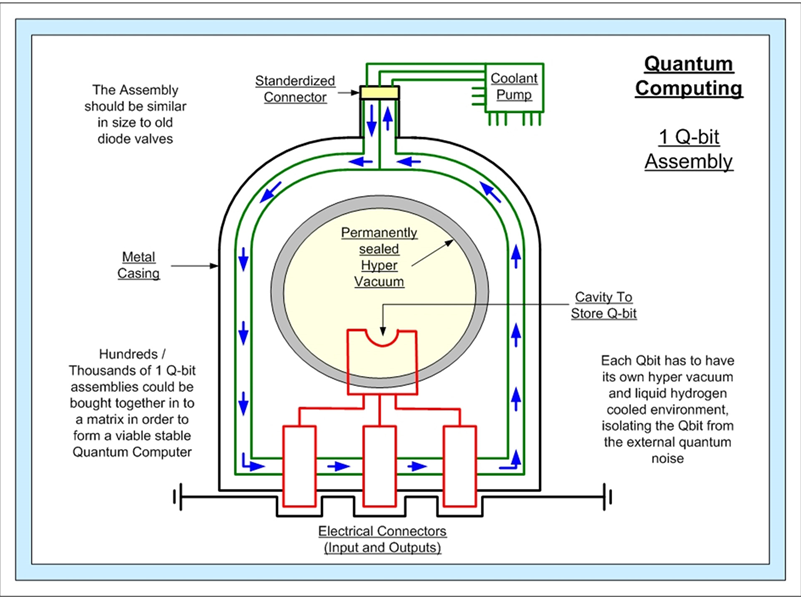
Quantum computers are exquisite, fragile creatures — devices that must be cooled to near absolute zero, protected from environmental noise, isolated from electromagnetic interference.
They are engineering marvels:
- superconducting qubits vibrating in shimmering loops
- ion traps holding atomic particles in electric fields
- topological qubits braided through exotic quantum states
- photonic qubits whispering information in beams of light
They look less like machines and more like lab-grown crystals of thought.
But something remarkable happened around 2017 and 2018:
Quantum devices went from experimental curiosities to programmable systems accessible through cloud APIs.
Suddenly, students, researchers and entrepreneurs could run quantum circuits remotely — and many ran machine learning algorithms as their first experiments.
Quantum computing stopped being theoretical.
It became a playground.
VIII. The Limits of the Classical Mind
Even the best classical AIs struggle with:
- combinatorial optimisation
- molecular simulation
- protein folding
- cryptographic analysis
- high-dimensional clustering
- graph reasoning
- multi-agent complexity
- generative modelling of physical systems
Quantum systems excel at these categories because nature itself is quantum.
A quantum AI can simulate chemical systems more accurately than any classical model — enabling drug discovery, materials science, renewable energy breakthroughs, and climate modelling at unprecedented fidelity.
This is not acceleration.
This is access to truths classical systems cannot reach.
- The New Geopolitics of Intelligence
Quantum machine learning became the new frontier of global competition.
The U.S. framed it as a national-security imperative.
China framed it as a cornerstone of industrial supremacy.
The EU framed it as a scientific renaissance.
India, Japan, Canada, Australia, Israel and Singapore all launched quantum-AI initiatives.
The stakes are enormous:
- whoever controls quantum optimisation controls logistics
- whoever controls quantum simulation controls drug discovery
- whoever controls quantum AI controls cybersecurity
- whoever controls quantum modelling controls climate strategy
- whoever controls quantum-enhanced defence systems controls warfare dynamics
Quantum AI is not a technology.
It is a strategic axis.
A cognitive arms race.
But unlike past arms races, this one is fought not with destructive forces but with computational possibility.
- The Ethical Singularity
Quantum machine learning raises ethical questions classical AI never had to confront:
What happens when an algorithm can explore trillions of outcomes at once?
Who owns the space of possibilities?
Can decisions be audited if they emerge from quantum interference?
Will AI become unintelligible to humans?
Does explainability survive quantum optimization?
Can quantum models encode biases even more deeply through entangled states?
How do we govern machines we can barely simulate?
The world will need new ethics:
- quantum transparency
- quantum interpretability
- quantum accountability
- quantum risk assessment
- rights to quantum-secure privacy
- rules for quantum-enhanced surveillance
- international quantum treaties
We are building systems capable of exploring possibility spaces so vast that human oversight must be reinvented.
Quantum AI is not simply a technical shift.
It is a governance revolution.
- A Future Measured in Possibilities
One day — perhaps sooner than expected — people will interact with devices that think in quantum probability:
- self-driving cars that calculate millions of trajectories at once
- surgical robots guided by quantum-enhanced pattern recognition
- climate models predicting decades of weather with unprecedented accuracy
- financial systems that understand risk in multidimensional space
- AI assistants capable of interpreting nuance in ways indistinguishable from intuition
- scientific engines capable of discovering principles we never hypothesised
Quantum AI will not replace human thinking.
It will expand it.
It will give humanity access to intellectual landscapes previously sealed by complexity itself.
The future is not classical.
The future is entangled.
XII. Standing at the Threshold
As of February 2018, the world is only one step into this frontier.
We do not yet have fault-tolerant quantum systems.
We do not yet have mature quantum neural networks.
We do not yet understand how to govern these systems.
We do not yet know what discoveries they will make.
But we know this:
A machine that can think in superposition is not merely faster.
It is fundamentally different.
It is a machine capable of moving through the space of the possible.
A machine built not from binary logic but from the mathematics of existence itself.
A machine that does not choose between alternatives — it inhabits them.
Quantum machine learning is not the future of AI.
It is the expansion of intelligence beyond the boundaries of classical reality.
We are witnessing the birth of a new cognitive species — not artificial, not biological, but quantum.
And its first thoughts are already forming.
You May also like