The Sentinels That Learn: How Artificial Intelligence Is Rewiring the Global Fight for Cybersecurity
By Lola Foresight
Publication Date: 28 September 2018 — 09:51 GMT
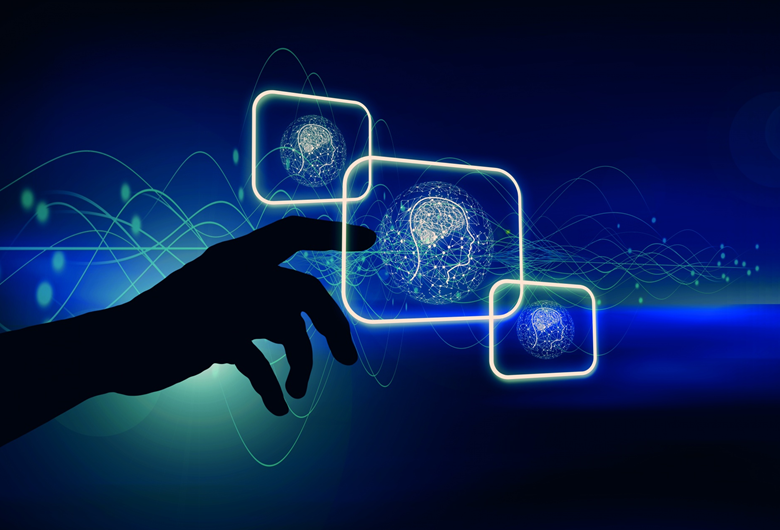
(Image Credit: publicdomainpictures.net)
- The Day the Defenders Fell Silent
Every era has a moment when the tools that protected us become insufficient.
In 2018, the world reached such a moment in cyberspace.
It happened quietly — not with a catastrophic failure, but with a collective realisation among security chiefs and intelligence analysts that the old model of defense was dead.
Signature-based antivirus systems, firewalls with fixed rules, manual threat-hunting teams, patch-and-pray cycles — these once formidable sentinels of the digital world were crumbling beneath the weight of modern attacks.
Malware no longer resembled static code.
Phishing was algorithmically personalised.
Breaches unfolded in milliseconds.
Botnets mutated faster than updates could be deployed.
Zero-days were weaponised at industrial scale.
And then there were the attacks no human could have foreseen —
AI-generated impersonations, automated spear-phishing, polymorphic malware that rewrote itself with every execution, and adversarial code that travelled through networks like a storm made of logic.
The defenders could not keep up.
The attackers did not need to.
A race had begun —
not between nations, nor corporations,
but between human cognition and machine-driven assault.
Something had to change.
And so cybersecurity turned to artificial intelligence —
not as a tool, but as a colleague.
- When Machines Became Hunters
Artificial intelligence is often described as pattern recognition.
In cybersecurity, pattern recognition becomes survival.
Machines excel at the things humans do slowly:
- ingesting billions of events per second
- correlating faint anomalies across giant networks
- tracking behavioural deviations across thousands of endpoints
- identifying micro-patterns invisible to even expert analysts
- isolating incidents before they cascade
AI became, almost immediately, a new species of defender — tireless, scalable, unblinking.
The first public demonstrations of genuine AI-driven threat detection circulated in early summer 2018.
By late September, it was clear:
Machines had learned to watch over the digital world with a level of vigilance humans could never match.
Not because they were smarter,
but because they were relentless.
Where humans needed coffee, sleep, families, downtime, weekends, holidays,
AI worked in a continuous hum of probability.
The battlefield had changed.
III. The Anatomy of a Machine Defender
AI-driven cybersecurity is built on layers:
- Behavioural Analytics
Systems learn what “normal” looks like — for users, devices, servers, cloud workloads, networks — and detect deviations.
Sudden spikes of unusual file access?
Flagged.
Midnight login from an unusual location?
Flagged.
Micro-changes to firmware?
Flagged.
- Autonomous Response
Within milliseconds, AI isolates compromised machines, cuts malicious network connections, or quarantines files.
This is not merely speed.
This is reflex.
- Adversarial Intelligence
AI trains on simulations of millions of attack variations, building resilience through exposure.
It learns from failure — and failure becomes training data.
- Predictive Defence
Instead of reacting to attacks, AI models forecast them — identifying vulnerable nodes before exploitation occurs.
- Self-Healing Infrastructure
Some systems initiate automatic remediation: patching, isolating, rolling back configs, hardening endpoints.
This is cybersecurity not as policing,
but as immune system.
- The First Wars Between Algorithms
The most startling development of 2018 was not that AI defended networks.
It was that attackers began using AI too.
Malware learned to hide within benign processes.
Bots performed reconnaissance.
Phishing emails were AI-crafted, exploiting linguistic analysis to mimic personal writing styles.
Fake login pages were algorithmically generated to match obscure regional vernaculars.
Adversarial code mutated, testing new variants at superhuman speed.
Cybersecurity had entered the era of
algorithm vs. algorithm.
These battles were silent, invisible to the world —
programs duelling in microseconds,
neural networks anticipating each other’s moves,
digital strategies unfolding with no human awareness until the aftermath.
This was not science fiction.
This was 2018.
- The Rise of Autonomous Blue Teams
In classical cybersecurity terminology, the “blue team” defends while the “red team” attacks.
By 2018, companies began deploying Autonomous Blue Teams — AI systems capable of:
- discovering misconfigurations
- simulating red-team attacks
- stress-testing networks
- evaluating insider threats
- continuously scanning cloud workloads
- eliminating vulnerabilities
- generating vulnerability reports
Human teams became investigators, strategists and overseers.
The machines became the foot soldiers.
This was a turning point:
Cyber defense was no longer reactive or static.
It became alive.
- The New Frontier of Identity Defense
The greatest vulnerability in any system is not software.
It is people.
Passwords.
Phishing.
Privilege escalations.
Misconfigurations.
Accidental data leaks.
Social engineering.
Compromised credentials.
AI transformed identity security into something dynamic.
Systems began analysing:
- typing patterns
- mouse movement rhythms
- login sequences
- device biometrics
- behavioural signatures
- gestural anomalies
- location consistency
- digital body language
Authentication became less about passwords, and more about identity as behaviour.
If an attacker stole credentials, AI still recognised the anomaly.
Identity became a pattern, not a string of characters.
Security became personal —
deeply, intricately personal.
VII. The Cloud, the Edge, and the Expanding Attack Surface
The digital world exploded outward:
- cloud platforms
- edge devices
- IoT networks
- mobile endpoints
- distributed microservices
- containerised workloads
- smart infrastructure
Every expansion created vulnerabilities:
- billions of insecure devices
- misconfigured S3 buckets
- container escape exploits
- API misuses
- brute-force botnets
- lateral movement across hybrid architectures
AI became the only scalable answer.
Traditional security tools could not handle millions of distributed nodes.
But AI could:
- monitor them
- classify them
- protect them
- predict their weaknesses
- coordinate their updates
The edge had intelligence.
The cloud had oversight.
AI became the bridge.
VIII. The Geopolitics of Cyber Sovereignty
By 2018, governments understood a chilling truth:
The next great conflicts would be fought not on land, but in code.
AI-driven cyberattacks could:
- cripple power grids
- disrupt financial markets
- manipulate elections
- shut down hospitals
- counterfeit identity logs
- corrupt industrial control systems
- deploy autonomous disinformation
- infiltrate military hardware
Nations raced to build defensive AI, offensive AI, counter-AI, and AI-ethical frameworks.
Cybersecurity became national security.
The new arsenals were:
- zero-day stockpiles
- malware AI engines
- autonomous intrusion tools
- machine-speed reconnaissance
- predictive threat analysis
- quantum-secure encryption
The battlefield had no borders.
No terrain.
No ceasefires.
Only continuous contact.
And in this new geopolitical order,
the most powerful nations were not those with the largest armies,
but those with the most adaptive algorithms.
- The Ethics of the Invisible War
AI in cybersecurity introduces dilemmas no previous generation had to confront:
Who is responsible when an autonomous system launches a defensive action that impacts civilians or innocent users?
How do we audit machine-speed decisions in attacks that humans never saw?
What happens when defensive AI misclassifies legitimate activity as malicious?
Do organisations have the right to monitor behaviour as deeply as AI enables?
Can AI-driven surveillance be abused under the guise of cybersecurity?
The boundary between protection and intrusion blurred.
AI can detect insider threats by analysing behaviour —
but behaviour is deeply intimate.
A system that prevents data breaches may also reveal private patterns.
Security became inseparable from privacy.
Protection became inseparable from power.
We entered an era where the same tools that defend us can also control us.
And the line between them is policy — or the lack thereof.
- When Machines Heal Systems Faster Than We Break Them
One of the most remarkable outcomes of AI-driven cybersecurity is self-healing infrastructure.
Imagine:
- servers that repair their own vulnerabilities
- networks that isolate compromised segments automatically
- cloud systems that reconfigure themselves to resist attacks
- IoT devices that coordinate to eliminate threats
- AI engines that patch systems without human aid
- digital wounds closing faster than attackers can exploit them
This is not metaphor.
This is happening.
AI enables a kind of biological architecture: a digital immune system evolving in real time, shaped by recursive learning.
In this world, downtime shrinks.
Attacks become shorter.
Crises become manageable.
The internet becomes survivable.
- The Human Element Returns — Stronger
Contrary to dystopian predictions, AI did not replace cybersecurity professionals.
It elevated them.
AI did the triage.
Humans did the judgement.
AI filtered noise.
Humans crafted strategy.
AI analysed.
Humans interpreted.
AI patrolled.
Humans investigated.
The division of labour became elegant.
Where machines excelled in speed, humans excelled in meaning.
Cybersecurity shifted from technical firefighting to investigative reasoning:
the art of understanding adversaries, not just their code.
A new profession emerged —
part analyst, part detective, part psychologist, part strategist —
supported by AI systems that provided the clarity the digital world had long denied.
XII. The World That Defends Itself
The future of cybersecurity will not look like the present.
We are moving toward systems that:
- autonomously detect and neutralise threats
- coordinate defence across global infrastructures
- maintain adaptive resilience
- self-repair without downtime
- share intelligence at machine speed
- build global threat maps
- operate like ecosystems rather than fortresses
Cybersecurity becomes not an industry,
but an environment.
One day, people will ask:
“How did the early internet function when attackers could outpace defenders?”
And the answer will be:
“It didn’t.
That’s why we built machines that could learn.”
You May also like