The Rise of Global Open Science: Knowledge Without Borders
By Lola Foresight
Publication Date: 10 November 2018 — 12:39 GMT
(Image Credit: Wikipedia)
In September 2018, Plan S was launched — a bold initiative requiring publicly funded research to be freely accessible to all. Two months later, the global research ecosystem was undergoing its most significant cultural shift since the invention of the modern journal.
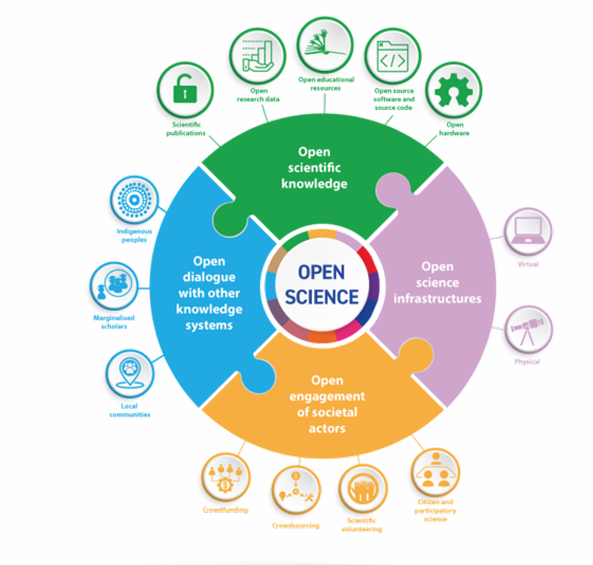
Open science is more than free PDFs. It encompasses open data, open code, open peer review, transparent methods, preprints, and collaborative international infrastructure. Each component weakens old hierarchies and accelerates discovery. When researchers no longer hide methods behind paywalls or delay publication for prestige, the global scientific engine runs faster and fairer.
The benefits became undeniable during public-health crises: open genomic data allowed global teams to track viral evolution; preprints enabled rapid hypothesis testing; open modelling tools informed national responses. What once took years now takes weeks.
Yet open science is not just for emergencies. It democratises participation for researchers in low-income countries who cannot afford journal subscriptions. It strengthens reproducibility, helping expose flawed studies and encouraging robust methodologies. It fosters interdisciplinary innovation by breaking information silos.
Challenges remain — sustainable funding models, quality control, cultural shifts around tenure and prestige — but the movement is irreversible. Knowledge grows fastest when shared. Open science transforms research from a gated landscape into a global commons, where the best ideas rise not because of where they originate, but because of what they can achieve.