The Ledger of Truth: How Blockchain Is Quietly Rebuilding Trust in the World’s Supply Chains
By Lola Foresight
Publication Date: 17 February 2018 — 11:22 GMT
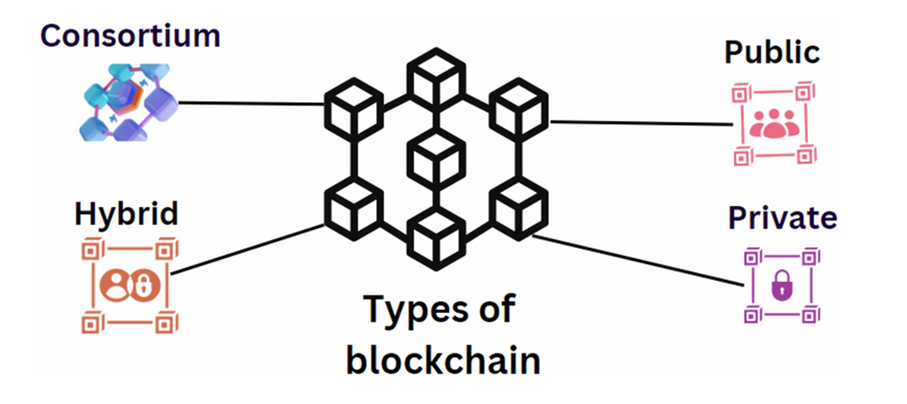
(Image Credit: researchgate.net)
- A World Held Together by Paper and Hope
The modern world is a miracle of coordination — a global ballet of ships, trucks, databases, invoices, customs brokers, warehouses and digital ledgers, all moving in a choreographed swirl so intricate that most people never think about the objects in their hands, on their desks, in their homes.
Everything — from the cobalt in a smartphone to the grain that becomes breakfast bread — travels through supply chains so sprawling they resemble neural networks more than logistical systems.
Yet for all their sophistication, these chains rest on something astonishingly fragile:
trust.
Trust that a shipment labelled “organic” actually is.
Trust that medicines contain what the label claims.
Trust that diamonds are conflict-free.
Trust that seafood is caught legally, that timber is not stolen, that an aircraft part is not counterfeit, that the cotton in a shirt is not woven by the hands of a coerced child.
Trust that each paper slip, each barcode scan, each digital update reflects material reality.
For decades, this trust rested on paperwork — millions of documents circulated through courier envelopes, email attachments, third-party auditors, and inspection stamps. A global economy worth trillions relied on a system that could be forged, altered, lost, corrupted, hacked, manipulated or simply… wrong.
Then, in late 2017, something subtle but seismic happened.
Maersk, Walmart, IBM and a coalition of shipping, food, pharmaceutical and manufacturing giants announced the results of their first large-scale blockchain pilot programs.
Shipments once requiring days of verification were authenticated in seconds.
Tampering dropped to zero.
Regulators gained real-time visibility.
Spoiled goods were traced back to the exact pallet — sometimes the exact minute — where contamination occurred.
One month later, by February 2018, it was clear:
Blockchain had not arrived to make anyone wealthy through speculation.
It had arrived to make the world legible.
- The Ledger That Cannot Lie
Blockchain is often misunderstood as cryptocurrency — a speculative casino of digital coins rising and falling. But the underlying idea is far more profound, and far older.
Human societies have always created ledgers: clay tablets, papyrus rolls, account books, tally sticks, notarized logs.
A ledger is a memory — a system of recorded truth.
Blockchain introduced one radical innovation:
**The truth becomes collective.
Not stored by one authority but by everyone involved.**
A blockchain ledger cannot be unilaterally altered.
A forged invoice cannot hide in the shadows.
A false certification cannot overwrite the real one.
A corrupt inspector cannot silently modify a record.
A missing shipment cannot evaporate into bureaucratic confusion.
It is not that blockchain knows the truth.
It is that it prevents the quiet erasure of truth.
The world finally had a technology that could protect honesty from human error, human deceit and human incentives.
III. The Anatomy of a Transparent Chain
At its core, blockchain transforms supply chains by giving each step its own immutable signature.
- A farmer uploads crop data.
- A processor verifies origin and quality.
- A transporter logs temperature and humidity.
- A port authority confirms on-boarding.
- A distributor checks inventory.
- A retailer confirms arrival.
- A consumer scans a QR code revealing the full chain.
At each stage, data becomes a block, cryptographically linked to the previous one.
If someone tries to falsify a record — a dishonest broker, a corrupt inspector, a competitor looking to undermine quality — the system rejects the alteration. The chain becomes a narrative with no deleted scenes.
This matters because the supply chains that feed, clothe, transport, energize and medicate the world are no longer linear. They are webs, entanglements, flows mingling across continents.
Paper cannot handle that.
Emails cannot handle that.
Silos of private databases cannot handle that.
But a shared, immutable ledger can.
- The Foods That Tell Their Stories
The food industry became blockchain’s first great proving ground.
By 2017, food recalls were widespread. E. coli outbreaks travelled farther than epidemiologists could trace. Consumers had no idea where their produce came from; neither, in many cases, did retailers.
In the first blockchain pilot at a major supermarket chain, a batch of mangoes was traced from U.S. stores back to a Mexican farm in 2.2 seconds.
Before blockchain?
Seven days.
Seven days of faxes, emails, inspections, phone calls, mismatched logs, contradictory timestamp records, customs declarations and confused suppliers.
With blockchain, the mangoes told their own story.
They had a memory.
Food safety gained a time machine.
Consumers gained visibility.
Retailers gained trust.
Farmers gained proof of quality.
This was not efficiency.
It was revelation.
- The Fight Against Perfectly Invisible Fraud
Fraud within supply chains is lucrative — a multi-trillion-dollar shadow economy.
Some of the most profitable criminal nodes include:
- counterfeit pharmaceuticals
- falsified medical devices
- diluted chemicals
- illegal logging
- mislabelled seafood
- conflict minerals
- forged automotive parts
- falsified environmental certifications
Traditional enforcement works like policing a fog.
Blockchain flips the problem: it makes the fog transparent.
- Counterfeit Medicine
A blockchain-verified pill can be scanned at the pharmacy, the hospital, or the patient’s home.
Its provenance speaks for itself.
- Illicit Timber
Each log’s journey — forest, mill, shipping container, customs, warehouse — is timestamped on-chain. Illegal timber can no longer be laundered into legality.
- Human-Rights Violations in Raw Materials
If a mineral emerges from a mine where forced labour is suspected, blockchain records cannot erase that origin. Brands that claim ethical sourcing can no longer rely on ambiguous assurances.
Blockchain is not moral by nature — but it makes immorality harder to hide.
- The Ethical Earthquake
For decades, corporations hid behind plausible deniability — supply chains that were too complex to trace, too opaque to inspect, too global to certify.
Blockchain ends that era.
It forces a philosophical reckoning:
If you can trace exploitation, are you responsible for eliminating it?
If you can prove provenance, do you now own the duty of transparency?
If a product leaves a trail, are you compelled to follow it?
Blockchain does not simply reveal logistical truth.
It reveals moral truth.
Brands can no longer claim ignorance.
Regulators can no longer accept opacity.
Consumers can no longer be misled.
NGOs can no longer be blocked from verifying claims.
In a blockchain world, ethics becomes verifiable.
VII. The Machinery of Cooperation
Supply chains are messy, competitive, territorial environments.
No company wants to reveal too much, share too much, expose profit margins or business secrets.
Blockchain solves this through cryptographic architecture:
- Zero-knowledge proofs reveal truths without revealing data.
- Permissioned blockchains allow members to see only what they’re authorized to see.
- Smart contracts automate compliance, certification, payments.
- Decentralized governance ensures no single corporation can manipulate the system.
In other words:
Blockchain creates cooperation without trust.
That is its genius.
That is its power.
That is why no previous technology ever succeeded at supply chain transparency.
VIII. The Geopolitics of Visibility
Supply chains have always been geopolitical battlegrounds.
Who controls shipping routes?
Who controls rare-earth metals?
Who controls dock labour, port infrastructure, customs enforcement, shipping fleets?
Blockchain superimposes a new layer atop these struggles: transparent accountability.
Nations that adopt blockchain-based customs and port systems gain:
- faster trade clearances
- lower corruption
- reduced smuggling
- verified environmental compliance
- automated tax and tariff auditing
Development economists have begun calling blockchain “the anti-corruption technology.”
It is possible — even likely — that in the coming decade, global trade agreements will mandate blockchain-based traceability.
The future might not be shaped by military alliances but by data alliances — who shares what, who verifies what, and who trusts the record.
- The Cultural Shift: When Consumers Become Investigators
In a world where goods carry a verifiable history, consumer behaviour transforms.
Imagine scanning a product and instantly knowing:
- which farm produced it
- which factory assembled it
- whether slave labour was involved
- how much carbon it emitted
- whether it was ethically certified
- whether it was illegally harvested
- how much the workers were paid
Suddenly, shopping becomes a moral act supported by evidence rather than marketing.
Suddenly, “greenwashing” collapses under the weight of proof.
Suddenly, companies cannot merely claim virtue — they must demonstrate it.
Blockchain becomes not a technical tool but a cultural intervention.
- The Future: A World That Remembers
We are moving toward a world where:
- every product tells its story
- every transaction is timestamped
- every material has a memory
- every supply chain is visible
- every consumer becomes an auditor
- every brand becomes accountable
- every certification becomes algorithmic
- every shipment is trustable by default
- every deception becomes detectable
This is not dystopia.
This is not utopia.
This is reality bending toward transparency.
The world will not become perfectly honest — humans are endlessly inventive in their strategies of deceit — but their room to manoeuvre will shrink.
A world that remembers is harder to manipulate.
- The Ledger as a Mirror
Blockchain’s greatest power is not technological.
It is philosophical.
It forces us to confront:
What do we owe to the people and ecosystems behind our goods?
What responsibility do we have to know where things come from?
How do we rebuild trust in an age where trust has been shattered?
The answer, surprisingly, might be a ledger
a new kind of ledger,
a global ledger,
a ledger that does not worship profit or ideology,
but that preserves truth with a kind of stubborn impartiality.
Blockchain will not save the world.
But it will show the world to itself.
And in that revelation lies the possibility — fragile, imperfect, hard-won — of a more honest economy.
You May also like
By Lola Foresight