
The Invisible Architecture: How 5G and the New Wireless Frontier Are Rewiring the Modern World
By Lola Foresight
Publication Date: 6 January 2019 — 09:48 GMT
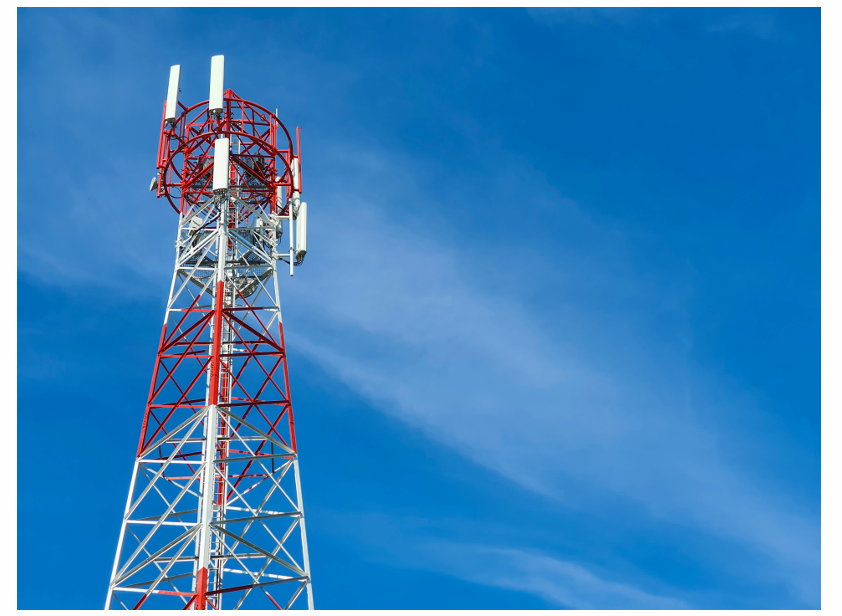
(Image Credit: publicdomainpictures.net)
- The New Layer Beneath the World
There are technological shifts that arrive with fanfare — new gadgets, gleaming devices, ceremonial unveilings — and then there are the shifts that happen underneath us, quietly restructuring the world’s operating system while we go about our lives unaware.
The rollout of 5G belongs unmistakably to the latter category.
By late 2018, the first public demonstrations of ultra-low latency, multi-gigabit wireless communication had already circulated among engineers and early adopters. Video clips of robotic arms being steered remotely with near-instant precision, and self-driving cars navigating test tracks with data piped directly from edge-servers, flickered across conference screens. Yet, two months later, in January 2019, most people still imagined 5G as a mere upgrade — a faster bar of signal on their phones.
It was not.
5G was the birth of a new invisible architecture — a digital atmosphere — and like all infrastructures that fundamentally alter the world (electricity, highways, satellites, fibre-optic cables), its true significance would only be recognised years later, when we found ourselves living inside it.
The easiest mistake is to think of 5G as speed.
It is, instead, structure.
A rewiring of the distance between devices.
A collapse of latency that changes what machines can do.
A new geometry of information flow.
A world in which physical and digital systems operate not in parallel — but in fusion.
- The Physics of a Revolution
To understand 5G is to understand atoms made of data.
Where earlier networks relied on wide, penetrating frequencies, 5G introduced millimetre-wave bands that behave differently: they carry enormous amounts of information, but travel shorter distances and are blocked by walls, foliage, even the thickness of human skin.
On paper, this looks like a limitation.
In practice, it forces the network to become dense, decentralized, and cellular at unprecedented granularity.
This creates a radically different infrastructure:
- Small cells on lampposts, buildings, rooftops, buses, and utility poles
- Beam-forming antennas that sculpt electromagnetic energy like an optical lens
- Network slicing, allowing entire virtual networks to coexist inside the same physical hardware
- Edge computing nodes physically close to data sources
- Device-to-device communication that bypasses centralized towers entirely
- Latency measured in single milliseconds
The result is not a faster internet.
It is a real-time world.
A world where machines do not simply exchange data — they coordinate, negotiate, respond, and adapt as if connected by a nervous system rather than an infrastructure.
If 4G gave us streaming, 5G gives us machine perception.
III. The Industrial Awakening
Talk to engineers in manufacturing hubs from Shenzhen to Stuttgart, and they will tell you the same thing: 5G did not merely improve factories. It reconceptualised them.
For the first time, industrial robots, automated guided vehicles, and human augmentation systems could share a wireless environment that behaves like a hardwired control system.
Consider a robotic arm welding a chassis.
On a 4G connection, the latency is too high; the machine must be cabled.
On 5G, the signal is so immediate — a handful of milliseconds — that robots communicate like neurons firing across synapses.
Factories become symphonies of decentralised, mobile intelligence:
- Drones mapping warehouse inventory in real time
- Exoskeletons adjusting torque to support workers lifting heavy loads
- Safety sensors detecting anomalies, sparks, heat, human presence
- Autonomous forklifts navigating aisles without crashing
- Predictive maintenance systems analysing vibration signatures
- AR glasses overlaying instructions directly onto components
This is not automation replacing humans.
It is automation in collaboration with humans — networks of machines that enhance productivity without tethering workers to static positions.
The industrial world, long calcified by traditional engineering, becomes supple, flexible, improvisational — because the network itself becomes alive with coordination.
- Cities That Think
If industry was the first beneficiary of 5G, cities will be the most transformed.
Cities are already saturated with digital systems — traffic sensors, public transit telemetry, CCTV, environmental monitors. But these are passive networks, collecting but not responding.
5G changes the equation: suddenly, cities gain a nervous system.
Not metaphorical — actual.
Imagine:
- Traffic lights communicating with driverless cars
- Emergency responders receiving real-time overlays of hazards
- Crowds monitored for density to prevent crush disasters
- Water systems dynamically rerouted to avoid contamination
- Buildings adjusting energy usage based on occupancy
- Delivery drones coordinating flight paths with each other
- Streetlights responding to pedestrian flow
- Public spaces adapting ventilation and lighting instantaneously
This is not the surveillance dystopia many fear — though governance matters immensely.
This is a blueprint for responsive cities, urban systems that anticipate rather than react.
Cities that think.
The transition will not be smooth.
Old power structures resist new infrastructure.
Regulators must adapt faster than they ever have.
Cultural fears surrounding invisible radiation persist despite scientific consensus.
But the direction is set: cities will gradually become organisms, not objects.
- The New Edge: When Computing Steps Out of the Cloud
4G gave rise to the cloud economy:
Data soared skyward to distant servers, was computed, then returned to devices.
5G ends the tyranny of distance.
With its low latency and high throughput, computation can move to the edge, placing intelligence closer to the physical world.
This matters for two reasons:
- Privacy
Sensitive data stays on-device or local, rather than streaming to massive corporate servers. - Speed
Critical operations — braking systems in autonomous vehicles, surgical robotics, drones, industrial actuators — must respond faster than a data centre 2,000 km away can manage.
Edge computing and 5G are symbiotic:
one gives proximity, the other gives bandwidth.
Together, they birth a hybrid world where:
- Cars carry their own decision-making logic
- Medical implants process bio-signals in microseconds
- Wearables adjust treatments in real time
- Farming drones respond to localized crop analytics
- Construction machinery reacts to unexpected terrain shifts
- VR systems operate without nausea-inducing lag
- Assistive robots interpret human speech without cloud interpretation
Computing becomes spatial — embedded in the environment itself.
- The Surge of the Internet of Everything
The IoT promised billions of devices but delivered an unruly mess — lag, dropouts, security holes, battery constraints.
Most “smart devices” ended up as dumb objects with notifications.
5G changes that.
It can support one million devices per square kilometre — enough for dense networks of sensors, wearables, machines, and autonomous agents functioning harmoniously.
Energy-efficient communication protocols allow tiny devices to run for over ten years on a battery.
This is where 5G stops being a technology and becomes an ecosystem:
- Smart agriculture with soil-level pH and moisture sensors
- Ocean buoys tracking microplastic flows
- Elder-care wearables detecting falls instantly
- Precision energy grids balancing themselves
- National transportation systems that intercommunicate
- Environmental monitoring at planetary resolution
- Swarms of emergency-response drones
For the first time, the world becomes semi-sentient — aware of itself.
VII. Healthcare Without Walls
The medical world has always been shackled by geography.
Doctors needed to be physically present; data needed to be physically seen; diagnoses needed physical tools.
With 5G, healthcare escapes the clinic.
Remote surgeries are no longer science fiction.
Haptic gloves transmit tactile feedback across continents.
Wearables stream ECG, glucose, respiration, gait and stress signals continuously.
Hospital-grade diagnostics move into homes, powered by real-time networks.
5G-enabled telemedicine is not a videoconference.
It is a mobile hospital:
- Ultrasound probes paired with phones
- Portable MRI assisted by cloud inference
- Post-operative patients monitored remotely
- Stroke symptoms flagged instantly
- Ambulances transmitting vitals en route
- Emergency physicians guiding paramedics through AR overlays
Healthcare becomes proactive rather than reactive, continuous rather than episodic.
Illness is no longer a disruption but a dataset.
VIII. The New Political Battleground
Every major infrastructure shift becomes politicised — because infrastructure is power.
5G is no exception.
Competing national visions emerged:
- The U.S. emphasised private-sector innovation and rapid deployment.
- China pursued state-backed nationwide coverage at unprecedented speeds.
- Europe focused on regulatory harmonisation, safety standards, and security scrutiny.
- Developing nations saw 5G as a leapfrog moment — bypassing fibre altogether.
Debates over vendor trustworthiness, spectrum allocation, and national competitiveness became focal points of geopolitical tension.
Security agencies warned that 5G networks could become attack surfaces for foreign adversaries; economists warned that failing to adopt quickly would cede the next decade’s growth to more agile nations.
It is not hyperbole:
5G is as geopolitically significant as nuclear policy, semiconductors, or rare-earth minerals.
Because 5G is not communication infrastructure.
It is civilisational infrastructure.
- The Human Question
For all the technological elegance, the most important question is profoundly human:
What does it mean to live in a world that reacts to you?
Earlier eras defined themselves through scarcity:
information, bandwidth, connection.
This era will be defined through presence — the presence of millions of silent, invisible observers sensing, responding, adjusting, interpreting.
Not surveillance — but responsiveness.
The challenge will be ensuring that responsiveness remains benevolent, equitable, secure and transparent.
A real-time world can serve us.
A real-time world can also nudge, steer, manipulate, or confine us.
Technology, as always, reflects the values of those who build and govern it.
- The Layer We Will One Day Forget
The most profound infrastructures become invisible.
We no longer marvel at electricity, despite its miracle.
We no longer think about GPS, though it reshaped global logistics.
We no longer regard the internet with wonder, though it remade human life.
5G will follow the same path.
In a decade, people will not say, “This is because of 5G.”
They will simply expect:
- cars that navigate,
- devices that collaborate,
- cities that anticipate,
- factories that dance,
- medicine that pre-empts,
- homes that respond,
- environments that sense,
- and worlds — both physical and digital — that knit themselves together seamlessly.
They will live inside the architecture without noticing it.
Just as we live inside air.
5G is not the faster future.
It is the responsive future.
The future in which the world listens, and machines answer, and boundaries blur between what is sensed and what is known.
And it began — quietly, modestly — not with fireworks or spectacle, but with frequencies so small the human eye could never see them, shaping a world we are only beginning to understand.
You May also like
By Lola Foresight

By Lola Foresight