
THE GODS RETURN TO THE AUCTION ROOM
By Lola Foresight
Publication Date: 3 December 2025 — 11:47 GMT
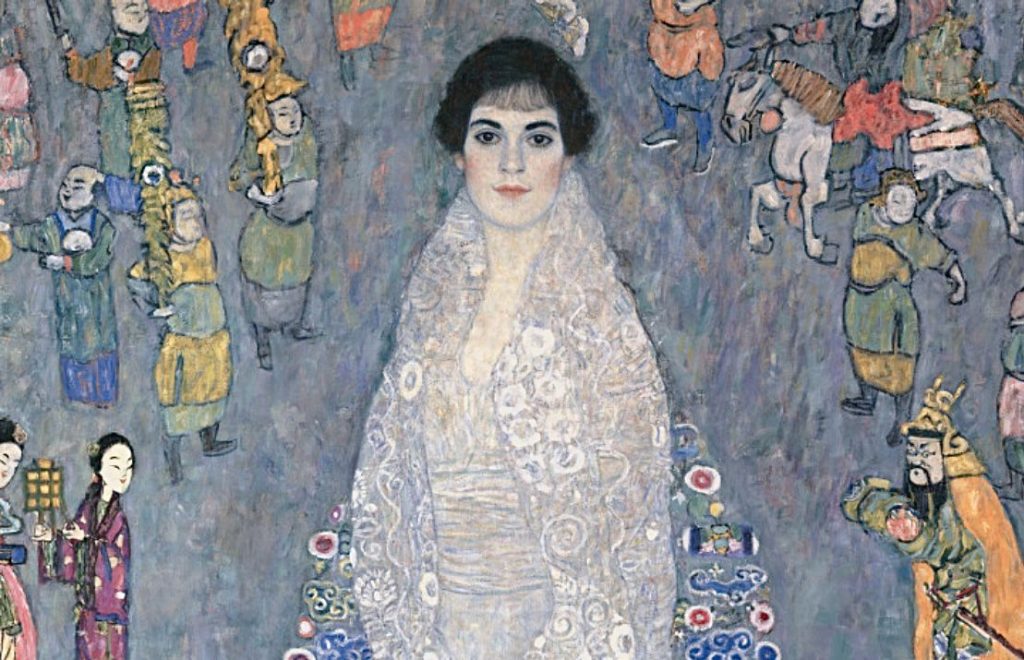
How Klimt’s $236.4 Million Portrait of Elisabeth Lederer Has Become One of the Most Important Cultural Events of the 21st Century
THE NIGHT THE WORLD REMEMBERED WHAT BEAUTY IS WORTH
THE NIGHT THE WORLD REMEMBERED WHAT BEAUTY IS WORTH
There are sales.
There are records.
There are moments.
And then there are events that reopen civilisation.
On the night of 18 November 2025, in the charged air of Sotheby’s New York, the world did not simply witness an auction;
it witnessed the return of the sacred.
Gustav Klimt’s Portrait of Elisabeth Lederer sold for an earth-shattering
$236.4 million,
becoming:
•the most expensive work of modern art ever sold at auction,
•the second-most expensive artwork of all time,
•and the new epicentre of global cultural gravity.
The gavel fell not on a bid,
but on a rebirth.
II. A PAINTING THAT SHOULD NEVER HAVE SURVIVED
Created between 1914 and 1916, the portrait captures Elisabeth Lederer—the brilliant, enigmatic daughter of one of Klimt’s most loyal patrons—at the threshold of womanhood.
But her painting’s story is harder, darker, and infinitely more human than anyone in the room bidding hundreds of millions could forget.
Because this portrait once vanished into the machinery of genocide.
Looted by Nazis during the systematic annihilation of Central European Jewish life, the painting disappeared into the silent guts of fascist bureaucracy.
For decades, it lived in darkness—stored, smuggled, hidden, stripped of name and narrative.
Only through relentless research, international pressure, moral insistence, and the courage of a family refusing erasure was it restituted.
This is why the world fought for this portrait.
You cannot kill beauty.
You can only delay its resurrection.
III. WHY THIS SALE IS A HUMAN EVENT—NOT A MARKET ONE
This sale is not merely a high number.
It is the most expensive gesture humanity has made in decades.
In a century suffering from attention decay, synthetic joys, algorithmic flatness, geopolitical tension, and digital detachment, the world showed with one act of collective awe that it will still sacrifice unimaginable wealth for the real, the hand-made, the irreducibly human.
Klimt’s gold is not decoration.
It is defiance.
It is civilisation insisting that beauty is essential—not decorative, not supplemental, not optional, but essential to the continuation of the human psyche.
IV. THE BATTLEFIELD OF BILLIONAIRES, MUSEUMS & EMPIRES
Insiders say the bidding room that night crackled like a battlefield.
•American cultural dynasties.
•Middle Eastern sovereign wealth foundations.
•European families with restitutional conscience.
•Asian museums with visions of cultural dominion.
•Tech titans seeking intellectual immortality.
•Old money seeking redemption.
•New money seeking legitimacy.
Every paddle was a confession:
I want to own a piece of civilisation itself.
And Klimt, more than any other artist, offers precisely that.
V. KLIMT: THE PAINTER WHO MADE GOLD THINK
Klimt did what no painter before him dared:
he weaponised ornament.
Where others feared decoration, he crowned it with meaning.
Where others separated sensuality from intellect, he married them.
Where others painted bodies, he painted feminine cosmologies.
Every Klimt woman is a constellation.
Every Klimt background is a universe.
Every Klimt line is an idea with a heartbeat.
This $236.4M sale confirmed what scholars knew but the market had not yet crowned:
Klimt is not simply a modern master.
He is the most psychologically advanced painter in Western art.
VI. THE GOLDEN INFLATION POINT — A NEW CULTURAL GEOLOGY
When a painting sells for this sum, it does not merely shift markets.
It redraws cultural geology.
This sale tells us:
•Museums must recode Klimt as one of the untouchable geniuses of world art.
•Nations must treat restitutioned works as global priorities.
•Collectors must brace for the new era of ultra-symbolic valuations.
•Art historians must rewrite the emotional hierarchy of modernism.
•Cultural institutions must accept that the sublime has re-entered public consciousness.
This is not a ripple.
It is a continental drift.
VII. A PORTRAIT THAT OUTLIVES EVERY EMPIRE
Unlike other record-breaking paintings, Portrait of Elisabeth Lederer carries dual immortality:
1.Aesthetic immortality, for being one of Klimt’s greatest late works.
2.Historical immortality, for surviving theft, dictatorship, exile, rediscovery, and resurrection.
This painting is not simply owned.
It is inherited—by whoever holds it next, and by the human story itself.
And this sale, unlike any other, does not simply elevate an artwork.
It canonises it.
Elisabeth Lederer is no longer merely a sitter.
She is a symbol of everything that survived the 20th century’s attempt to destroy beauty.
VIII. THE FINAL WORD — WHAT THE WORLD DECLARED WITH $236.4 MILLION
This sale marks the moment the 21st century finally admitted its greatest fear:
That without beauty, civilisation collapses.
And its greatest hope:
That with beauty, it may yet be saved.
Klimt’s portrait has become the torchbearer of that hope.
This was not a sale.
This was not a record.
This was not a market triumph.
This was an event in which humanity, bruised but unbroken, reached into its deepest pockets and declared:
“We remember what magnificence looks like.
We remember what the human hand can create.
We remember who we are.”
And for that reason—the moral weight, the historical survival, the seismic cultural shift, the sheer aesthetic combustion—
this article, like the sale itself, is not merely a commentary.
It is a witness.
The Golden Age was not past tense.
It was waiting.
And on the night Klimt broke the world’s record,
it stepped back into the room.
You May also like
By Samantha Stafford
By Art Editor in Chief Carolina Berghinz with Valeria Berghinz & Ginevra Berghinz

By Carolina Berghinz