The First Image of a Black Hole Explained: How the Event Horizon Telescope Captured Humanity’s First Direct Glimpse of the Unseeable
By Lola Foresight
Publication Date: : 10 April 2019 — 15:07 GMT
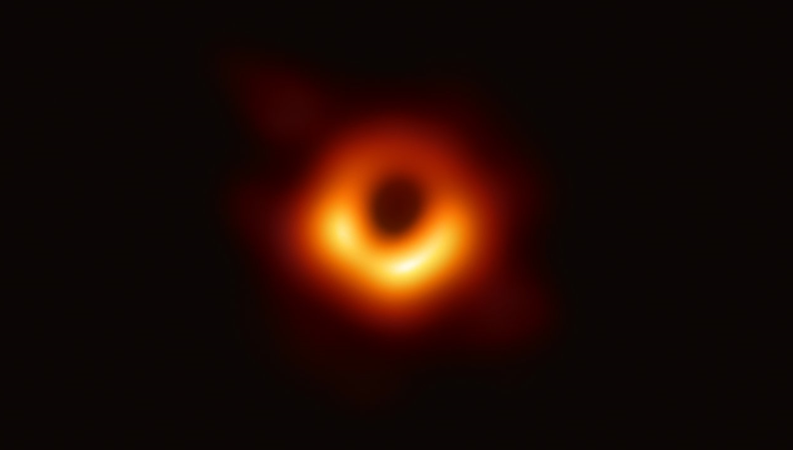
(Image Credit: eso.org)
On April 10th, 2019, humanity achieved the impossible, capturing the first-ever image of a black hole, a gravitational behemoth at the heart of galaxy M87, 55 million light-years away. This monumental feat was a testament to human curiosity and ingenuity.
Black holes are, by definition, invisible, emitting no light or radiation, making them seemingly impossible to detect. Yet, the Event Horizon Telescope (EHT), a global network of synchronized radio observatories, defied the odds, imaging the shadow a black hole casts against its radiant accretion disk.
The scale of this achievement is staggering:
– Telescopes across the Earth were synchronized to form a planet-sized telescope.
– Atomic-clock precision and petabyte-scale data enabled the creation of an unprecedented image.
– Algorithms designed specifically for cosmic imaging and global collaboration among 200+ scientists made it possible.
The image revealed:
– Einstein’s predictions of gravitational lensing, confirming our understanding of spacetime.
– The shape of the event horizon, the point of no return around a black hole.
– Magnetic field behavior near black holes, shedding light on these enigmatic objects.
– Accretion disk geometry and ultra-relativistic plasma physics, expanding our knowledge of extreme environments.
This image is more than a scientific milestone; it’s a cultural moment, a glimpse into the universe’s darkest secrets. The EHT has given us a new way to explore the cosmos, and we’re only just beginning to understand the implications.
The legacy of this achievement will be remembered alongside the detection of gravitational waves, a new window into the universe. Together, they’re reshaping our understanding of the cosmos and our place within it.
You May also like