Suzhou Museum of Contemporary Art, Suzhou
By Rojina Bohora
Publication date: 29 October 2023, 09:00 GMT
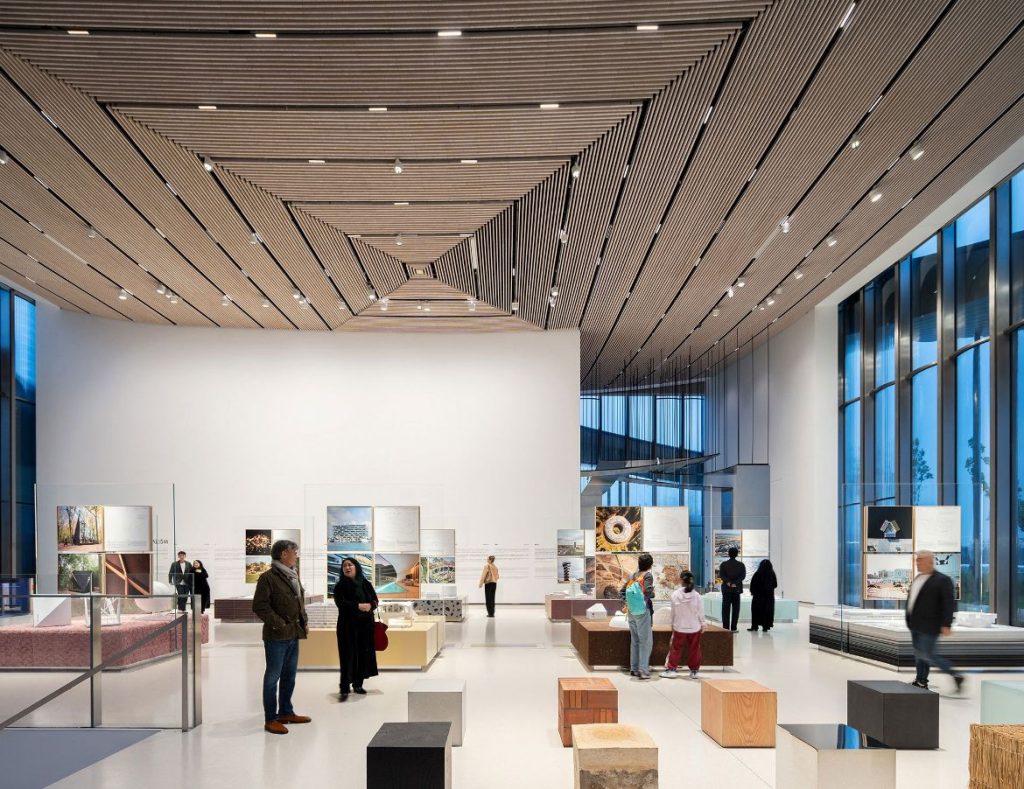
(Image credit: National Memorial for Peace and Justice, Montgomery — Architecture by MASS Design Group. Photograph via Wikimedia Commons, licensed under Creative Commons Attribution–ShareAlike 4.0 [CC BY-SA 4.0]).
Twelve Rooms on Water: When a City Learned to Reflect Itself
I.The Difficulty of Building Quietly in a City That Already Speaks
Suzhou does not need interpretation.
Its canals, bridges, and gardens have articulated a philosophy of space for centuries — one in which architecture does not impose order, but frames perception. To build a contemporary art museum here is not to introduce novelty, but to risk misunderstanding.
The Suzhou Museum of Contemporary Art, opened in October 2023 on the edge of Jinji Lake, approaches this challenge with uncommon restraint. Designed by Bjarke Ingels Group, the building does not attempt to outshine the city’s historical vocabulary. Instead, it reorganises it.
This is not architecture as statement.
It is architecture as recollection.
II.Twelve Pavilions, Not One Monument
Rather than consolidating the museum into a singular object, BIG fragments it into twelve low-rise pavilions, each with a pitched roof and crystalline geometry. Arranged loosely along the water’s edge, the pavilions read less like a building and more like a settlement.
This decision is foundational.
Suzhou’s classical gardens are composed of sequences — rooms unfolding into courtyards, framed views revealing partial vistas. The museum mirrors this logic spatially rather than stylistically. Visitors move between galleries as they would through a garden: meandering, pausing, reorienting.
The museum does not instruct movement.
It invites wandering.
III. Rooflines as Cultural Memory
The sharply pitched roofs immediately recall Suzhou’s vernacular architecture, but they are not replicas. Their proportions are abstracted, their materiality contemporary.
Glass replaces tile. Precision replaces ornament.
This is not mimicry.
It is architectural translation.
The roof becomes a device for capturing light, reflection, and sky — refracting the lake’s surface into the galleries below. The familiar form is preserved not as image, but as environmental intelligence.
Iv.Water as Spatial Medium
Jinji Lake is not treated as backdrop.
The museum extends into the water, allowing reflections to become part of the architectural experience. Pavilions appear to float, dissolving the boundary between land and lake.
This relationship is not dramatic. It is calibrated.
Water here functions as negative space — slowing perception, amplifying light, and creating visual distance between volumes. It restores a rhythm Suzhou knows well: architecture that breathes through reflection.
V.Light Without Exhibitionism
Contemporary museums often struggle with light — either suppressing it entirely or turning it into spectacle.
Suzhou MOCA avoids both extremes.
Daylight enters obliquely, filtered through roof geometry and glazing calibrated to protect artworks while preserving atmospheric variation. Light changes through the day, registering time without distracting from content.
The museum does not theatricalise illumination.
It lets it happen.
VI.Galleries as Rooms, Not Halls
Internally, the museum resists the temptation of cavernous exhibition halls. Galleries are scaled as rooms — discrete, proportioned, intimate.
This matters for contemporary art, which often benefits from spatial specificity rather than generic expansiveness. Works are encountered individually, not consumed en masse.
The architecture does not overwhelm the art.
It supports attention.
VII. BIG After the Gesture
BIG is often associated with bold diagrams and extroverted form-making. Suzhou MOCA marks a quieter chapter.
Here, complexity is organisational rather than expressive. The project’s ambition lies in how pieces relate, not how they announce themselves.
This restraint is not retreat.
It is confidence through listening.
The building demonstrates that contemporary architecture need not shout to remain relevant — especially in a city already fluent in spatial subtlety.
VIII. Circulation as Garden Logic
Paths between pavilions curve gently. Views open and close. The lake appears and disappears. There is no singular axis, no enforced narrative.
This garden logic resists the museum-as-procession model, where visitors are marched through curated sequences. Instead, experience is self-authored.
The museum accepts that meaning emerges through choice.
IX.Material Precision Without Ornament
Materiality throughout is restrained: glass, steel, stone, and concrete deployed with clarity.
Surfaces are smooth but not glossy. Details are precise but not decorative. Nothing competes for attention.
This minimalism is not aesthetic ideology.
It is discipline in service of atmosphere.
X.A Contemporary Institution Without Anxiety
Many new museums strain to assert their relevance through form. Suzhou MOCA does the opposite.
It appears unconcerned with visibility from afar. Its presence unfolds gradually, revealing itself through proximity and movement.
This lack of anxiety is rare — and refreshing.
The museum trusts its setting, its visitors, and its content.
XI.Modernity Without Disruption
What makes Suzhou MOCA significant is not that it is contemporary, but how it is contemporary.
It does not rupture historical continuity.
It does not sentimentalise tradition.
It positions modernity as extension rather than interruption — a continuation of spatial values translated into present conditions.
XII. Conclusion: A Museum That Learned to Reflect
The Suzhou Museum of Contemporary Art succeeds not by redefining the city, but by listening to it carefully.
By fragmenting mass, embracing water, moderating light, and resisting spectacle, the building offers a contemporary cultural institution that feels native rather than imported.
It reminds us that architecture, at its most mature, does not demand attention.
It earns familiarity.
And in a city where reflection has always mattered more than assertion, that may be the most contemporary gesture of all.
You May also like
By Rojina Bohora
By Rojina Bohora
By Rojina Bohora