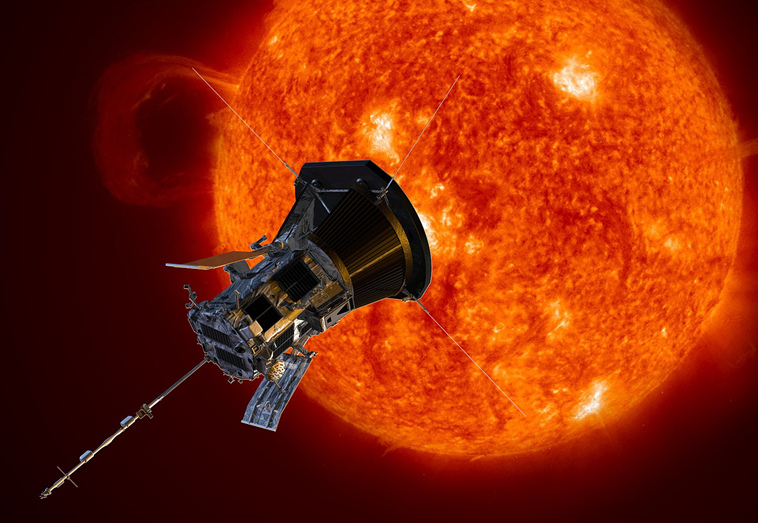
2021 will be remembered as a landmark year in space exploration, as NASA’s Parker Solar Probe achieved the unthinkable: flying into the Sun’s corona, the outer atmosphere of our star. This remarkable feat has opened a new chapter in our understanding of the Sun and its impact on our solar system.
Touching the Face of the Sun
The Parker Solar Probe’s journey into the corona has provided unprecedented insights into the Sun’s behavior, revealing the extreme conditions that shape our star’s environment. The temperatures are staggering, exceeding a million degrees, while solar winds accelerate to supersonic speeds, influencing the Earth’s climate and technology.
A Treasure Trove of Discoveries
The mission has yielded a wealth of new knowledge, including:
– The mechanism behind solar wind acceleration, a long-standing mystery in astrophysics
– Magnetic switchbacks, sudden reversals in the Sun’s magnetic field that impact space weather
– High-resolution structure of coronal plasma, revealing the intricate dynamics of the Sun’s outer atmosphere
– Origins of space weather, providing new insights into the complex interactions between the Sun and Earth’s magnetic field
Redefining Heliophysics
The Parker Solar Probe’s groundbreaking achievements are redefining our understanding of the Sun and its influence on the solar system. This mission is a testament to human curiosity and ingenuity, providing unprecedented insight into the star that sustains our existence. As we continue to explore the Sun, we embark on a journey that will reshape our understanding of the cosmos and our place within it.