
Sheikh Zayed National Museum, Abu Dhabi
By Rojina Bohora
Publication date: 17th May 2015; 08:09 GMT
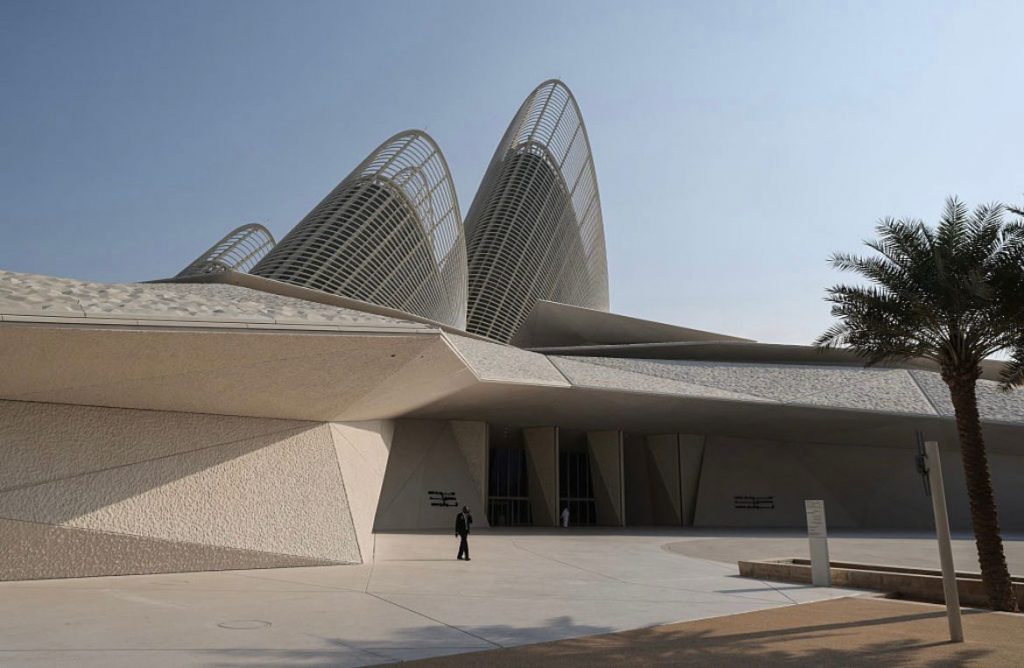
(Image credit: Sheikh Zayed National Museum, Abu Dhabi — Architecture by Foster + Partners. Image released via Saadiyat Island Cultural District / Foster + Partners press materials).
A Nation Drawn in Wind: Memory, Climate, and the Architecture of Respect
I.The Problem of the National Museum
National museums are among the most difficult architectural commissions.
They are asked to embody identity without reducing it, to commemorate leadership without sanctifying power, and to teach history without fixing it in myth. In young nations especially, the risk of monumentality overwhelming meaning is acute.
The Sheikh Zayed National Museum confronts this dilemma with unusual composure.
Rather than asserting permanence through mass or symmetry, the building proposes something more elusive: movement.
II.A Museum Shaped by Air
The museum’s defining gesture — five soaring, wing-like towers — has often been described as symbolic. This reading is incomplete.
The towers are not only referential.
They are environmental engines.
Drawing on traditional Emirati wind-tower principles, they function as thermal chimneys, pulling cool air through the galleries below. Climate control here is not hidden behind mechanical anonymity; it is formalised, celebrated, and legible.
The building breathes — visibly.
III. Falcons, But Not Figuratively
The towers inevitably recall falcon wings — a potent cultural symbol in the UAE. Yet the design avoids literal representation.
There are no feathers, no sculptural mimicry. Instead, the form captures the logic of flight: lift, taper, and directional flow.
This distinction matters.
The architecture honours heritage without reducing it to image. Symbolism emerges through function aligned with meaning, not applied iconography.
IV.Building Into the Dune
The galleries themselves are largely embedded into the landscape, forming a low, undulating base that reads as an extension of Saadiyat Island’s terrain.
This decision reverses a common museum impulse. Rather than elevating content above ground as object, the building buries it — suggesting continuity rather than spectacle.
Knowledge here is not placed on a pedestal.
It is carved into the earth.
V.Light as Narrative Device
Light enters the museum indirectly, filtered through apertures, courtyards, and transitional spaces.
This approach avoids both the darkness of the sealed museum and the glare of uncontrolled exposure. Instead, light becomes narrative — shifting, partial, revealing.
Visitors move through zones of brightness and shadow, mirroring the complexity of history itself.
The museum does not flatten time.
It layers it perceptually.
VI.Foster + Partners and the Discipline of Climate
Foster + Partners’ long engagement with environmental performance finds a particularly appropriate expression here.
Rather than applying universal solutions, the design responds specifically to Abu Dhabi’s climate — heat, wind, solar intensity — using form as mediator.
This is high technology expressed through low-energy logic.
The museum’s sustainability is not an add-on.
It is inseparable from its identity.
VII. Monumentality Without Weight
Despite its scale, the Sheikh Zayed National Museum avoids heaviness.
The towers rise slender and spaced, allowing sky to pass between them. The base remains low and continuous. The overall composition feels aerated rather than imposing.
This lightness is ethical as much as aesthetic. It acknowledges that national memory must remain open, not sealed.
VIII. Leadership Without Idolatry
Dedicated to the UAE’s founding father, Sheikh Zayed bin Sultan Al Nahyan, the museum could easily have slipped into hero-worship.
Instead, the architecture resists figuration entirely.
There are no statues, no axial approaches, no authoritarian alignments. The building honours leadership by focusing on values — environmental stewardship, cultural continuity, openness.
Memory is framed as collective inheritance, not personal monument.
IX.A Cultural District Without Competition
Situated among major cultural institutions on Saadiyat Island, the museum does not compete for visual dominance.
Its low profile and sculptural restraint allow neighbouring projects to coexist without hierarchy. The district reads as ensemble rather than collection of icons.
This restraint is deliberate — and rare.
X.The Museum as Climate Teacher
Perhaps the museum’s most lasting contribution will be pedagogical rather than curatorial.
By making climate-responsive design visible, it teaches visitors that architecture in this region has always been environmental — long before sustainability became terminology.
The past is not merely displayed.
It is activated.
XI.Waiting as Part of the Story
Like several major cultural projects of its generation, the Sheikh Zayed National Museum has experienced delay.
Yet its design has aged well.
Unlike buildings dependent on stylistic novelty, its logic remains relevant — grounded in climate, landscape, and cultural humility.
The museum does not feel urgent.
It feels inevitable.
XII. Conclusion: When Memory Moves Like Wind
The Sheikh Zayed National Museum proposes a powerful alternative to the national monument.
It suggests that identity need not be fixed in stone to endure — that it can move, adapt, and circulate like air.
By shaping wind into architecture, and history into space, the building offers a vision of nationhood that is neither static nor fragile.
It is held in motion.
And in a region where climate and culture are inseparable, that may be the most respectful form remembrance can take.
You May also like
By Rojina Bohora
By Rojina Bohora
By Rojina Bohora