
Rubell Museum, Miami
By Rojina Bohora
Publication date: 20 December 2019, 09:00 GMT
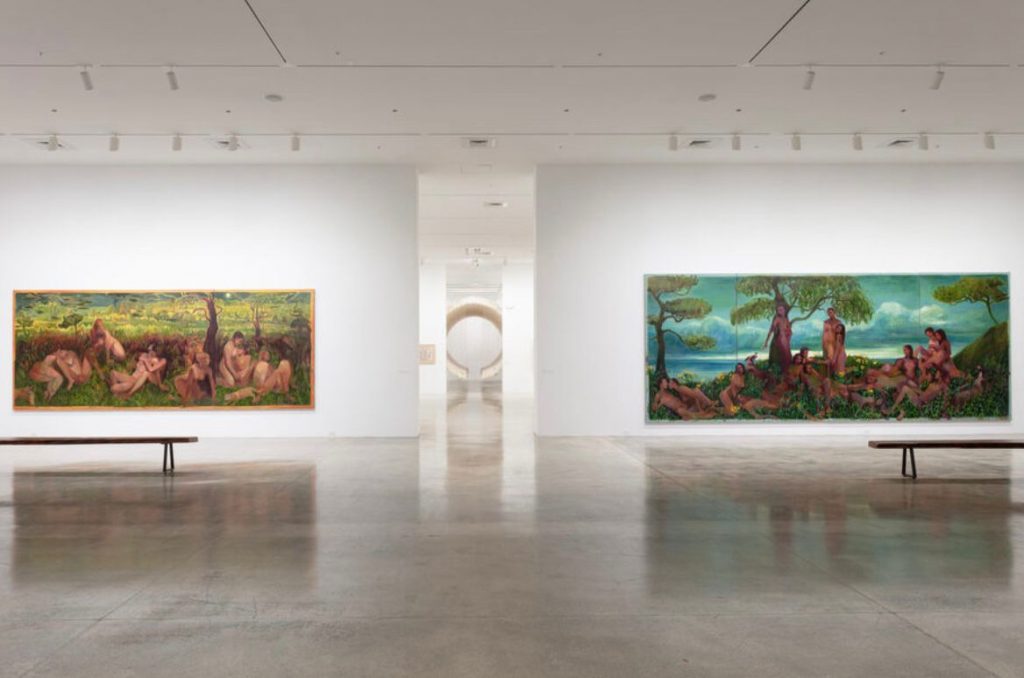
(Image credit: Rubell Museum, Miami — Architecture by Selldorf Architects. Photographs via Wikimedia Commons, licensed under Creative Commons Attribution–ShareAlike 4.0 [CC BY-SA 4.0).
Industrial Grace: When a Warehouse Learned How to Listen
I.The Discipline of Not Competing With Art
There is a particular temptation when designing for powerful collections: to perform alongside them.
The Rubell Museum resists this temptation completely.
Housed in a former industrial warehouse in Miami’s Allapattah district, the museum’s 2019 transformation by Selldorf Architects is an exercise in architectural restraint so precise it borders on asceticism. Nothing here shouts. Nothing gestures. Nothing attempts to steal focus from the art it contains.
This is not minimalism as style.
It is minimalism as ethic.
II.A Warehouse That Keeps Its Memory
The building does not erase its industrial origins.
Concrete walls remain exposed. Volumes remain legible. Structural spans retain their muscular clarity. Rather than disguising the warehouse, the architecture refines it — sanding roughness into calm without polishing it away.
The result is a building that remembers where it came from.
This memory matters. It grounds contemporary art in a space of labour rather than luxury, production rather than display.
III. Selldorf Architects and the Architecture of Deference
Selldorf Architects’ work has long been defined by an almost radical humility.
At the Rubell Museum, this humility becomes architectural intelligence. Proportions are tuned carefully. Transitions are slow. Light is introduced without drama.
The architecture does not frame art aggressively.
It steps aside for it.
This deference is not weakness. It is confidence.
IV.Light as Calibration, Not Spectacle
Lighting is one of the museum’s quiet triumphs.
Natural light is introduced selectively — filtered, diffused, and controlled. Artificial lighting is precise, neutral, and unobtrusive. The building understands that contemporary art demands clarity, not atmosphere imposed from above.
Light here reveals without editorialising.
The museum does not tell you how to feel.
It allows you to see.
V.Proportion as Silent Authority
Nothing in the Rubell Museum is oversized.
Galleries are generous but not monumental. Ceiling heights are calibrated rather than heroic. Circulation spaces remain calm, almost domestic in scale.
This proportional discipline creates a sense of ease — a feeling that the building is confident enough not to impress.
The architecture does not posture.
It holds.
VI.Circulation Without Choreography
Movement through the museum is intuitive.
There are no grand axes, no forced narratives. Visitors drift rather than process. Rooms unfold logically without being sequenced aggressively.
This freedom mirrors the collection itself — eclectic, global, and unconcerned with linear art history.
The building accommodates this openness without trying to impose order where none is needed.
VII. Concrete as Neutral Ground
Concrete, often treated as expressive material, is rendered here as neutral field.
Its tone is steady. Its texture consistent. It provides weight without drama, presence without emphasis.
Against this backdrop, art asserts itself clearly — colour, form, and concept rising forward without architectural interference.
The walls do not compete.
They listen.
VIII. A Museum Without Monumentality
Unlike many contemporary museums, the Rubell does not announce itself as civic monument.
Its exterior remains understated, almost anonymous within its neighbourhood. This lack of spectacle is deliberate.
The museum privileges experience over image, interior over icon.
It does not demand pilgrimage.
It rewards discovery.
IX.Miami Without Gloss
Miami’s architectural culture is often defined by shine — glass, polish, reflection.
The Rubell Museum offers an alternative register.
Here, seriousness replaces gloss. Permanence replaces novelty. The building’s calm becomes a counterpoint to the city’s visual noise.
This contrast gives the museum cultural weight beyond its walls.
X.Art, Finally Undistracted
The Rubell collection is formidable — challenging, political, and often confrontational.
The architecture understands this.
By removing itself from the conversation, it allows the art to speak at full volume. There are no competing curves, no dramatic shadows, no spatial theatrics.
The building does not frame interpretation.
It gets out of the way.
XI.A New Model for the Private Museum
As private museums proliferate globally, many struggle with architectural excess — buildings designed to validate wealth rather than serve art.
The Rubell Museum proposes a different model.
It suggests that seriousness, restraint, and respect may be the most radical architectural gestures available.
XII. Conclusion: When Architecture Knows Its Place
The Rubell Museum succeeds because it knows exactly what it is not.
It is not an icon.
It is not a statement.
It is not a brand.
It is a vessel — calibrated, quiet, and disciplined — built to support art without interference.
In an age of architectural noise, this refusal to compete may be its most powerful act.
You May also like
By Rojina Bohora
By Rojina Bohora
By Rojina Bohora