
Queen Camilla, Barbie, & A Curiously Modern Monarchy
By Anne Canal
Publication Date 1st April 2024: 08:06 GMT
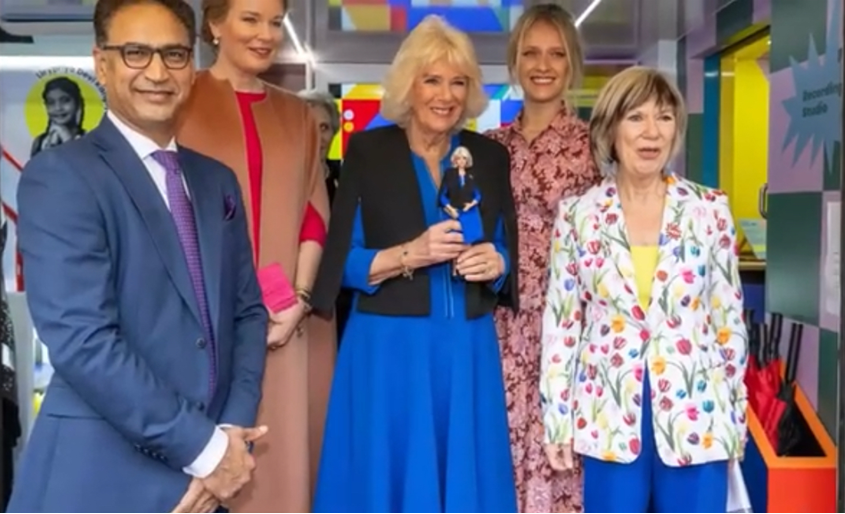
(Image Credit: YouTube Channel Real Time News)
On a crisp afternoon in March 2024, Buckingham Palace—an institution as steeped in ritual as any cathedral—became the unlikely theatre for a symbolic collision of monarchy and mass culture: Queen Camilla was presented with a bespoke Barbie doll made in her own likeness. Not as a charity auction piece, not as a dry historical curiosity, but as a deliberate emblem of contemporary womanhood and the monarchy’s evolving public face.
The moment was simple. Surrounded by ambassadors of gender equality, British cultural icons, and schoolgirls gathered for an International Women’s Day reception, Her Majesty held the doll—clad in a tiny duplicate of her blue Fiona Clare dress and Amanda Wakeley cape—before quipping with a characteristic blend of warmth and self-effacement:
“You’ve taken about 50 years off my life—we should all have a Barbie.”
It was a joke rooted in performance: the queen, at seventy-five, making light of a plastic effigy that somehow made her appear decades younger. Yet beneath the levity lay a curious historical layering—queens, suffragettes, girls with big ambitions, and a global toy brand all intersecting at a single palace salon.
Barbie Meets the Crown
The doll was not a commercial release but a one-off creation by Mattel presented in recognition of Queen Camilla’s role as president of the Women of the World (WOW) Foundation, an organisation committed to spotlighting and dismantling barriers facing women and girls. The WOW Girls Festival Bus—an initiative touring community centres and schools to bring opportunities and mentorship directly to young people—had concluded its nationwide journey at the palace that day, embodying the sort of forward-looking activism Barbie’s modern marketing increasingly embraces.
It’s worth unpacking how telling this narrative is: Barbie, once a lightning rod for debates about female imagery and unrealistic beauty standards, has in recent years been rebranded as a platform for empowerment. Mattel’s “Role Models” campaigns and limited-edition Barbies honoring figures from scientists to artists make clear that this plastic icon is being reframed as a cipher for possibility rather than conformity.
For Camilla—the queen consort whose own public image has been shaped by scandal, reinvention, and scrutiny—being immortalised in such a form is laden with paradox.
Between Scandal and Symbol
Queen Camilla did not come to royal life under the most auspicious circumstances. Her relationship with King Charles, emerging into public view during a period of intense media scrutiny and painful for many who adored Diana, Princess of Wales, left long shadows in the public imagination. That historical context means gestures like a Barbie doll are bound up not just in ceremony but in cultural negotiation over character and legacy. Indeed, commentators have noted that some royal watchers greeted the Barbie revelation with ambivalence—even derision—reminding the world that pop culture tributes seldom stay apolitical.
Yet in the palace’s Great Room, surrounded by women ranging from Dame Helen Mirren to grassroots activists, the doll was less an accessory than a statement: a metaphor for how power and femininity are being reimagined on the global stage.
Camilla used the platform not to deflect criticism but to anchor her own narrative in a longer history of women demanding change. In her address, she displayed two stones thrown during a suffragette protest in 1914—objects preserved by royal order—telling the audience they represented “hope … for women in the present and in the future.” That juxtaposition—of militant push for rights and gentle royal stewardship—summarises the delicate balancing act the modern monarchy now performs.
The Power of Play
It is tempting to dismiss the queen’s Barbie moment as a whimsical media artefact, an Instagram-ready snippet to distract from deeper institutional challenges. But within that moment lies something oddly generative: an affirmation that symbols still matter.
Barbie is, after all, a storyteller’s object—an avatar of aspiration, of identity, of play. To be Barbie-fied in a palace context suggests that even the most enduring institutions must find ways to speak in the vernacular of contemporary culture if they hope to remain meaningful.
And so Queen Camilla’s laughter—her gracious acceptance of this doll version of herself—was more than self-deprecation. It was a performance of adaptability, of an institution acknowledging that the old certainties of monarchy must now share space with the unpredictable, often contradictory rhythms of democratic culture.
In plastic and in palace halls alike, the message was the same: imagine all the people—girls and women, queens and citizens—finally seeing themselves reflected in the stories we tell.