
One Thousand Museum, Miami
By Rojina Bohora
Publication date: 13 June 2019, 09:00 GMT
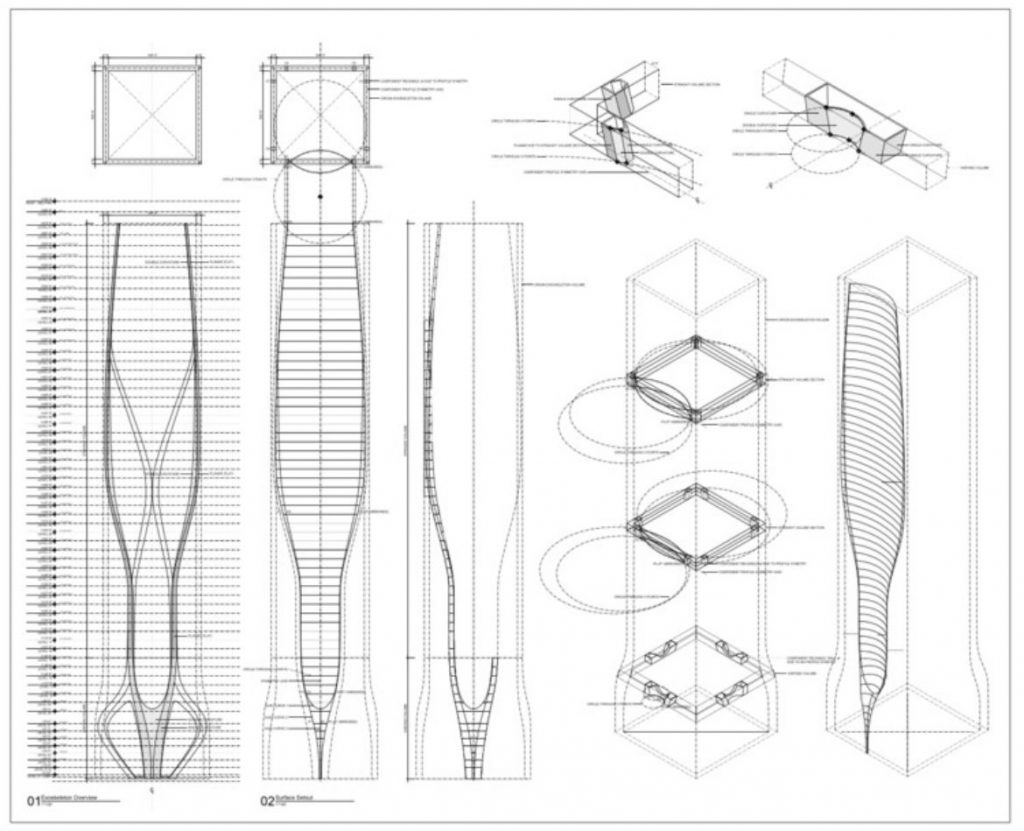
Image credit: One Thousand Museum, Miami — Architecture by Zaha Hadid Architects Photographs via Wikimedia Commons, licensed under Creative Commons Attribution–ShareAlike 4.0 (CC BY-SA 4.0). Images used with attribution
The Last Curve: How Zaha Hadid Left Her Signature on the SkY
I.A Tower That Refused to Stand Still
Miami’s skyline is crowded with ambition.
Glass slabs, reflective prisms, and speculative silhouettes jostle for attention along Biscayne Bay. Against this backdrop, One Thousand Museum does something quietly radical: it moves.
Completed in 2019, the tower’s sinuous exoskeleton wraps the building like muscle and bone, pulling concrete into motion. It is instantly recognisable — not because it is tall, but because it refuses rigidity.
This was never meant to be a neutral building.
It was meant to be felt.
II.Zaha Hadid’s Final High-Rise
One Thousand Museum holds a particular weight in architectural history.
It is the last skyscraper personally designed by Zaha Hadid before her death in 2016 — completed posthumously by her practice. As such, it reads not as an experiment, but as culmination.
Many of Hadid’s earlier towers explored fluidity through surface. Here, fluidity becomes structure.
The building does not wear curves.
It is the curve.
III. The Exoskeleton as Architecture, Not Ornament
The tower’s most defining feature — its external concrete exoskeleton — is not applied decoration.
It is structural, seismic, and spatial. The skeleton absorbs lateral forces, allowing interiors to remain column-free. Balconies emerge seamlessly from the structural frame, turning engineering into lived experience.
This integration dissolves the usual boundary between architecture and structure.
There is no façade here — only anatomy.
IV.Concrete Reimagined
Concrete, often associated with heaviness, is transformed into something almost elastic.
Its whiteness reflects Miami’s light. Its curvature softens scale. Shadows trace movement across its surface throughout the day, animating the building without mechanical display.
The tower does not shimmer like glass.
It breathes with light.
This choice resists Miami’s default material language and asserts a different urban temperament.
V.Luxury Without Glassy Distance
Inside, the building houses ultra-luxury residences — yet the experience is notably tactile.
Balconies are deep and integrated. Views are framed by structure rather than erased by glass. Occupants are held within the building’s form, not projected outward as spectators.
Luxury here is not detachment.
It is immersion.
The city is felt through enclosure, not exposure.
VI.Engineering as Design Partner
The project’s complexity demanded close collaboration between architects and engineers.
The exoskeleton’s geometry required bespoke formwork and advanced modelling. Each curve was resolved structurally before it was resolved visually.
This discipline matters.
The building’s expressiveness is not improvisational.
It is earned through calculation.
VII. A Feminine Monument Without Sentiment
One Thousand Museum is often described in gendered terms — fluid, organic, sensuous.
Yet the building avoids sentimentality.
Its curves are not decorative gestures; they are rigorous responses to force, load, and movement. This is not softness as weakness. It is strength articulated differently.
The tower challenges the visual masculinity of the skyscraper without rejecting power.
VIII. Miami’s Relationship With the Icon
Miami has embraced architectural icons eagerly — sometimes too eagerly.
What distinguishes One Thousand Museum is its seriousness. It does not rely on novelty alone. It sustains attention through depth — structural, spatial, and experiential.
It feels less like a marketing object and more like a commitment.
IX.The Legacy of Hadid, Reaffirmed
Hadid’s work was often misunderstood as formal excess.
This building corrects that reading.
Here, form is inseparable from logic. Movement is structural necessity. Complexity is controlled.
One Thousand Museum clarifies what her architecture always argued:
That geometry can be both expressive and exacting.
X.A Tower That Changes the Conversation
The tower’s presence has shifted expectations.
It demonstrates that high-rise residential architecture can be sculptural without becoming frivolous, iconic without becoming isolated, and expressive without abandoning discipline.
It raises the bar — quietly but decisively.
XI.Time, Weather, and Durability
As the building settles into Miami’s climate, its material choices continue to prove prescient.
Concrete weathers gracefully. The exoskeleton ages as surface rather than skin. The tower anticipates time rather than denying it.
This foresight is architectural maturity.
XII. Conclusion: The Curve That Remains
One Thousand Museum stands not only as a landmark, but as a closing sentence.
In its curves, its discipline, and its refusal to default to glass, the tower encapsulates a career that redefined how buildings could move, feel, and think.
It does not shout.
It holds its line, even as the city shifts around it.
And in Miami’s ever-changing skyline, that clarity may be its most lasting contribution.
You May also like
Rubell Museum, Miami
By Rojina Bohora

By Rojina Bohora
By Rojina Bohora