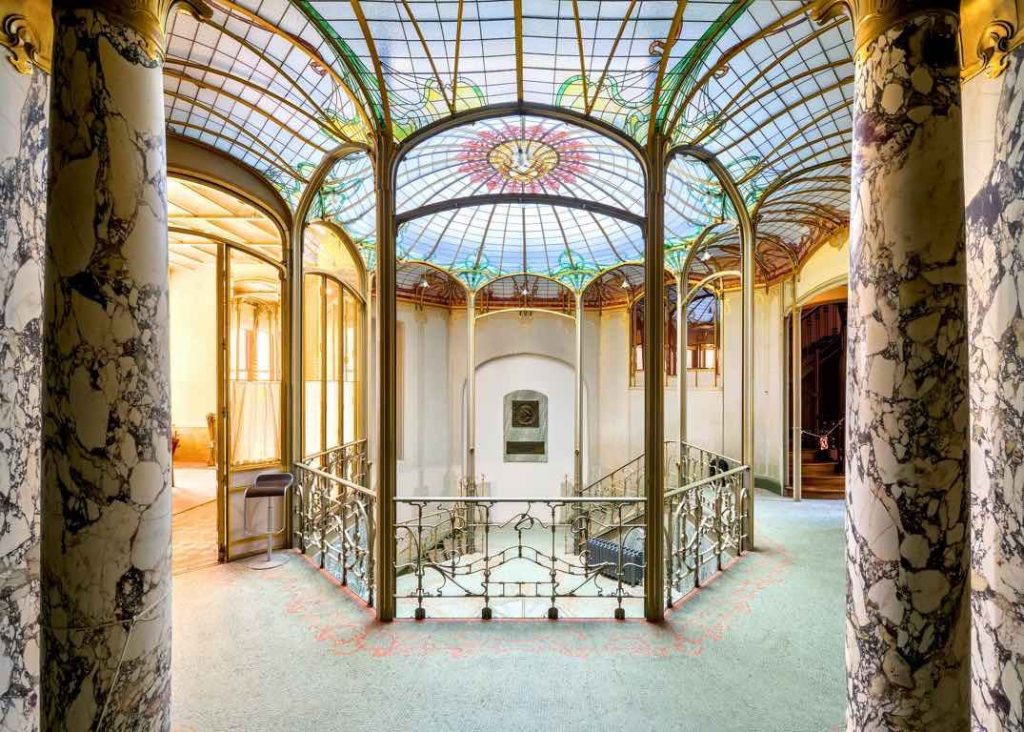
Nightingale Village, Brunswick
By Rojina Bohora
Publication date: 29 August 2017, 00:00 GMT
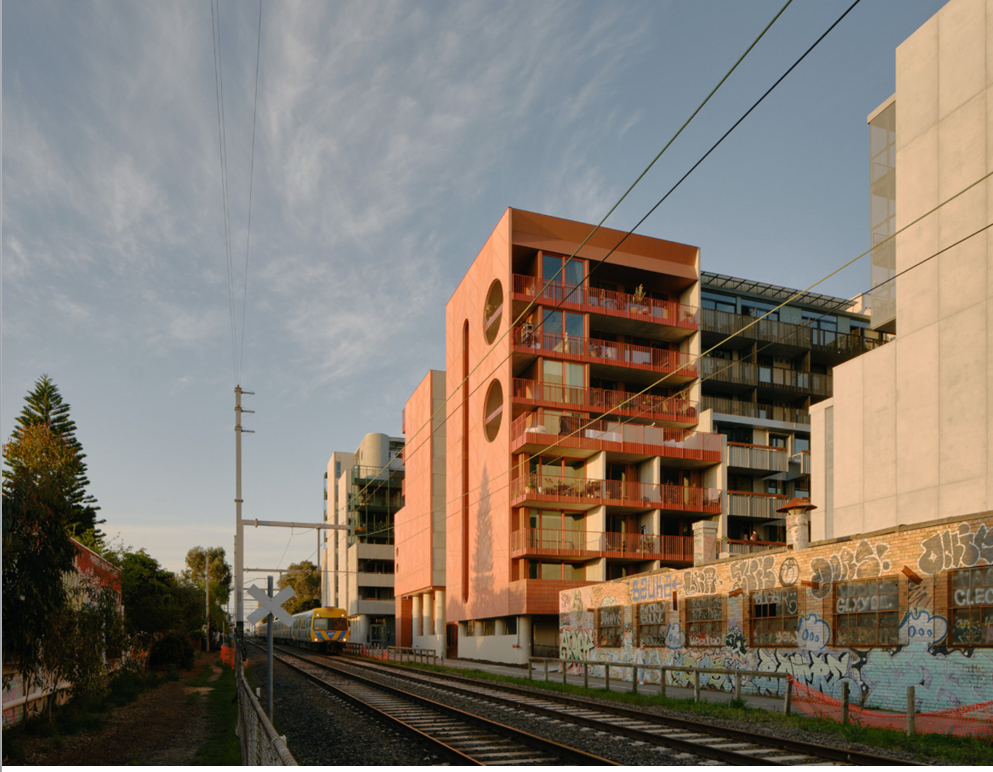
(Image credit: Nightingale Village, Brunswick — Nightingale Housing with multiple architects. Photograph via Wikimedia Commons, licensed under Creative Commons Attribution 4.0 [CC BY 4.0]).
The Architecture of Refusal: Housing That Withdrew from Speculation and Rejoined the City
- When Housing Stepped Out of the Market
Most housing projects announce themselves with optimism.
They promise lifestyle, return on investment, urban renewal. They speak the language of growth even when they quietly accelerate displacement. Architecture, in this context, is asked to soften what economics has already decided.
Nightingale Village, publicly announced in August 2017, begins from an act of refusal.
It refuses speculative pricing.
It refuses car-dependent planning.
It refuses fossil-fuel dependence.
It refuses the fiction that housing is primarily a financial instrument.
In doing so, it makes a claim that is both architectural and political:
Housing can be designed as civic infrastructure rather than tradable commodity.
II.Six Architects, One Ethical Framework
Nightingale Village is not the product of a single authorial vision. It is a collaboration between six architectural practices, coordinated under the Nightingale Housing model.
This multiplicity is not incidental. It is structural.
Rather than imposing stylistic unity, the project is unified by rules of conduct:
- capped profit margins
- transparent costs
- no on-site car parking
- fossil-fuel-free operation
- long-term affordability
- prioritisation of owner-occupiers
- community governance
Architecture here does not compete for attention.
It subordinates itself to principle.
This is a rare inversion in contemporary practice.
III. Form Without Iconography
Nightingale Village does not look radical in the way architectural magazines often reward.
Its buildings are modest in height. Their forms are legible. Materials are durable rather than expressive. There is no singular façade engineered for instant recognisability.
This restraint is deliberate.
Speculative housing often relies on visual novelty to justify inflated value. Nightingale Village withdraws from that economy entirely. Its architecture refuses to perform desirability as spectacle.
Instead, it performs habitability.
IV.Courtyard as Social Contract
At the heart of Nightingale Village is shared open space — courtyards that operate as communal ground rather than residual leftover.
These spaces are not decorative amenities. They are social infrastructure.
They support:
- informal interaction
- shared responsibility
- passive surveillance through presence
- collective ownership of space
In dense urban housing, privacy is often protected through separation. Nightingale proposes a different model: privacy through trust, cultivated spatially.
The courtyard becomes the project’s moral centre.
V.The Refusal of the Car
One of Nightingale Village’s most controversial decisions was its near-elimination of private car parking.
This was not a symbolic sustainability gesture. It was a direct challenge to the spatial dominance of the automobile in Australian cities.
By prioritising proximity to public transport, cycling infrastructure, and walkability, the project reallocates land from storage of vehicles to habitation, landscape, and shared life.
The architecture asks residents to live differently — not ascetically, but deliberately.
VI.Sustainability Without Technological Heroics
Environmental performance at Nightingale Village is achieved through cumulative intelligence rather than singular innovation.
- passive design strategies
- high-performance envelopes
- shared services
- renewable-ready systems
- elimination of gas
- reduced operational energy demand
There is no green theatre here. No gadgetry designed to impress rather than endure.
Sustainability is treated as baseline competence, not architectural identity.
VII. Affordability as Design Constraint
Affordability is often discussed as policy outcome. Nightingale treats it as a design parameter.
Capped margins limit excess.
Standardised components reduce cost.
Shared amenities replace private redundancy.
Transparency replaces financial mystification.
Architecture is not asked to aestheticise affordability. It is asked to protect it.
This is a crucial distinction.
VIII. Against the Architecture of Aspiration
Much residential architecture trades in aspiration — selling futures rather than homes.
Nightingale Village refuses this narrative. It does not promise transformation through consumption. It offers stability, dignity, and participation.
Residents are not customers.
They are stakeholders.
This reframing changes everything: how spaces are used, maintained, and valued.
IX.Governance as Spatial Practice
One of Nightingale Village’s least visible but most important features is its governance model.
Residents participate in decision-making. The community is not managed as an abstract demographic, but as a lived collective.
Architecture supports this through:
- shared rooms
- legible circulation
- spaces that invite encounter without coercion
The building does not enforce community.
It makes it possible.
X.The Risk of Being Taken Seriously
At the time of its announcement in 2017, Nightingale Village was often described as idealistic.
Critics questioned scalability. Developers dismissed it as niche. Financial institutions treated it cautiously.
Yet seriousness has a way of compounding.
Once housing demonstrates that alternative economic models can be spatially realised, the argument shifts. The question is no longer “Is this possible?” but “Why isn’t this standard?”
- Architecture After the Market’s Authority
Nightingale Village does not reject the city.
It rejects the assumption that the market alone should determine how cities are lived in.
This is architecture that understands its limits — and acts precisely within them.
It does not legislate.
It demonstrates.
XII. Conclusion: Housing That Chose to Stay
Nightingale Village is not loud architecture.
It does not shout reform.
What it does instead is more enduring: it stays.
It stays affordable.
It stays legible.
It stays socially present.
It stays resistant to extraction.
In an era when housing is increasingly treated as a liquid asset, Nightingale Village makes a quiet but radical proposition:
That architecture can choose to belong to people
rather than to price.
You May also like
By Rojina Bohara

By Rojina Bohara