Machine Learning Is Transforming Archaeology: Uncovering Lost Worlds With Code
By Lola Foresight
Publication Date: : 23 October 2017 — 13:09 GMT
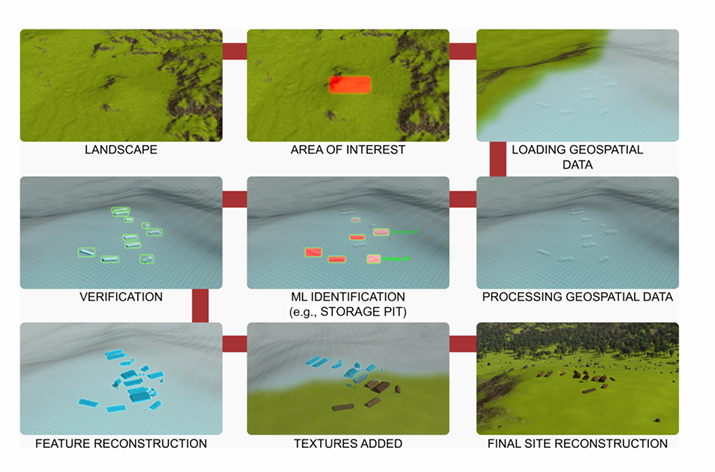
In the late summer of 2017, the world watched as LiDAR scans over Central America revealed sprawling hidden cities beneath dense jungle canopy. One month later, archaeologists publicly declared that machine learning had become one of the field’s most powerful new instruments — a quiet revolution decades in the making.
For centuries, archaeology relied on surface surveying, chance discovery, and painstaking excavation. Today, LiDAR-equipped aircraft and orbiting satellites generate terabytes of data revealing micro-variations in canopy height, soil density, geometry, and reflectivity. Machine-learning systems recognise rectilinear formations — buried plazas, causeways, terraces, defensive walls — that human eyes might overlook in a lifetime of manual analysis.
This shift is more than technological convenience. It is methodological liberation. Entire regions that were once inaccessible or too dangerous to survey can now be explored digitally, protecting archaeologists while exposing ancient landscapes with unprecedented clarity. AI triages vast search areas, allowing field teams to focus on the most promising sites. Excavation becomes targeted rather than speculative; preservation becomes preventive rather than reactive.
Machine learning also preserves heritage threatened by looting, climate change, or conflict. Rapid remote assessment identifies at-risk sites, enabling governments and NGOs to allocate resources for protection. In war zones, satellite-based models track damage patterns and illegal diggings; in coastal regions, they predict which archaeological layers will succumb to erosion.
Yet the role of AI is not to overshadow the human scientist. Archaeology remains an interpretive discipline — reading symbols, reconstructing rituals, inferring social organisation, understanding meaning. AI provides the map; archaeologists write the story. Together, they are transforming cultural heritage from a fragmented record into a coherent picture of human ingenuity.
The next decade promises even deeper integration: generative reconstruction of ancient cities, predictive modelling of undiscovered civilisations, and 3D digital repatriation of dispersed artefacts. Machine learning is not only revealing the past; it is ensuring the past survives the future.
You May also like

By Lola Foresight