Gravitational Wave Detection Explained: How LIGO’s Breakthrough Proved Einstein Right and Opened a New Era of Observing the Universe
By Lola Foresight
Publication Date: 11 February 2016 — 15:30 GMT
(Image Credit: esa)
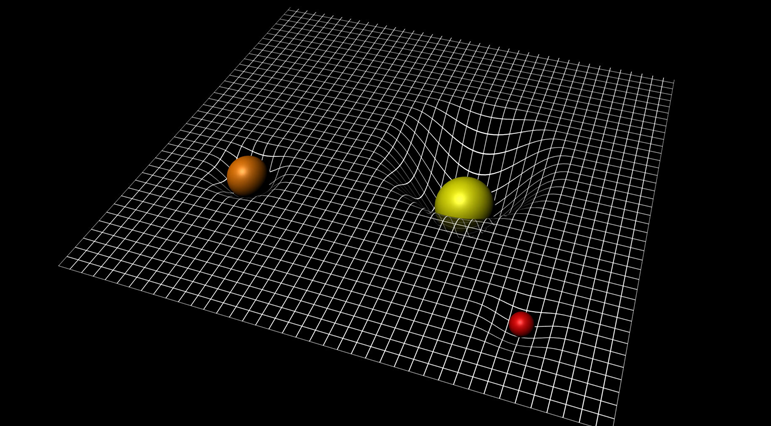
The morning of February 11th, 2016 marked one of humanity’s most extraordinary scientific announcements: the first direct detection of gravitational waves, ripples in the fabric of spacetime itself. Predicted by Einstein a century earlier, gravitational waves had long been a tantalizing mathematical idea — elegant, beautiful, and elusive.
Until LIGO heard the universe speak.
The Detection That Changed Astronomy Forever
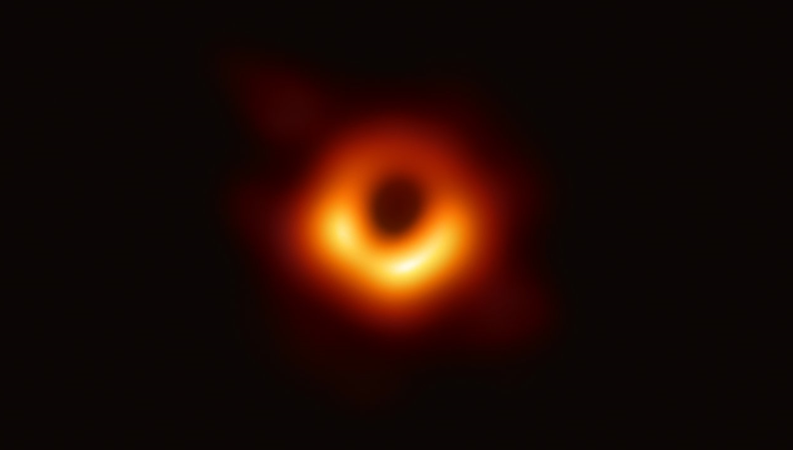
On September 14th, 2015, two black holes collided over a billion light-years away, releasing more energy in a fraction of a second than all the stars in the observable universe combined.
That signal — a faint stretching and relaxing of spacetime — traveled across the cosmos and finally brushed against Earth, nudging the enormous LIGO interferometers by a distance smaller than a proton.
It was enough.
The wave was detected, analyzed, confirmed and ultimately celebrated as the beginning of gravitational-wave astronomy.
Why It Was Revolutionary
Gravitational waves allow us to observe cosmic events that:
- Emit no light
- Produce no radio waves
- Do not glow in X-rays or gamma rays
They reveal:
- Black hole mergers
- Neutron star collisions
- The physics of the early universe
- Exotic cosmic structures
- Potentially new physics beyond Einstein
For the first time, humanity gained a new sensory organ for the cosmos.
A New Age of Discovery
Within years, LIGO and Virgo detected:
- Dozens of black hole mergers
- A landmark neutron star collision (kilonova)
- Heavy-element formation signatures (how gold is made)
- Ultra-dense matter physics inside neutron stars
Gravitational waves turned the universe into a dynamic, roaring ocean of invisible motion.
The Legacy
This discovery was not merely a scientific triumph — it was a philosophical one.
It proved that human ingenuity can detect the faintest whisper of the universe’s most violent events.
Gravitational-wave astronomy is still young, but it will reshape our cosmic understanding for centuries.
You May also like