GENE THERAPY FOR INHERITED BLINDNESS EXPLAINED: How Retinal Engineering, Viral Vectors and Genetic Repair Restored Human Sight
By Lola Foresight
Publication Date: : 19 December 2017 — 15:09 GMT
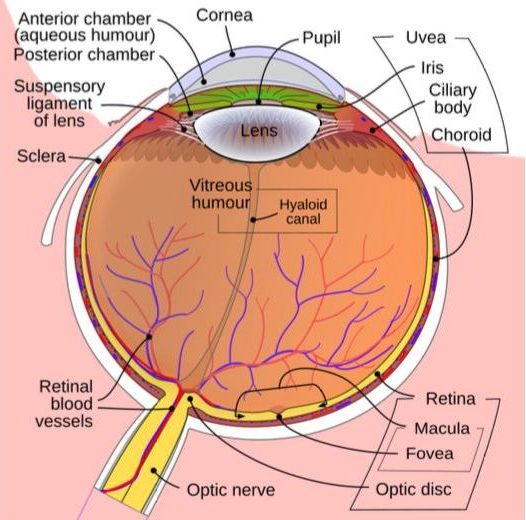
(Image Credit: Wikipedia)
In 2017, the approval of Luxturna marked one of the most profound medical achievements of the twenty-first century: reversing inherited blindness by editing the genetic instructions of retinal cells.
How It Works
Luxturna delivers a functional copy of the RPE65 gene into retinal cells using an adeno-associated viral vector. Once expressed, the new gene restores photoreceptor pathways, allowing the retina to convert light into neural signals.
The First True Proof That Gene Therapy Works
After decades of setbacks, failed trials and scientific skepticism, Luxturna provided:
- Clear clinical efficacy
- Long-lasting benefit
- Safe vector performance
- Repeatable outcomes
Patients who had lived in darkness saw light, movement, and faces — some for the first time.
Industrial and Clinical Significance
Gene therapy transformed:
- Ophthalmology
- Rare disease treatment pipelines
- AAV vector engineering
- Pricing and reimbursement models
- Regulatory frameworks for genetic medicine
This was the inflection point where gene therapy transitioned from experimental to actionable.
The Emotional Impact
The real legacy lies with the patients:
- Children recognizing their parents’ faces
- Adults navigating independently
- Individuals experiencing color for the first time
Medicine rarely delivers miracles.
This was one of them.
The Legacy
Luxturna proved that genetic destiny can be rewritten.
It opened the door for hundreds of gene therapies now in development — each aiming to repair, replace or augment the instructions of life.
The Platform Advantage: How Software Logic Entered Biology
The enduring value of mRNA is not its role in COVID-19 — it is its platform potential.
Just as smartphones evolved from single-purpose devices into multi-application ecosystems, mRNA unlocks:
- Rapid pandemic response
- Cancer neoantigen vaccines
- HIV and malaria vaccine candidates
- Allergy desensitization
- Autoimmune modulation
- Personalized immunotherapies
- Cardiovascular and metabolic correction tools
The same core components — the mRNA backbone and the lipid nanoparticle system — can be repurposed repeatedly. Only the sequence changes.
This creates a repeatable, scalable, software-like biomanufacturing pipeline, enabling global health systems to respond to future pathogens with unprecedented agility.
Geopolitics and Economics: A New Healthcare Strategy
The strategic implications run deep:
- Nations began investing in genomic surveillance as a matter of national security.
- Pharmaceutical pipelines reorganized around programmable therapeutics.
- Regulators shifted from product-based approvals to platform-based evaluations.
- Supply chains reoriented toward mRNA raw materials, not virus cultures.
The Legacy
mRNA vaccinology proved that biology can run on information timelines.
This one breakthrough permanently reshaped pandemic preparedness, biomedical R&D, national resilience, and global health governance.
It is not an exaggeration to say that the mRNA era marks the beginning of digital medicine.
You May also like