
Fukumura Cottage, Japan
By Rojina Bohora
Publication date: 15 July 2021, 09:00 GMT
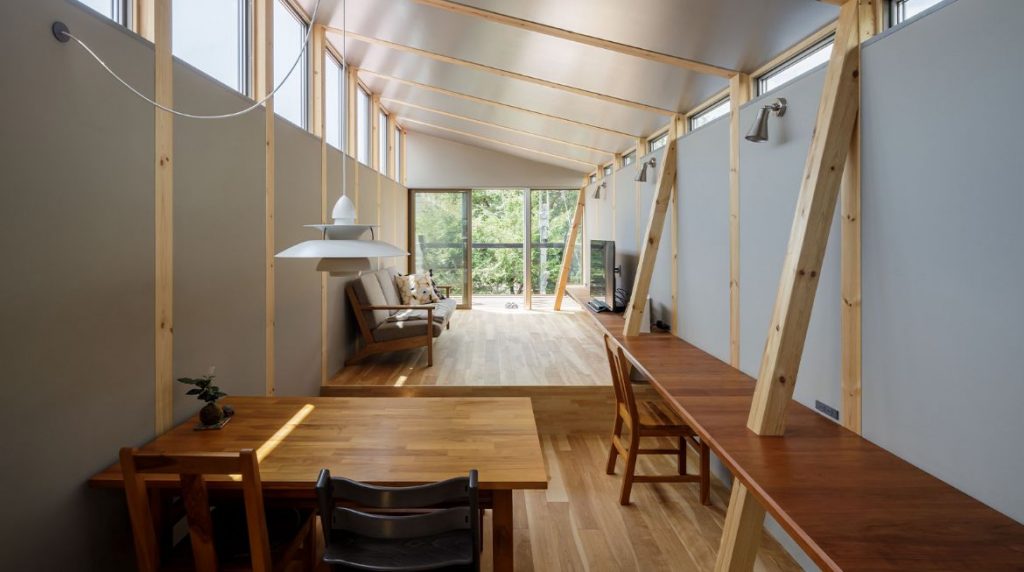
(Image credit: Fukumura Cottage, Japan — Architecture by FMD Architects. Images released by the architects for editorial use).
The Architecture of Quiet: How a Small House Relearned the Art of Attention
I.The Radical Modesty of the Small Building
Architectural culture has become accustomed to equating importance with scale.
Museums, towers, and masterplans dominate discourse, while small buildings are often treated as exercises — preliminary, private, or peripheral. Yet it is in the smallest commissions that architecture is most exposed. There is no scale to hide behind, no programme to dilute intention.
Fukumura Cottage, completed in July 2021, accepts this exposure fully.
Set between forest and sea, the house does not perform retreat as luxury. It performs it as discipline.
II.A Site That Demands Restraint
The cottage’s site is neither dramatic nor neutral. It is quietly demanding.
Surrounded by trees and open to shifting coastal light, the environment resists domination. Any excessive gesture would feel intrusive; any literal mimicry would feel sentimental.
FMD Architects respond with a structure that holds back.
The building does not seek to frame the landscape theatrically. It allows the landscape to remain primary, offering only enough architecture to make inhabitation possible.
III. The Folded Roof as Gesture of Protection
The defining architectural move is the roof.
Asymmetrical and gently folded, it reads almost as a single sheet bent into place. Its form recalls origami without referencing it directly — a structural fold rather than a cultural symbol.
This roof does more than cover.
It:
- shelters without enclosing
- directs rain and light
- mediates scale between tree canopy and domestic interior
The roof is not expressive.
It is protective.
IV.Transparency Without Exposure
Glass wraps much of the building, but transparency here is carefully controlled.
Views outward are generous; views inward are shielded by orientation, depth, and vegetation. The cottage feels open without feeling vulnerable — a crucial distinction in retreat architecture.
This balance produces a condition rare in contemporary houses: calm without isolation.
The inhabitant is not sealed off from the world.
They are held within it.
V.Interior as Continuous Space
Inside, the cottage unfolds as a single, flowing interior.
There are no grand separations, no emphatic thresholds. Functions bleed gently into one another — living, resting, observing. Movement is intuitive, almost unconscious.
This continuity shifts attention outward.
The house does not ask to be admired internally.
It asks to be lived quietly.
VI.Material Honesty Without Affectation
Material choices are spare: timber, glass, and restrained finishes.
Nothing is overworked. Nothing is distressed for effect. Surfaces are allowed to remain what they are.
This honesty is not ideological minimalism.
It is trust in sufficiency.
The building assumes that enough is enough.
VII. Light as Companion, Not Feature
Light enters the cottage gradually, filtered by trees and roof geometry.
There are no dramatic apertures, no framed spectacles. Light changes through the day, registering time without interruption.
The architecture does not choreograph light.
It lives with it.
This produces a subtle but profound effect: time becomes perceptible again.
VIII. Japanese Domestic Lineage, Reconsidered
While unmistakably contemporary, the cottage belongs to a long lineage of Japanese domestic architecture that values impermanence, lightness, and attentiveness.
Yet it does not quote tradition.
There are no tatami clichés, no nostalgic gestures. The building absorbs historical principles — modulation, threshold, restraint — without reproducing forms.
This is continuity without imitation.
IX.Retreat Without Escapism
Many retreat houses are conceived as escape pods — sealed environments designed to remove occupants from complexity.
Fukumura Cottage does the opposite.
It heightens awareness rather than numbing it. Sounds, weather, and light are present. The world is not edited out.
The retreat offered here is not escape.
It is attention restored.
X.Architecture That Accepts Smallness
The cottage does not attempt to exceed its scale.
It does not claim universality. It does not position itself as prototype. Its ambition lies in precision rather than influence.
This acceptance of smallness is rare — and generous.
It suggests that architecture need not always aspire upward or outward. Sometimes it can simply settle correctly.
XI.Living With Fewer Instructions
One of the cottage’s most striking qualities is how little it instructs behaviour.
There are no didactic gestures, no over-programmed zones. The inhabitant is free to use space as mood and moment dictate.
Architecture here provides permission rather than prescription.
XII. Conclusion: When Architecture Stops Speaking Loudly
Fukumura Cottage reminds us of something architectural culture often forgets:
That buildings do not need to speak loudly to matter.
By folding a roof, opening a wall, and trusting the environment, this small house achieves a form of clarity that many larger projects struggle to reach.
It does not declare itself important.
It becomes so through care.
And in an age of architectural noise, that quiet may be its most enduring achievement.
You May also like
By Rojina Bohora
By Rojina Bohora
By Rojina Bohora