
Fruitmarket Gallery, Edinburgh
By Rojina Bohora
Publication date: 21 February 2022, 09:00 GMT
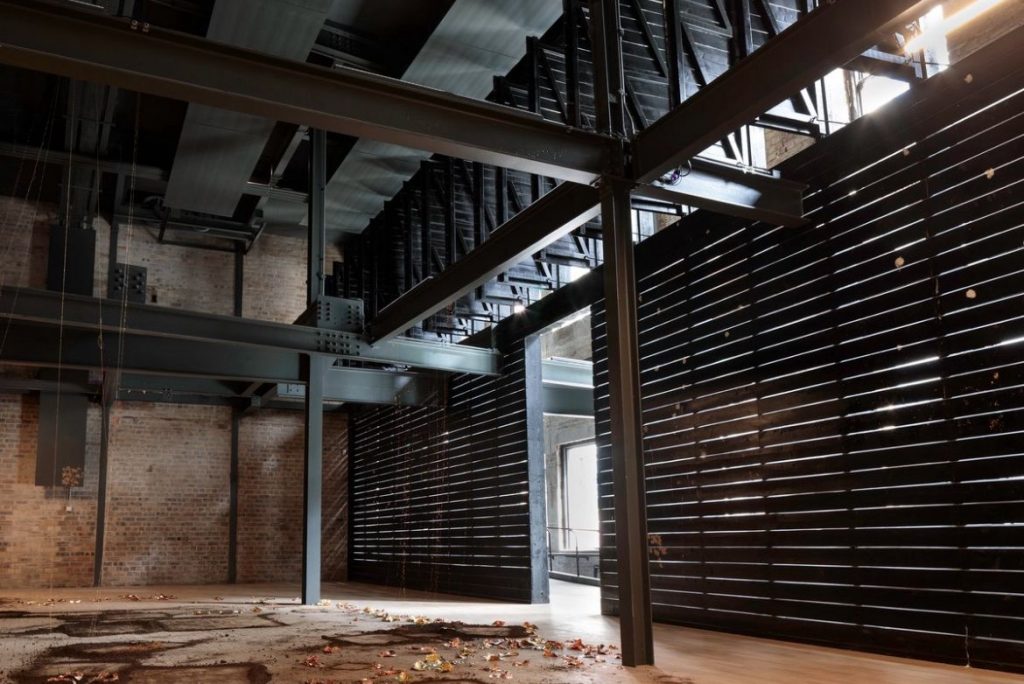
(Image credit: Fruitmarket Gallery, Edinburgh — Architecture by Reiach and Hall Architects. Photograph via Wikimedia Commons, licensed under Creative Commons Attribution–ShareAlike 4.0 [CC BY-SA 4.0]).
Raw Meets Refined: When an Art Institution Relearned Its Industrial Voice
I.An Institution Formed by Exchange
The Fruitmarket Gallery has always been an institution shaped by movement.
Housed beside Edinburgh’s Waverley Station, it emerged from the city’s mercantile infrastructure — warehouses, loading bays, and trading floors — rather than from a purpose-built cultural monument. Art arrived here by way of commerce, transit, and contingency.
The renovation completed in early 2022 does not erase this inheritance.
It sharpens it.
II.The Problem of Expansion Without Dilution
When cultural institutions expand, they often dilute their character in the process — smoothing rough edges, clarifying narratives, and replacing improvisation with polish.
The Fruitmarket’s challenge was the opposite: how to grow without losing rawness.
Reiach and Hall Architects approached the project with restraint. Rather than wrapping the gallery in a new identity, they extended its existing logic — industrial, adaptable, and open-ended.
III. A Staircase as Spatial Argument
The project’s most visible new element is its staircase — sculptural, unapologetic, and central.
But this is not a staircase as spectacle.
It operates as a spatial connector, drawing visitors upward and backward through the building’s layered history. Steel, concrete, and exposed services are left legible, reminding visitors that art here exists within a working structure.
Movement becomes part of the exhibition experience.
IV.Doubling Space Without Doubling Noise
The renovation effectively doubles the gallery’s exhibition capacity, yet the building does not feel louder.
New galleries are proportioned carefully, maintaining intimacy even at larger scale. Circulation avoids grand axes, favouring incremental discovery.
The architecture supports art without insisting on how it should be encountered.
V.The Warehouse Reclaimed
Behind the gallery, a former warehouse has been transformed into a performance and event space.
Crucially, its industrial character remains intact. Surfaces are robust. Volumes are generous. Acoustic interventions are subtle.
This space does not pretend to be a theatre.
It remains a working room — flexible, open, and responsive.
VI.Light as Negotiated Condition
Daylight enters selectively, filtered through existing openings and new insertions that respect the building’s industrial envelope.
There is no attempt to flood the galleries with light at the expense of control. Instead, illumination is calibrated — attentive to both artworks and the building’s material presence.
Light is treated as collaborator, not feature.
VII. Reiach and Hall’s Material Honesty
Reiach and Hall Architects are known for material clarity, and the Fruitmarket renovation exemplifies this discipline.
Steel is steel. Concrete is concrete. Timber appears where warmth is needed, not as decorative contrast.
Nothing is disguised.
Nothing is romanticised.
The building’s authority comes from truthfulness.
VIII. Accessibility Without Erasure
The renovation improves accessibility throughout — lifts, routes, thresholds — without sanitising the building’s character.
This is accessibility achieved through intelligent planning rather than cosmetic smoothing. The industrial fabric remains present, but no longer exclusionary.
Care is embedded quietly.
IX.A Gallery That Accepts Change
One of the Fruitmarket’s defining qualities is its openness to evolving forms of art — installation, performance, sound, and social practice.
The architecture reflects this openness.
Spaces are not fixed in identity. Services are exposed and adaptable. The building anticipates change rather than resisting it.
This flexibility is architectural generosity.
X.Edinburgh’s Cultural Infrastructure Grows Up
Edinburgh’s cultural buildings often oscillate between heritage reverence and festival spectacle.
The Fruitmarket renovation offers a third path: continuity without nostalgia, seriousness without solemnity.
It strengthens the city’s cultural infrastructure without demanding attention.
XI.The Value of Remaining Unfinished
Despite the renovation’s precision, the Fruitmarket does not feel completed in the conventional sense.
It retains an openness — spatial, material, and conceptual — that allows future adaptation.
This refusal of finality aligns perfectly with contemporary art’s shifting nature.
XII. Conclusion: An Institution That Chose to Stay Honest
The renovated Fruitmarket Gallery does not reinvent itself.
It recommits.
By expanding space while preserving industrial character, by clarifying circulation without imposing hierarchy, and by treating architecture as support rather than spectacle, the project reinforces what made the institution vital in the first place.
It proves that growth need not mean polish — and that cultural architecture can remain tough, flexible, and generous all at once.
You May also like
By Rojina Bohora
By Rojina Bohora
By Rojina Bohora