Artemis II: The Return to the Edge of the Human Horizon
By Rojina Bohora
Publication Date 1st April 2026: 08:48 GMT
(Image credit: NASA)
On the day humanity chooses to look outward again, history does not announce itself with noise—it shifts quietly, almost imperceptibly, beneath our feet. Today marks such a moment. The forthcoming Artemis II mission is not merely a flight; it is a recalibration of human ambition, a reassertion that our species still intends to explore not just the Earth we inhabit, but the universe that surrounds it.
To understand Artemis II is to understand something deeper than rockets and trajectories. It is to understand the psychology of a civilization that, having once reached the Moon, is now asking itself why it should go back—and what it must become in order to go further.
From Apollo to Artemis: Why Return at All?
When NASA last sent humans beyond low Earth orbit during the Apollo program, the objective was geopolitical as much as scientific. The Moon was a proving ground—an arena in which technological superiority could be demonstrated before a global audience.
Artemis II emerges from a different world.
There is no singular rival, no binary contest. Instead, there is a multipolar, technologically interdependent planet facing challenges that are planetary in scale—climate instability, resource constraints, and the long-term fragility of a single-world civilization. The Moon is no longer a finish line. It is infrastructure.
Artemis II is the first crewed step toward building that infrastructure.
What Artemis II Actually Is
Artemis II will be the first crewed mission of the Artemis program, sending astronauts aboard the Orion spacecraft on a journey around the Moon and back to Earth—without landing.
At first glance, this may appear modest. After all, humans orbited the Moon over half a century ago.
But this comparison misses the point.
Artemis II is not repeating history—it is requalifying humanity for deep space.
Every system on board—from life support to navigation—is designed not for a short demonstration, but for sustained operations far beyond Earth orbit. The mission is a systems test at a human scale, where engineering meets physiology, and where failure is not theoretical.
The Architecture of Return
The mission rests on a technological triad:
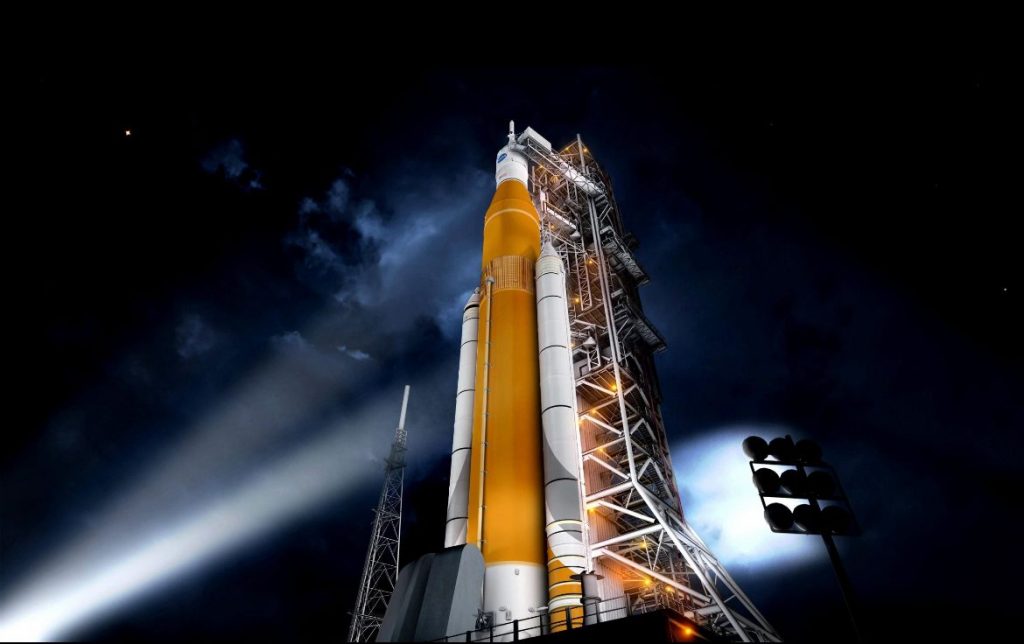
•The Space Launch System (SLS), the most powerful rocket ever built by NASA
•The Orion spacecraft, engineered for deep-space human survival
•The emerging lunar infrastructure that will follow—most notably the Lunar Gateway
Together, these elements form the skeleton of a long-term presence beyond Earth.
Unlike Apollo, which was designed for brief excursions, Artemis is designed for continuity. The Moon becomes not an endpoint, but a staging ground—for science, for industry, and eventually, for Mars.
Why This Matters Scientifically
For younger readers, Artemis II might feel like a spectacle. For scientists, it is something far more consequential: a platform.
The Moon offers:
•Pristine geological records of the early solar system
•Low-gravity environments for biological and material science experiments
•Radio-quiet zones on the far side, ideal for deep-space observation
But perhaps most importantly, it offers proximity. At roughly three days away, the Moon allows humanity to test deep-space systems with a safety margin that Mars will never afford.
In this sense, Artemis II is not about discovery alone—it is about preparation.
The Human Dimension
Spaceflight is often framed in terms of hardware. Yet the most complex system aboard Artemis II is the human being.
Outside Earth’s protective magnetosphere, astronauts will encounter:
•Increased cosmic radiation exposure
•Profound psychological isolation
•The physiological effects of extended microgravity
Artemis II will help answer a fundamental question: not just can humans survive deep space, but how well—and for how long.
This is where the mission becomes intimate. It is not just a test of machines, but of endurance, cognition, and resilience.
A Cultural Inflection Point
Every era of exploration reshapes how humanity understands itself.
The voyages of the 15th century expanded geography. The industrial revolution expanded production. The digital age expanded information.
Artemis expands perspective.
To see Earth from lunar distance is to confront a truth that no data set can fully communicate: that the divisions we consider permanent are, from afar, invisible. Artemis II carries not just astronauts, but a vantage point—one that has historically altered politics, philosophy, and environmental awareness.
The Long View: Beyond the Moon
Artemis II is, by design, incomplete.
It does not land. It does not build. It does not stay.
And yet, it enables all three.
By proving that humans can once again travel safely beyond low Earth orbit, it unlocks:
•Sustained lunar surface missions
•The development of off-world habitats
•The eventual human journey to Mars
In this way, Artemis II is less a destination than a hinge—turning humanity from a species that has visited the Moon into one that intends to remain beyond Earth.
For the Next Generation
For teenagers watching today, Artemis II may feel distant—another mission, another headline.
But history suggests otherwise.
The students who watched Apollo became the engineers of the Shuttle, the scientists of the ISS, the architects of Artemis itself. The observers of today are the builders of tomorrow’s interplanetary world.
Artemis II is not just an invitation to watch.
It is an invitation to participate.
Conclusion: The Quiet Return
There is a temptation to measure significance by spectacle—to equate importance with noise.
But the most consequential moments in human history are often quiet at first.
A spacecraft leaves Earth. It arcs toward the Moon. It returns.
And in doing so, it reopens a frontier we once touched, then abandoned.
Artemis II is that reopening.
Not as a repeat of the past—but as a declaration of intent: that humanity, having learned to look inward, is ready once again to look outward—with greater wisdom, greater purpose, and a far longer horizon in mind.