
AI-Assisted Journalism & Fact-Checking: Defending Truth in the Age of Information Warfare
By Lola Foresight
Publication Date:25 November 2018 — 10:11 GMT
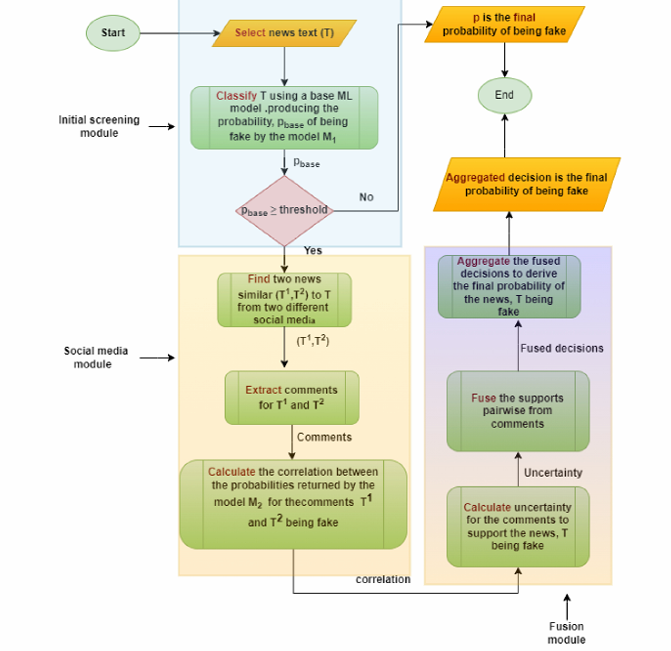
(Image Credit: MDPI)
(Image Credit: MDPI)
By late 2018, journalists were confronting an unprecedented challenge: misinformation spreading at a velocity, scale, and sophistication no human newsroom could match alone. Deepfakes, botnets, algorithmic amplification, synthetic personas, manipulated images and hyper-targeted propaganda created a battlefield in which truth struggled to keep pace with fabrication.
Two months after the first public demonstrations of AI-powered fact-checking pipelines, the global media community recognised that machine intelligence had become not merely an aid, but a necessity.
AI-assisted journalism does not eliminate human judgement—rather, it expands it. Machine-learning systems comb through millions of posts, transcripts, speeches, images and videos in real time, surfacing anomalies: identical talking points duplicated across thousands of profiles, suspicious metadata, altered pixels, contradictions between official transcripts and viral clips, or fabricated “expert quotes.” These tools flag, prioritise and triage; humans investigate, contextualise and validate.
Crucially, these systems are not arbiters of truth. They are early-warning sirens. They map networks of manipulation, show how narratives move, and highlight where journalistic scrutiny is most urgently required. AI enables journalists to spend less time wading through noise and more time conducting deep, high-quality investigative work.
Yet dangers abound. Poorly governed fact-check algorithms can inadvertently amplify certain narratives by labelling them as controversial. Over-delegation to AI risks both over-censorship and under-correction. Transparency is essential: readers must know when algorithms were used, under what assumptions, and with what limitations.
The real promise lies in augmented journalism — machine vigilance combined with human ethics. AI can detect coordinated disinformation; humans can distinguish malice from error. AI can spot manipulated images; humans can understand the motives behind them. AI can monitor global information flows; humans can defend democratic norms.
The next decade will likely see newsroom-integrated AI copilots: systems that summarise press conferences, cross-reference claims against databases, track political promises, detect toxic influence operations, and assemble provenance maps of images and videos. These will not replace journalism’s essential human core. They will defend it.
Misinformation is not merely a technical problem; it is a civic one. But technology, wielded wisely, becomes a shield for truth — ensuring that in an age of digital distortion, democracy retains its clearest tool: trustworthy, accountable, vigilant journalism.