
The Palace That Descends Towards Water
By Aletheia Gako
Publication Date: 19 February 2026 — 08:37 GMT
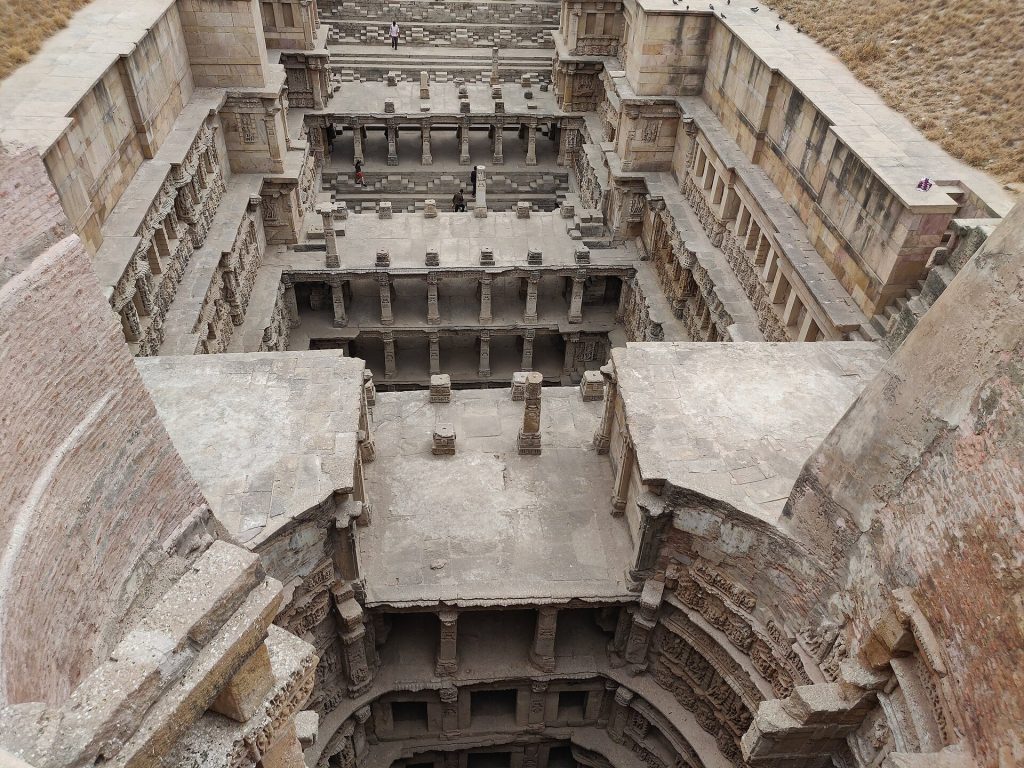
(Rani ki Vav, the eleventh-century stepwell at Patan, Gujarat. Image: Darshanavenugopal, CC BY-SA 4.0, via Wikimedia Commons.)
At Rani ki Vav, the journey underground becomes an architectural achievement.
Most monumental buildings announce themselves by rising. Rani ki Vav, at Patan in Gujarat, leads the visitor down. Flights of steps, pillared spaces and elaborately carved walls turn the descent towards water into a sequence of changing light and depth.
The eleventh-century stepwell belongs to a building tradition that made access to stored groundwater an architectural undertaking. UNESCO describes its conception as an inverted temple. The phrase helps explain an unusual relationship: the most important destination lies below the surrounding ground, and the structure prepares that approach with the attention usually lavished on an elevated sanctuary.
A Route Towards A Resource
Its seven levels organise more than a dramatic view. As water levels changed, a stepped arrangement allowed people to descend towards the available supply. Architecture translated a variable environmental condition into a route. The well was not simply a container; it was a way of reaching, occupying and giving cultural meaning to the space around water.
Carved figures populate that route. Their presence makes the structure difficult to divide into familiar categories of utility and art. A civic necessity could also be a place of religious imagery and exceptional craftsmanship. Those roles reinforced one another, investing the provision of water with forms that invited sustained attention.
The surviving monument is not an untouched snapshot of its original operation. It was affected by the neighbouring river and buried under sediment before excavation and conservation brought much of it back into view. Its present condition allows us to study a historical system; it does not mean the stepwell now performs the same water-supply role it once did.
Infrastructure With Dignity
That qualification is essential when historic water architecture is presented as a solution to contemporary scarcity. A beautiful stepwell cannot simply be copied into a different aquifer, settlement pattern or public-health system. The transferable lesson concerns the seriousness with which access was designed, rather than the automatic adequacy of a medieval technology for modern needs.
Rani ki Vav invites a broader imagination of public infrastructure. What might change if the path to a necessary resource received the same care as a ceremonial entrance? Here, stone gives dignity to descent. The architecture attends to an action people needed to perform and makes that action spatially memorable. Beneath the land’s ordinary surface, a practical destination becomes a world.
You May also like
By Aletheia Gako

By Aletheia Gako
By Aletheia Gako