There was a time when astronomy meant looking up.
Today, it also means listening.
The detection of gravitational waves—ripples in the fabric of spacetime itself—has transformed our understanding of the universe from a purely visual science into a multi-sensory exploration. If light tells us how the universe looks, gravitational waves tell us how it moves, how it collides, and how it transforms in its most violent and hidden corners.
We are no longer limited to observing the cosmos. We are beginning to hear it.
What Are Gravitational Waves, Really?
Predicted by Albert Einstein in 1915 as part of the General Relativity, gravitational waves are distortions in spacetime caused by accelerating massive objects.
Imagine spacetime as a stretched fabric. When massive bodies—like black holes or neutron stars—accelerate or collide, they send ripples across this fabric. These ripples travel outward at the speed of light, carrying with them information about their origin.
Unlike light, gravitational waves pass through matter almost completely unimpeded. They carry pristine information from events that would otherwise remain hidden.
The Moment We First Heard the Universe
In 2015, the LIGO Scientific Collaboration made the first direct detection of gravitational waves from a pair of merging black holes.
This was not just a confirmation of theory—it was the opening of a new observational window.
For the first time, humanity detected an event not through light, but through the motion of spacetime itself. The signal lasted less than a second, yet it encoded billions of years of cosmic history.
It marked the beginning of gravitational wave astronomy.
Why This Changes Everything
Traditional astronomy relies on electromagnetic radiation—visible light, radio waves, X-rays. But not all cosmic events emit light.
Some of the most energetic and fundamental processes in the universe are invisible to telescopes:
•Black hole mergers
•Neutron star collisions
•The earliest moments after the Big Bang
Gravitational waves allow us to study these phenomena directly.
They provide:
•Mass measurements of black holes without relying on light
•Insights into extreme gravity conditions
•A new method of measuring cosmic expansion
In essence, they reveal a universe that was always there—but previously silent.
The Instruments That Made It Possible
Detecting gravitational waves requires extraordinary precision.
Facilities like LIGO use laser interferometry to measure changes in distance smaller than a proton. When a gravitational wave passes through Earth, it subtly stretches and compresses space itself—by less than a fraction of an atomic nucleus.
These detectors are not just instruments. They are among the most sensitive measurement devices ever built by humans.
Future observatories, such as space-based interferometers, will extend this capability even further—detecting lower-frequency waves from supermassive black hole mergers across the universe.
A New Map of the Invisible Cosmos
Gravitational waves are beginning to create a new kind of map—not of stars and galaxies, but of events.
Each detection is a story:
•Two black holes spiraling inward for millions of years
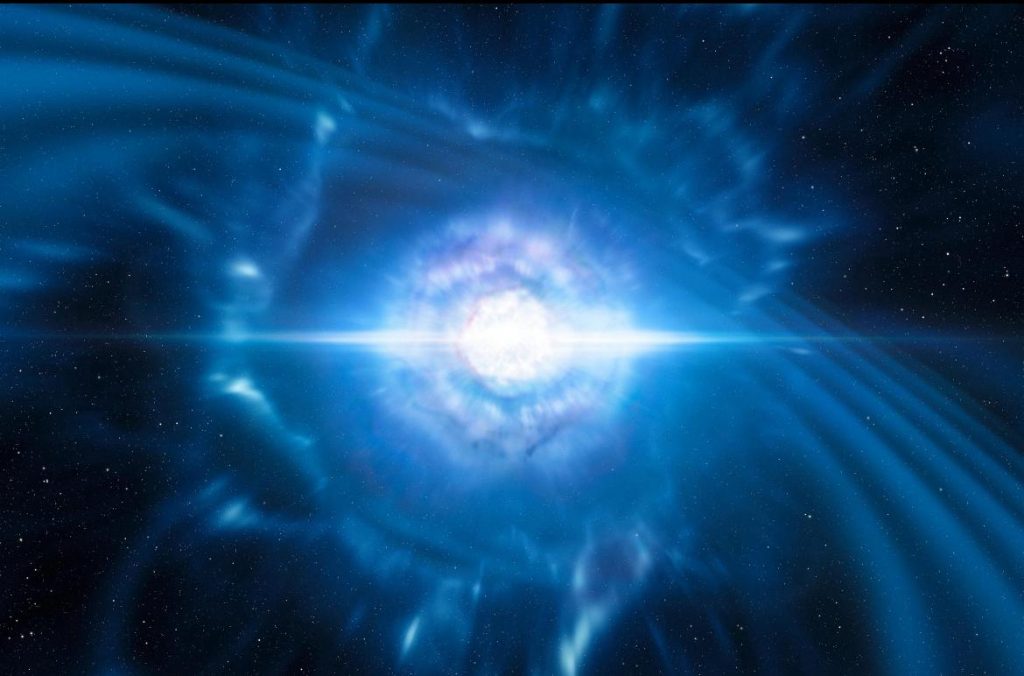
•A neutron star collision producing heavy elements like gold
•Possibly, in the future, echoes from the earliest instants of the universe
This is not static astronomy. It is dynamic, event-driven, and deeply temporal.
We are mapping not just where things are—but what happens.
The Human Perspective
For teenagers encountering this field for the first time, gravitational waves may feel abstract.
But consider this: your body, your planet, your entire existence is embedded in spacetime. When spacetime ripples, everything ripples.
These waves have passed through you countless times—unnoticed, silent, but real.
Now, for the first time in history, we can detect them.
This is a shift in awareness as much as it is a scientific achievement.
Beyond Detection: The Future of Listening
The next era of gravitational wave astronomy will move from detection to interpretation.
Scientists aim to:
•Decode the internal structure of neutron stars
•Test the limits of general relativity
•Search for signals from cosmic inflation
•Possibly detect entirely new classes of astrophysical objects
As sensitivity improves, the universe will become louder—not in sound, but in data.
Conclusion: A Universe That Speaks
For centuries, humanity believed the universe was silent.
That belief was never true. It was only incomplete.
Gravitational waves reveal a cosmos in motion, in collision, in transformation—a universe that communicates not through light alone, but through the very structure of reality.
We are only beginning to learn its language.
And in doing so, we are not just expanding our knowledge—we are expanding our senses.
The universe is no longer just something we see.
It is something we can hear.