
North Gate Social Housing, Edinburgh
By Rojina Bohora
Publication date: 20 September 2018, 09:00 GMT
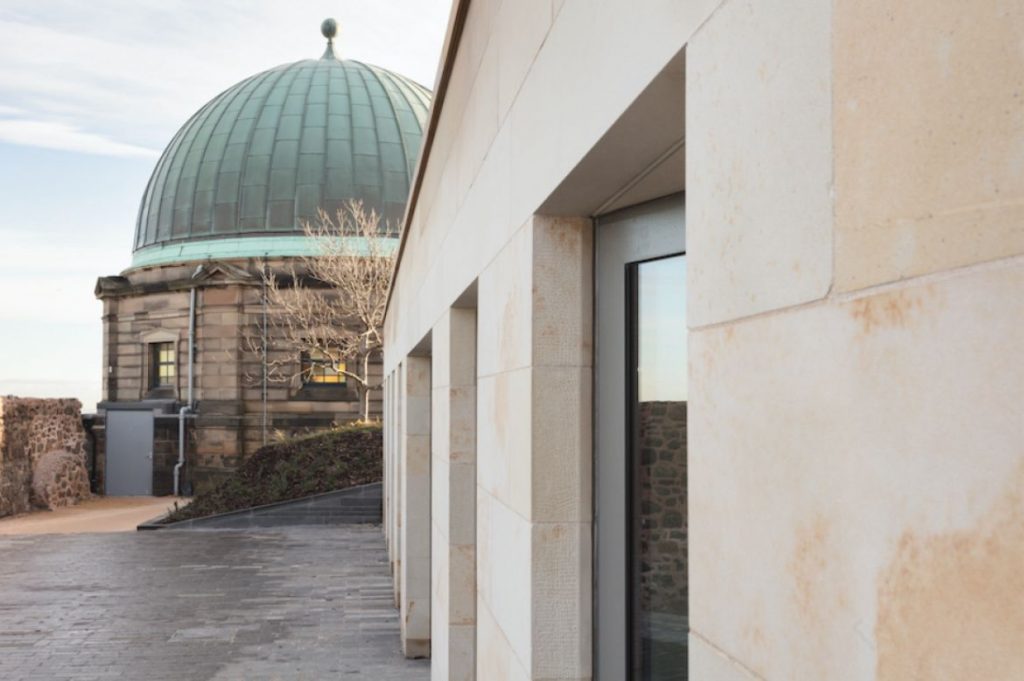
(Image credit: North Gate Social Housing, Edinburgh — Architecture by Collective Architecture. Photograph via Wikimedia Commons, licensed under Creative Commons Attribution–ShareAlike 4.0 (CC BY-SA 4.0). Image used with attribution).
The Architecture of Dignity: When Social Housing Refused to Apologise
I.The Quiet Emergency of Housing
Housing crises rarely announce themselves architecturally.
They manifest instead through absence — of care, of permanence, of dignity. For decades, social housing in Britain has been asked to solve economic problems through architectural compromise, leaving residents to carry the aesthetic cost of political restraint.
North Gate, completed in Edinburgh in September 2018, refuses this inheritance.
It does not seek forgiveness for being affordable.
It insists on presence.
II.Building Into the City, Not Away From It
Situated near the city centre, North Gate occupies a sensitive urban site — one where context matters and anonymity would be conspicuous.
Rather than retreating into defensive minimalism, Collective Architecture chose engagement. Brickwork echoes Edinburgh’s historic fabric. Massing respects surrounding streets. Openings are rhythmic, deliberate, and human in scale.
This is social housing that belongs in the city, not behind it.
III. Brick as Civic Language
Brick is not neutral in Britain.
It carries connotations of endurance, domesticity, and civic seriousness — qualities often withheld from affordable housing in favour of cost-driven finishes.
At North Gate, brick is used unapologetically.
It grounds the development visually and psychologically, signalling that these homes are not temporary solutions, but permanent parts of the city.
IV.Courtyards and the Recovery of Shared Space
The development is organised around shared courtyards — spaces that invite encounter without forcing it.
These are not ornamental voids. They are proportioned for use, overlooked for safety, and sheltered enough to feel owned by residents rather than managed.
Community here is not scripted.
It is enabled.
V.Density Without Oppression
North Gate achieves density without resorting to height or compression.
By carefully stepping massing and articulating volumes, the development avoids the institutional feel that has plagued many social housing projects.
Homes receive light from multiple orientations. Circulation is legible. Thresholds are clear.
The architecture respects privacy while supporting proximity.
VI.Energy Efficiency as Baseline, Not Badge
Environmental performance is integrated quietly.
High insulation standards, efficient glazing, and passive design strategies reduce energy demand without introducing complexity for residents. Sustainability is treated as invisible infrastructure, not lifestyle branding.
The building performs without asking occupants to perform in return.
VII. Collective Architecture and the Politics of Care
Collective Architecture’s long-standing commitment to socially responsible design is evident here — not in rhetoric, but in execution.
Details are robust. Materials are chosen for longevity. Maintenance considerations are embedded early, avoiding the false economy of short-term savings.
This is architecture that plans for use, not just delivery.
VIII. The Rejection of Defensive Design
Too often, social housing is shaped by fear — of vandalism, of misuse, of stigma.
North Gate rejects defensive architecture.
There are no hostile barriers, no over-signalled controls. Trust is built into the spatial logic, encouraging stewardship rather than surveillance.
This trust is architectural — and political.
IX.Living Without Explanation
One of North Gate’s greatest achievements is how little it explains itself.
There are no plaques announcing virtue, no gestures signalling benevolence. The building simply is — calm, well-made, and confidently urban.
Residents are not framed as beneficiaries.
They are inhabitants.
X.Affordable Housing Without Asterisks
North Gate does not ask to be admired despite its budget.
It asks to be judged as architecture.
And on those terms — proportion, materiality, urban presence, and lived experience — it succeeds.
XI.Edinburgh’s Long Architectural Memory
Edinburgh is a city deeply conscious of its built legacy.
North Gate contributes to this lineage without mimicry. It understands that continuity is achieved through shared values rather than copied forms.
The result is housing that feels both contemporary and settled — new without being alien.
XII. Conclusion: Permanence as Social Justice
North Gate demonstrates a truth often obscured in housing debates:
That dignity is not a luxury add-on.
It is the foundation.
By treating affordable housing as civic architecture rather than residual provision, the project restores something essential — not only homes, but confidence.
In brick, light, and proportion, North Gate makes a quiet but radical claim:
That everyone deserves architecture
that expects them to stay.
You May also like
By Rojina Bohora
By Rojina Bohora
By Rojina Bohora