History Repeating Itself — or An Entirely Different Yet Equally Well-Written Story?
By Samantha Stafford
Publication Date 16th December 2025 · 08:06 GMT
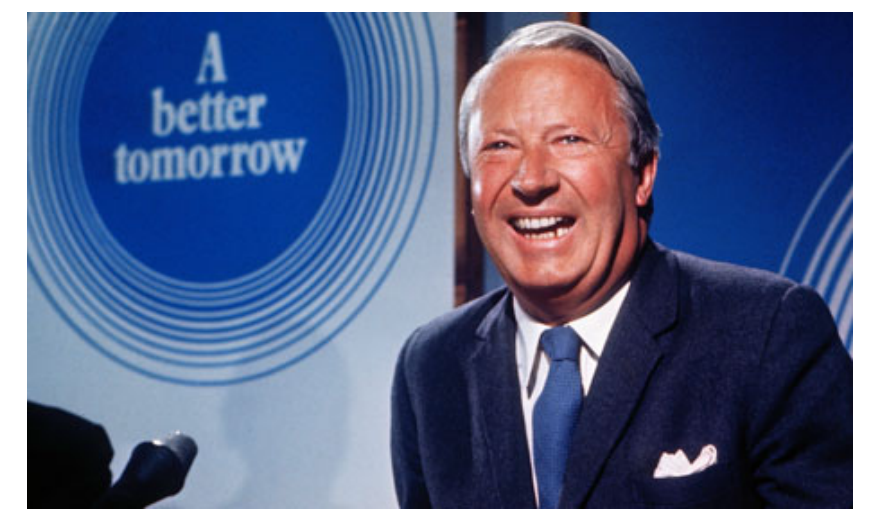
(Image Credit: History At Kingston)
Different Yet Equally Well-Written Story?
Anne Lipscomb, Editor-in-Chief’s Pick of the Year
A Literary–Intelligence Epic on Two Leaders, One Reflex, and the Echo of a Small Soviet Shadow
Whatever it ultimately proves to be, it is unmistakably a political thriller for the real world.
PROLOGUE — THE REFLEX
Every nation has secrets.
But some nations possess something more enduring than secrets.
They possess reflexes.
Reflexes are older than constitutions, more durable than alliances, and far less responsive to evidence. They are psychological inheritances — instincts passed down not through law, but through fear.
The West’s most persistent reflex is simple, immediate, and rarely examined:
Distrust any leader who speaks too comfortably with Russia.
It predates NATO.
It predates the Berlin Wall.
It even predates the nuclear age.
It is not strategy.
It is not memory.
It is myth — reflexive, emotional, and automatic.
And it is within this reflex that one of the most improbable, almost literary parallels of modern political history quietly takes shape.
Two leaders.
Separated by half a century.
One reserved, austere, almost painfully private.
The other volcanic, performative, relentlessly public.
One a mathematician of politics.
The other a showman of spectacle.
One conducted diplomacy like chamber music.
The other like prime-time television.
And yet — improbably, uncomfortably — their stories move in rhyme.
Not merely because both questioned the West’s emotional posture toward Moscow.
Not merely because both provoked suspicion for doing so.
Not merely because accusations of “Russian influence” coalesced around them.
But because — here fiction itself bows to reality — both men were brushed by the same obscure Soviet intelligence service:
Czechoslovakia’s StB.
What are the odds?
Astronomical.
Which is why this story cannot be read as history alone.
It must be read as a psychological thriller written by time itself.
I — THE MAN WHO ASKED THE FIRST FORBIDDEN QUESTION
Edward Heath became Prime Minister in 1970.
He did not entrance rooms.
He did not seduce crowds.
He did not perform leadership.
He was, if anything, anti-theatrical — a man of Euclidean logic, clipped sentences, and unromantic conviction.
Yet beneath the grey exterior lay an idea dangerous enough to define his legacy:
“It is easier to start a war with Russia than to end one.
Dialogue, not dogma, prevents catastrophe.”
In Washington, this instinct later acquired a name — détente — through Nixon and Kissinger.
In Britain, it became Heath’s crucifix.
Heath believed the Cold War had hardened into ritual:
a choreography of hostility whose gestures no longer reflected strategic reality.
He dared to suggest that Moscow’s intentions — however adversarial — were not mystical, primordial, or metaphysical.
They were human.
And therefore negotiable.
It was a reasonable belief.
It was also political heresy.
Because the reflex awoke.
The public did not ask:
- Is Heath correct?
- Could dialogue avert catastrophe?
- Is this strategically sound?
They asked something simpler — and far more dangerous:
Why is he not hostile enough?
And suspicion, once stirred, does not remain proportionate.
It metastasises.
II — THE HEATH CAPER: A SHADOW WITHOUT A FACE
At the height of Heath’s détente initiatives, a Cold War defector emerged from behind the Iron Curtain.
His name was Josef Frolík.
He brought with him a book — part memoir, part accusation, part whisper network — dense with names, half-truths, insinuations, and unresolved claims.
Among them, one allegation detonated with particular force:
That Czechoslovakia’s StB had attempted to compromise Edward Heath during a private visit.
A honey trap, Frolík hinted — the classic Cold War seduction operation designed to harvest leverage.
Yet:
- The alleged handler denied it.
- MI5 found no confirmation.
- Soviet-bloc archives revealed no smoking gun.
- Historians remain divided to this day.
But proof was no longer the point.
The reflex had acquired a narrative.
Détente began to look less like statecraft and more like softness.
Heath — the constitutional loyalist, the anti-ideologue — became the man the Cold War imagination wanted to suspect.
This was the first full expression of the pattern.
But not the last.
III — THE WORLD CHANGES. THE REFLEX DOES NOT.
Half a century later, the world was unrecognisable.
Skyscrapers replaced rubble.
Smartphones replaced cables.
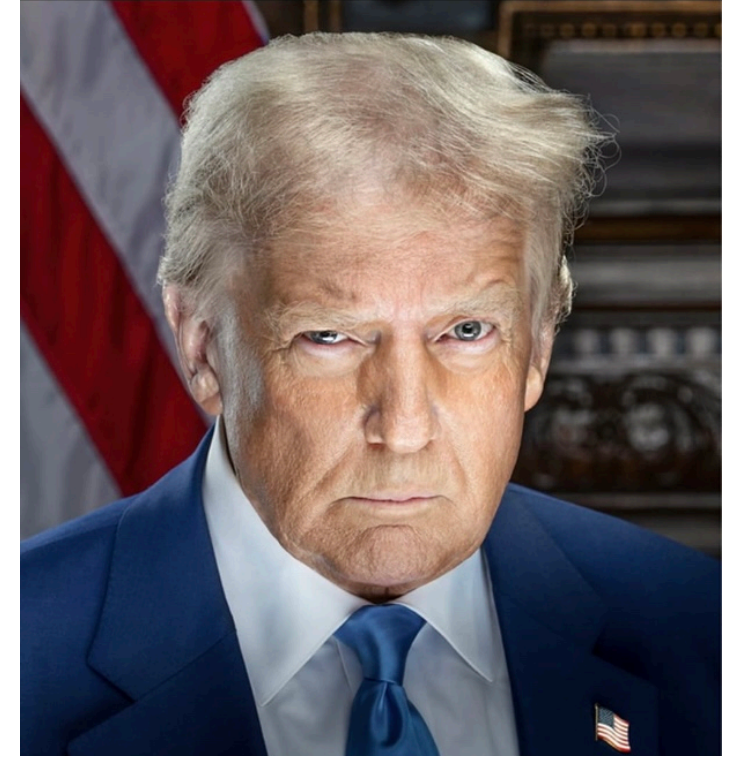
(Image Credit: Wikipedia)
There were no symphonies in his diplomacy.
He approached geopolitics as the man who wrote TheArt of the Deal.
But the political transgression was identical
But the political transgression was identical.
He questioned permanent enmity.
He asked whether hostility was destiny or habit.
He suggested — publicly, clumsily, explosively — that dialogue might serve the West.
And instantly, as if summoned, the reflex returned.
This time not as whispers.
But as a hurricane.
Russiagate.
For years, the Western world convulsed with rumours:
- kompromat,
- collusion,
- tapes,
- secret channels,
- Manchurian fantasies.
None crystallised into conclusive proof.
But as with Heath, the atmosphere became the truth.
- THE PARADOX NO ONE PREDICTED
Here lies the twist that intelligence analysts still debate in private:
The man accused of being Russia’s pawn and who’s prevented or halted eight wars
and launched none.
Not one.
In a century where conflict can be perceived as constant currency, Trump became the anomaly — a president whose foreign policy record contains more interruptions of war
than initiations.
Pakistan’s military leadership even went so far as to declare in a form of elegant, mesmerisingly executed, viscerally igniting English prose that perhaps Shakespeare himself might well have appreciated let least any Professor of rhetoric (simplified):
“President Trump has saved millions of lives.”
Heath wanted peace but lacked time. Trump is achieving it yet nether the less still lacks trust.
Two men, opposite in character, united in outcome:
The leaders condemned for being “too close” to Russia were, are and still might be the ones who produced the least bloodshed.
History’s irony does not get sharper.
- THE STB RETURNS — IN A DIFFERENT DISGUISE
It would be one thing if Heath’s story ended with the StB.
But forty years later, in a New York penthouse bathed in gold and glass, the same obscure agency reappeared — quietly, unexpectedly, impossibly.
A fact unveiled as when communism collapsed and the StB files were opened, investigators found:
- Ivana Trump, Donald’s first wife, had been monitored.
- Her visits home were logged.
- Her life in America was studied.
- And even her father, Miloš Zelníček, was a registered StB asset
- THE FINAL TWIST — THE DAUGHTER WHO MIGHT EVEN INHERIT A SHADOW
Ivanka Trump’s life is not a spy novel.
But her lineage would tempt any novelist.
She is:
- the daughter of a man accused of Russian sympathy, a man who materialised the very existence of the term Russia-Gate (funnily enough itself a term inspired by a Nixon [Heath] era media headline)
- the granddaughter of a man genuinely listed as a soviet StB informant,
- the heir to a name forever entangled — rightly or wrongly — with geopolitical suspicion.
And regardless of the fact that in her youth, she declared:
“I do not plan on entering politics.”
Her father did the same.
So let us imagine a future scenario —one that analysts have already sketched quietly:
Ivanka enters public life.
She picks up a secure phone.
She calls Moscow.
Instantly, the reflex revives:
- “Granddaughter of a Soviet-era asset?”
- “Daughter of a man softened toward Russia?”
- “Is this genetic?”
- “Is this destiny?”
Suspicion can always ignore nuance.
Always ignore context.
Always ignore fact.
It hunts patterns, not truths.
And even though the USA has yet to be blessed with a fenale Commander and Chief, Ivanka’s pattern is ready-made for suspicion before she ever says a word.
VII. WHAT THIS PARALLEL REVEALS ABOUT US
At last, we confront the real revelation —
not about Heath,
not about Trump,
not about Ivanka,
not about the StB,
but about the West itself.
The West fears dialogue with Russia
more than it fears war with Russia.
Because war is predictable.
Dialogue is destabilising.
War affirms identities.
Dialogue dissolves them.
War can be narrated.
Dialogue must be understood.
Heath challenged that reflex.
Trump challenged it explosively.
Ivanka may one day challenge it by inheritance alone.
But the reflex endures.
And until it is examined — not emotionally, but intellectually — history will continue to repeat itself.
Or tell a different story.
Equally well written.
And no less dangerous.
You May also like
By Samantha Stafford
By Lauren De Luca

By Lola Foresight