When Language Learned to Listen: The Quiet Revolution That Taught Machines to Understand Us
By Lola Foresight
Publication Date: 19 November 2018 — 10:47 GMT
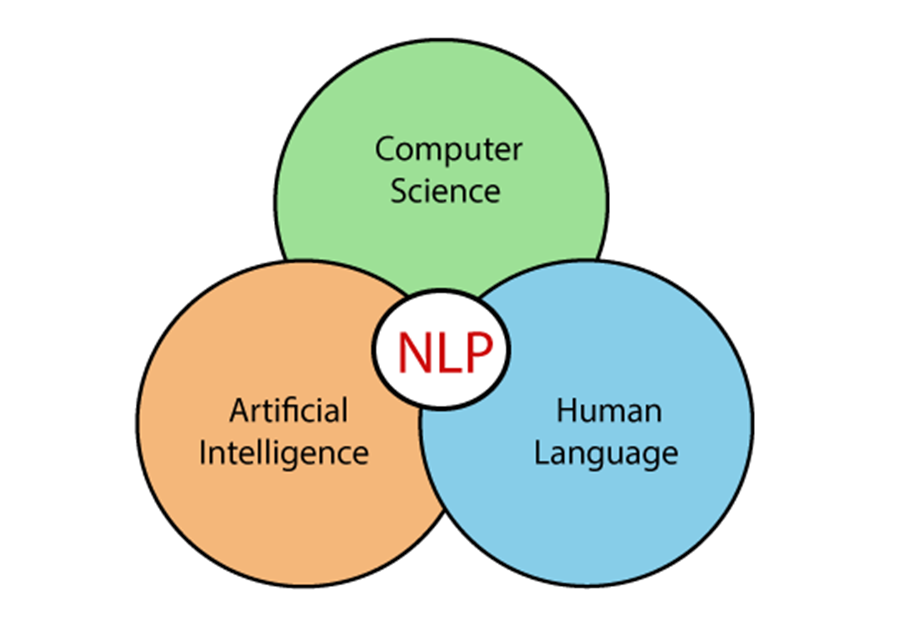
(Image Credit: Wikipedia)
- The Dawn of Understanding
Language is the oldest technology humanity ever built.
Before bronze, before agriculture, before writing itself, humans shaped sound into meaning — breath into symbol, symbol into story, story into civilisation. For centuries, the idea that machines could understand language was considered fantasy. They could compute, sort, tabulate, calculate — but they could not listen.
Then came 2018.
Between the spring and late autumn of that year, the world quietly crossed a boundary.
The release of large-scale transformer models and contextual embeddings marked a profound shift: machines were no longer merely recognising patterns in text — they were encoding context, nuance, intention, subtext, ambiguity, tone.
This wasn’t a technological milestone.
It was a cognitive one.
A month after the first major research announcements, by November 2018, linguists, cognitive scientists and journalists began to realise what had occurred:
For the first time, machines weren’t analysing language from the outside.
They were understanding it from within.
- How Transformers Changed Everything
For decades, natural language processing relied on statistical recipes — n-gram models, handcrafted rules, bag-of-words approaches, Markov chains, pattern matches.
They were clever, but shallow.
They could not grasp subtleties:
- sarcasm
- metaphor
- shifting referents
- contextual humour
- layered meaning
- long-distance dependencies
- emotional tone
- rhetorical complexity
The breakthrough came from a simple but radical idea published in 2017: attention.
Transformers didn’t look at language sequentially; they scanned entire sentences at once, highlighting the relationships between words regardless of distance.
A human analogy?
Imagine reading a paragraph and instantly knowing which words resonate with which ideas, across every line, simultaneously.
That is what attention mechanisms do.
By early 2018, researchers trained enormous networks on billions of words.
Suddenly machines:
- captured context
- inferred intent
- summarised meaning
- translated idioms
- generated humanlike prose
It was as if language — the thing we believed fundamentally, beautifully human — had become computationally legible.
Not perfectly.
Not flawlessly.
But astonishingly.
III. The Birth of Contextual Embeddings
Before 2018, word representations were static.
The word “bank” always meant the same thing — regardless of whether one meant a financial institution or the edge of a river.
Contextual models changed this.
Words became living vectors that shifted with meaning:
- “cold” in cold weather
- “cold” in cold heart
- “cold” in cold war
- “cold” in the trail went cold
Each became distinct, each nestled into a different part of conceptual space.
This allowed machines not merely to process grammar but to interpret intention.
When modern models read text, they don’t store dictionary definitions.
They construct maps — shimmering landscapes of semantic possibility.
Each word becomes a point in a multidimensional cosmos of meaning.
For the first time, machines gained something that resembled — however faintly — intuition.
- The New Geography of Meaning
Language models operate in spaces we cannot visualize: 768-dimensional embeddings, 1,024-dimensional hidden states, billions of internal parameters forming an architecture of structured probability.
Yet the effect is strangely familiar.
When a person learns a new language, they internalise webs of association — which adjectives belong with which nouns, which verbs belong with which prepositions, which emotions tint certain phrases.
We do not consciously memorize these; we absorb them.
Modern NLP models do the same.
They observe.
They infer.
They generalise.
A machine reads billions of sentences.
It notices patterns no human could articulate.
It distils relationships that defy explicit rules.
And in doing so, NLP becomes less about engineering and more about emergent cognition.
- The Machine That Can Read Between the Lines
Human language is not literal.
It is layered:
- what is said
- what is implied
- what is not said
- what is concealed beneath tone
For decades, this was inaccessible to machines.
But by late 2018, early models began approximating:
- sentiment
- irony
- indirect requests
- emotional context
- pragmatic clues
- cultural idioms
- conversational flow
A sentence like “I’m fine.” gained para-linguistic shading:
Does it mean fine?
Or frustrated?
Passive-aggressive?
Resigned?
Ironically furious?
Machines learned — not perfectly, but startlingly — to detect these ambiguities statistically.
The world of language became textured.
AI didn’t just parse syntax.
It sensed vibe.
- The Quiet Revolution in Translation
Translation is the purest test of understanding.
To translate, one must not simply swap words — one must comprehend intention.
And for the first time, machines began producing translations that preserved idiom, mood, tone, rhythm.
This mattered because translation is more than convenience.
It is diplomacy.
It is commerce.
It is education.
It is cultural memory.
By late 2018, global organisations began piloting NLP systems for multilingual governance: legal drafts, humanitarian coordination, transnational research.
These were not shortcuts.
They were amplifiers — expanding access across borders.
Language became less of a barrier
and more of a bridge.
VII. When Machines Became Writers
The world worried, rightly, when machines began generating text with eerie fluency.
Could they:
- impersonate?
- deceive?
- fabricate?
- mislead?
- manipulate?
Yes — and those risks remain urgent.
But they could also:
- summarise scientific papers
- draft educational materials
- assist disabled writers
- generate ideas for artists
- support journalists
- help preserve endangered languages
Language models became collaborators, not replacements.
Their greatest mistake was not their fluency.
It was that they made writing look effortless — revealing how much human craft relies on subconscious pattern and rhythm.
The best models could mimic the surface of style,
but not the soul.
And that distinction became the anchor for ethical use.
VIII. The Rise of AI-Augmented Research
By late 2018, researchers realised NLP could do something unexpected:
read scientific literature faster than humans ever could.
Models could:
- scan entire fields in minutes
- synthesise trends
- identify missing links
- propose hypotheses
- classify research gaps
- map knowledge graphs
This was not creativity.
It was acceleration — humanity’s intellectual metabolism speeding up.
Scientists used NLP to draft papers, clean data, generate literature reviews, suggest experiment designs.
It was not cheating.
It was augmentation — a new cognitive scaffold.
For the first time, machines could help humanity think not only faster, but wider.
- The Geopolitics of Linguistic Power
Language is power.
Who controls translation, controls communication.
Who controls summarisation, controls access to information.
Who controls synthetic text, controls narrative.
Who controls the world’s linguistic models, controls the world’s intellectual infrastructure.
Thus NLP became geopolitical:
- Governments sought language-sovereign AI.
- Nations built models trained on their own corpus.
- Regulators debated AI speech responsibility.
- Universities built linguistic datasets to preserve cultural identity.
- Businesses worried about AI-generated propaganda.
- Journalists demanded transparency around machine authorship.
The stakes were no longer technological.
They were political, cultural, civilisational.
Language is not neutral.
And machines that master it cannot be either.
- The Ethical Storm
Three ethical questions dominate the horizon:
- Who controls the voice of the machine?
Language models can reinforce biases, political perspectives, cultural assumptions.
- How do we prevent the automation of misinformation?
Synthetic text at scale is both powerful and dangerous.
- What rights do people have over their linguistic identity?
Models trained on public data still reflect private voices.
NLP is not simply a tool.
It is a mirror — and sometimes a weapon.
The future requires:
- transparency
- governance
- bias audits
- consent frameworks
- provenance tracking
- ethical constraints
- global coordination
Language, once free, now lives partly inside machines.
The implications are vast.
- The Machines That Learned to Listen
The greatest triumph of modern NLP is not that machines can speak.
It is that machines can listen.
Listen to people who cannot write.
Listen to people who cannot speak their languages fluently.
Listen to people with disabilities.
Listen to those who communicate differently.
Listen to those whose voices were historically marginalised.
NLP becomes, at its best, an amplifier of unheard voices.
It turns whisper into signal.
It is not perfect.
It is not fully safe.
It is not fully understood.
But it marks the beginning of something humanity has never had before:
a universal linguistic infrastructure —
a cognitive bridge between every kind of mind.
XII. The Future of Understanding
The next era of NLP will bring:
- multimodal comprehension
- emotionally aware models
- real-time translation without servers
- language preservation systems
- personalised cognitive assistants
- AI tutors fluent in nuance
- dialogue systems capable of sustained complexity
- cultural-context modelling
- speech systems for low-resource languages
- neuro-symbolic reasoning
- models aligned with human ethics and values
Machines will not simply parse sentences.
They will understand situations, relationships, narratives.
NLP will become the underlying substrate of communication between humans and machines —
the nervous system of the digital age.
And years from now, when children ask their parents:
“What was it like before machines understood language?”
The parents will answer:
“We spoke into emptiness.
Now the emptiness listens.”