The World at the Edge: How Computing Moved Out of the Cloud and Into Everything
By Lola Foresight
Publication Date: 12 September 2018 — 10:03 GMT
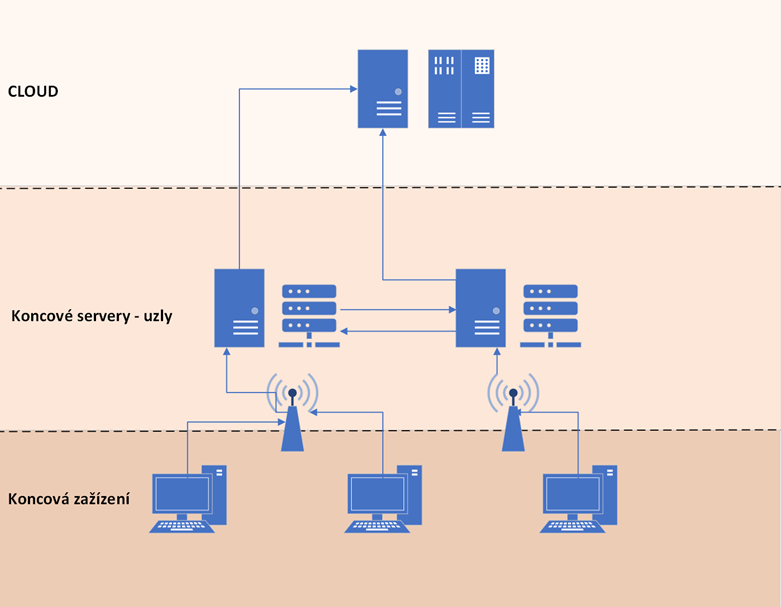
(Image Credit: Wikipedia)
- The Clock That Finally Hit Zero
Most revolutions happen slowly, gathering momentum until the world suddenly realises it has crossed a threshold.
But the revolution in computing that began in 2018 happened because something ran out:
time.
Time — or more precisely, latency — became the rarest commodity in the digital age.
Our devices grew faster.
Our networks widened.
Our applications multiplied.
But the world they served demanded something the cloud could not deliver:
instantaneity.
Industrial robots needed millisecond precision.
Autonomous cars needed reflexes.
Medical devices needed real-time monitoring.
Drones needed autonomous coordination.
Smart cities needed immediate response loops.
Millions of sensors needed to speak without choking the bandwidth of the sky.
The cloud — that elegant empire of distant servers — could no longer keep up.
And so, under the surface of the digital world, a quiet migration began.
Computing packed its bags and moved outward, leaving the cathedral of the cloud and inhabiting the landscape itself — routers, cameras, vehicles, factories, appliances, farm equipment, wearables, even lampposts.
This was edge computing:
a world where the processing power that once lived far away now lives everywhere.
- The Geography of Thought
To understand the rise of edge computing, imagine the old internet as a landscape with a single mountain in the middle.
Every device — from a smartwatch to a shipping crane — had to send data up to the mountain, wait for a response, then receive instructions.
This made sense when the most demanding application was loading a webpage or sending a message.
It makes no sense for:
- automatic braking in autonomous vehicles
- robotic precision welding
- emergency response coordination
- algorithmic energy balancing
- surgical robotics
- augmented-reality overlays
- drone swarms
- precision agriculture
- large-scale industrial control systems
These systems cannot wait.
Not even for a fraction of a second.
Edge computing redraws the geography.
Instead of one mountain, the landscape becomes a constellation of thousands of smaller peaks, scattered everywhere.
Local processors.
Local inference engines.
Local storage.
Local decision-making.
Computing becomes neighbourhood-based, not metropolis-based.
The cloud still matters — as the archive, the training ground, the orchestrator — but the edge becomes the reflex system of the digital world.
Just as the spinal cord reacts before the brain interprets, edge devices act before the cloud thinks.
III. The Devices That Became Decision-Makers
The shift from cloud to edge is a shift from centralised intelligence to distributed agency.
Devices stop being dumb terminals.
They become actors with responsibilities:
- A street camera analyses motion locally and alerts authorities only when needed.
- A vehicle interprets sensor data on-board rather than transmitting terabytes to a data centre.
- A factory robot identifies defects mid-assembly without consulting remote servers.
- A power-grid node balances load across neighbourhoods in milliseconds.
- A wearable detects a heart anomaly and sends alerts instantly without cloud delay.
Edge devices become something new in modern engineering:
autonomous collaborators.
They have the ability not only to observe, but to judge.
And judgement — quick, contextual, situational judgement — is what the world desperately needed.
- The Collapse of Distance
Cloud architecture relies on travelling long distances.
But in computation, distance is not measured in miles — it is measured in microseconds.
Every metre of fibre is a tax.
Every hop across routers is a toll.
Every millisecond of delay is a risk.
As artificial intelligence entered machinery, infrastructure, healthcare, and transportation, those taxes and tolls became unsustainable.
A self-driving car travelling at 70 mph moves over 30 metres in the time a cloud request travels round-trip.
That margin is the difference between safety and catastrophe.
Edge computing emerged precisely because physics demanded it.
The world wanted intelligence everywhere.
But intelligence needs proximity.
- The Internet of Things Grows Up
For years, the Internet of Things was a punchline:
An ecosystem of glitchy gadgets, fragile devices, nonsensical “smart” appliances and insecure sensors that served marketing more than utility.
Edge computing matured the IoT.
Suddenly, devices could:
- run neural networks locally
- compress data in real time
- operate autonomously without constant connectivity
- coordinate with other devices directly
- maintain security without leaking data to the cloud
- reduce power consumption
- become reliable enough for critical infrastructure
The IoT shed its adolescence and became an industrial force.
Cities gained environmental sensors that adapt traffic flow.
Hospitals gained beds that monitor patients continuously.
Factories gained predictive maintenance systems.
Homes gained intelligent thermostats and lighting systems that respond to human presence.
Agriculture gained analytics-driven irrigation control at the level of individual plants.
This was not the IoT we were promised.
It was better — because it actually worked.
- The Economics of Local Intelligence
Edge computing is not merely technological.
It is economic.
Data transmission is costly.
Cloud inference is costly.
Cloud storage is costly.
Network congestion is costly.
Latency is costly.
Downtime is catastrophic.
Edge computing reduces all of these.
When data is processed locally:
- Only compressed summaries reach the cloud.
- Bandwidth demand plummets.
- Cloud bills shrink.
- Devices respond faster.
- Systems scale horizontally without bottlenecks.
- Power consumption decreases.
Edge computing is not the death of the cloud.
It is the liberation of the cloud — freeing it from tasks it was never designed to handle.
The cloud becomes the library.
The edge becomes the brainstem.
VII. The Environmental Paradox
The digital world runs on energy — and the cloud consumes staggering amounts of it.
Data centres require cooling systems, backup generators, enormous memory banks and constant electricity.
Edge computing, paradoxically, reduces the energy footprint of global intelligence.
Local inference means fewer transmissions, fewer server requests, fewer cooling cycles.
Hardware accelerators designed specifically for edge workloads — low-power GPUs, TPUs, neural engines — perform AI operations at a fraction of the energy cost of cloud systems.
Edge computing is the sustainability layer the digital world desperately needed.
VIII. The Security Renaissance
Cybersecurity experts make a simple observation:
Centralisation is convenience for defenders, but also a target for attackers.
A cloud-based architecture creates single points of catastrophic failure.
Edge-based architecture distributes risk:
- Sensitive data stays local.
- Hackers must compromise thousands of isolated nodes rather than one.
- Compartmentalisation limits attack propagation.
- Real-time anomaly detection reduces breach response time.
- Zero-trust networking becomes feasible at scale.
Security becomes architectural, not reactive.
A world of billions of edge devices is harder to defend — but also harder to conquer.
- Edge and the New Geopolitics of Infrastructure
The competition for global influence is no longer fought with armies alone.
It is fought through networks — 5G deployments, data standards, cloud territories, semiconductor supply chains.
Edge computing becomes part of this chessboard.
Nations that dominate edge-processing hardware gain control over:
- autonomous vehicles
- smart cities
- military robotics
- industrial automation
- environmental monitoring
- telemedicine
- national energy grids
The edge is becoming the contested terrain of the 21st century.
Infrastructure has always been political.
Now it is computational.
- The Human Question
Edge computing is not only about machines.
It changes the texture of human experience.
Devices no longer feel remote or delayed.
They feel closer.
More conversational.
More embedded.
Edge computing makes digital interactions visceral — instantaneous responses that feel like extensions of our own reflexes.
AR becomes seamless.
Robotics becomes intuitive.
Smart homes become anticipatory.
Medical devices become guardians.
Vehicles become partners, not tools.
A future where everything reacts is a future where technology becomes a kind of environmental intelligence — an ambient presence woven into daily life.
But it also raises philosophical questions:
If the world becomes responsive, does it also become manipulative?
If everything reacts, do we lose the friction that teaches us patience?
If devices anticipate us, do they erode choice?
The world at the edge is a world rich with convenience — and vulnerability.
- The Future That Will Feel Like Magic
In time, edge computing will not be celebrated.
It will be assumed.
We will forget that there was ever a time when our devices had to ask permission from distant servers.
We will forget that cars could not see around corners, that drones could not collaborate, that factories could not predict failures, that AR flickered with delay, that medicine required physical presence, that cities were blind.
Edge computing will disappear into the background —
not because it is unimportant,
but because it will become indistinguishable from the world.
The world will feel alive not because machines are conscious, but because they are near — close enough to respond with the intimacy of intuition.
This is the world that began in 2018.
A world where intelligence moved outward,
where decisions became local,
where latency collapsed,
and where the digital future stopped living in distant clouds
and came down to earth.
Edge computing is not an innovation.
It is a relocation —
of intelligence, of agency, of responsiveness, of possibility.
The world is no longer connected.
The world is interacting.
You May also like