Breakthroughs in Fusion Energy Explained: How Humanity Is Approaching the Ultimate Clean Power Source
By Lola Foresight
Publication Date: 13 December 2022 — 14:16 GMT
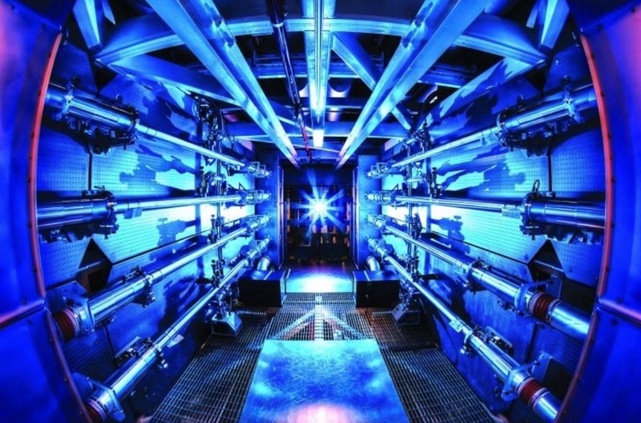
(Image Credit: energy.gov)
In a groundbreaking achievement the National Ignition Facility NIF at Lawrence Livermore National Laboratory in California successfully achieved fusion ignition on December 5 2022. This monumental breakthrough marks a significant milestone in the pursuit of clean sustainable energy producing more energy than the laser energy used to initiate the reaction.
The Power of Fusion
Fusion the process powering the sun has long been hailed as the holy grail of energy production. By combining hydrogen isotopes to form helium fusion releases vast amounts of energy without the harmful emissions and radioactive waste associated with traditional nuclear fission. The NIF’s achievement demonstrates the feasibility of fusion as a viable energy source offering numerous benefits:
Zero Carbon Emissions Fusion produces no greenhouse gas emissions making it an attractive alternative to fossil fuels in the fight against climate change.
No Long-Lived Waste Fusion generates minimal waste eliminating the challenges associated with nuclear waste disposal.
No Meltdown Risk Fusion reactions are inherently safe reducing the risk of catastrophic accidents.
Infinite Fuel Supply Deuterium a key fusion fuel can be extracted from seawater providing a virtually limitless energy source.
Planet-Scale Energy Fusion has the potential to meet global energy demands powering everything from homes and industries to transportation and technology.
The Road to Fusion Ignition
The NIF’s achievement is the culmination of decades of research and development involving a global community of scientists engineers and researchers. The facility’s 192 lasers focus 2.05 megajoules of energy onto a tiny fuel pellet compressing and heating it to the extreme conditions needed for fusion to occur.
Technological Pathways to Fusion
The NIF’s breakthrough has validated various technological approaches to fusion including:
Inertial Confinement Fusion Using high-powered lasers to compress and heat fusion fuel.
Tokamak Reactors Magnetic confinement devices shaping the fusion plasma.
Stellarators Twisted magnetic fields for improved confinement.
Magnetized Target Fusion Combining magnetic and inertial confinement.
Laser-Driven Hybrid Designs Innovative approaches to fusion ignition.
A New Era of Clean Energy
The NIF’s achievement marks the beginning of a new era in energy production one that promises to transform the global energy landscape. As research and development continue fusion is poised to become a cornerstone of clean sustainable energy powering humanity towards a brighter future.
Challenges Ahead
While the NIF’s breakthrough is a significant milestone much work remains to be done to make fusion a practical large-scale energy source. Challenges include:
Scaling Up Increasing the energy output and efficiency of fusion reactions.
Cost-Effective Developing cost-effective fusion technologies and materials.
Materials Science Creating materials that can withstand the extreme conditions of fusion reactions.
The Future of Fusion
The NIF’s achievement has sparked a global surge in fusion research and development with numerous public and private initiatives underway. As the field continues to advance we can expect:
ITER and DEMO Next-generation tokamak reactors aiming to demonstrate fusion’s commercial viability.
Private Sector Innovations Companies like Commonwealth Fusion Systems and Helion Energy are pushing the boundaries of fusion technology.
Global Collaboration International cooperation will be crucial in realizing fusion’s potential as a clean energy source.
The NIF’s breakthrough is a testament to human ingenuity and the power of scientific collaboration. As we embark on this new era of fusion energy we are poised to unlock a cleaner more sustainable future for generations to come
You May also like